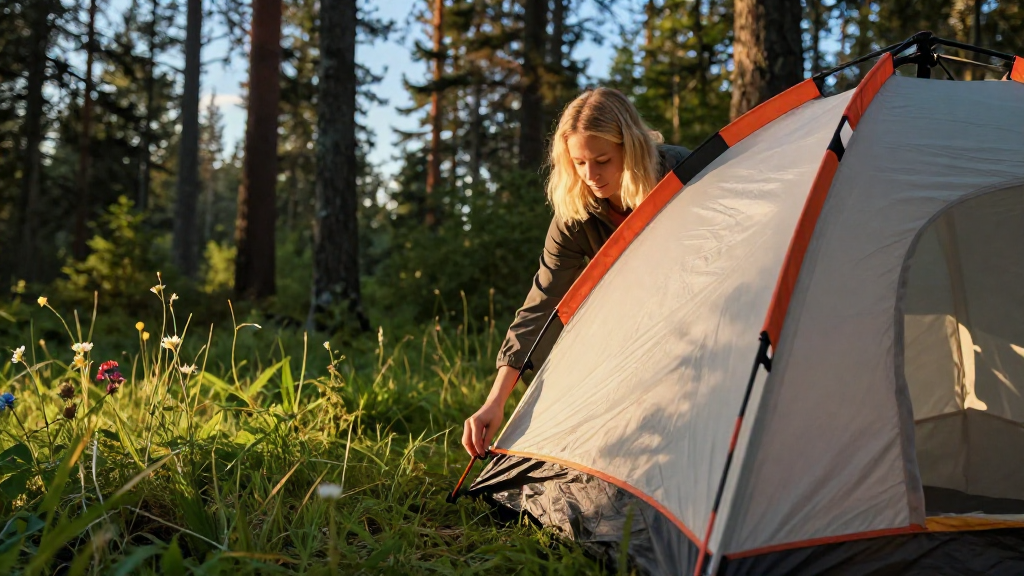
Setting up a tent alone can be a rewarding challenge, allowing you to connect with nature on your own terms.
In this guide, we’ll explore how to set up a tent alone, covering essential steps, tips, and tricks to make the process as smooth as possible.
What Do You Need Before You Start?
Before learning how to set up a tent alone, gather all the necessary equipment:
- Tent (including the body and rainfly)
- Tent poles (make sure they’re in good condition)
- Tent stakes (preferably durable and rust-resistant)
- Ground tarp (this provides extra protection)
- Hammer or mallet (for pounding stakes into the ground)
- Instructions/manual (if it’s your first time)
- Flashlight or headlamp (if setting up in low light)
How Do You Prepare the Site?
Choosing the right site is crucial for a successful tent setup. Here’s how to prepare the area:
-
Look for Level Ground:
Select a flat area free from rocks, sticks, or debris to ensure comfort during your sleep. -
Check for Natural Drainage:
Avoid low spots where water may collect in case of rain. -
Consider Wind Direction:
If it’s windy, set the tent up with the entrance away from the wind for added protection. -
Clear the Spot:
Remove any sharp objects or hazards that could damage your tent or become uncomfortable while sleeping.
How to Set Up a Tent Alone: Step-by-Step Guide
Now that you’ve prepared the site, let’s go through the steps on how to set up a tent alone.
Step 1: Lay Out the Ground Tarp
Start by placing your ground tarp on the area you’ve cleared.
- This provides an extra layer of protection against moisture and abrasions.
Step 2: Unpack Your Tent Components
Next, take your tent out of its bag:
-
Lay out the tent body, rainfly, and poles.
-
Ensure you have everything you need, especially if you’re setting up in an isolated area.
Step 3: Assemble the Tent Poles
Depending on the design of your tent, you may need to:
-
Connect the poles together if they are broken down.
-
Some tents come with pre-attached poles which can be simpler to set up.
Step 4: Insert the Poles into the Tent
Now, insert the poles into their corresponding sleeves or clips on the tent:
-
If your tent has a hub design, connect the poles to the central hub first.
-
Be mindful of pole tension to avoid accidental breakage.
Step 5: Raise the Tent
With the poles in place, carefully raise the tent.
-
You may need to pull the fabric taut to form the tent shape.
-
Consider using a stake to hold the tent in position while you secure all components.
Step 6: Stake Down the Tent
Staking is essential for a secure setup:
-
Use your hammer or mallet to pound stakes into the ground at a 45-degree angle.
-
Stake the corners first, then work your way around the tent, ensuring fabric stays tight.
Step 7: Attach the Rainfly
If your tent has a rainfly, place it over the tent structure:
-
Clip or attach it to the poles as per the instructions.
-
Ensure it extends far enough to cover the tent adequately.
What After Setup: Final Touches
Once your tent is up, take a moment to ensure everything looks good.
-
Check that all zippers function properly.
-
Verify that there are no gaps at the seams that could allow water to enter.
What Are Some Tips for Future Setups?
Now that you know how to set up a tent alone, consider these additional tips for your next excursion:
-
Practice Makes Perfect:
If this is your first time, consider practicing at home in your backyard. -
Bookmark The Manual:
Keep your tent instructions accessible on your phone or in a keep-sake. -
Wind Breaks:
If camping in areas with high winds, consider building a windbreak with nearby natural features like trees. -
Two-person Setup:
If possible, practice the setup process with a friend first, as it can help you familiarize yourself with the tent structure.
How Can You Troubleshoot Common Issues?
Even if you’ve mastered how to set up a tent alone, problems might still arise. Here are some quick fixes for common setup issues:
-
Tent Leaning:
If your tent leans, check the stakes and make sure they’re all secure and in place. -
Clothes Wet Inside:
Regularly check the rainfly and ground tarp for proper coverage. -
Condensation Problems:
Ensure proper ventilation if you notice condensation inside by keeping vents open or partially zipping the tent doors.
When is the Best Time to Set Up?
Timing your tent setup can make the process easier.
-
Daylight Hours:
Always aim to set up while there’s plenty of natural light. This reduces mistakes and your chances of accidents. -
Good Weather:
Avoid strong winds or rain when setting up to reduce complications.
Should You Consider Practice Ahead of Time?
Absolutely! The more familiar you are with your tent, the easier it will be to remember how to set up a tent alone in the field.
- Aim for a practice run in ideal conditions to get used to the setup without pressure.
Conclusion
Setting up a tent by yourself is entirely achievable with the right tools and techniques.
By following this guide on how to set up a tent alone, you’ll be prepared for a more enjoyable outdoor experience.
Remember to practice, stay organized, and enjoy the tranquility of your own space in nature.
Whether you’re headed out for a quick overnight trip or a longer adventure, knowing how to set up a tent alone will help you make the most of your outdoor time!