Wireless bike computers make it easier to track speed, distance, routes, and training data without the clutter of traditional wired setups. The best models now add GPS navigation, smartphone sync, and long battery life.
In this roundup, we focus on the features that matter most so you can choose a reliable cycling computer for commuting, training, or weekend rides.
Best 10 Wireless Bike Computers Picks for 2026
Premium GPS Cycling Computer
Garmin Edge 1050 Premium Cycling Computer

- 3.5-inch vivid touchscreen with navigation and planning tools
- Road hazard alerts, group ride messaging, and incident detection
- Up to 60 hours in battery saver mode
Best For: Riders who want premium navigation, training, and smart connectivity
Value GPS Bundle
CYCPLUS GPS Wireless Bike Computer M1

- GPS tracking with app sync and ANT+ sensor support
- 2.9-inch backlit LCD for daylight and night viewing
- Includes speed/cadence sensor and handlebar mount
Best For: Budget-minded riders who want GPS tracking and sensor support
Simple Wireless Odometer
CATEYE Padrone Wireless Bike Computer

- Large display for speed, distance, time, and clock
- Wireless speed sensor with no pairing required
- Tool-free FlexTight mount and auto start/stop
Best For: Riders who want a simple, readable computer for core ride stats
Navigation-Focused Touch GPS
iGPSPORT BSC300T Wireless Bike Computer
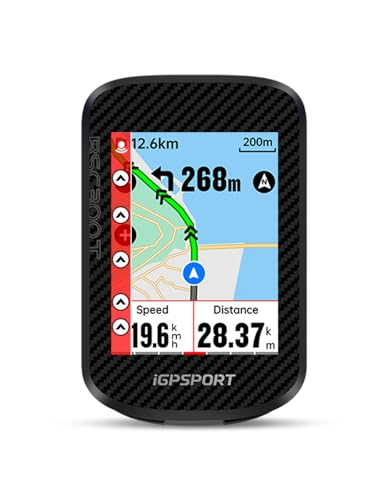
- Touchscreen with six buttons and offline map navigation
- Off-course warnings, route preview, and turn prompts
- ANT+ and Bluetooth 5.0 for sensors and Ebike support
Best For: Riders who want navigation, offline maps, and strong sensor compatibility
Analog wireless simplicity
CATEYE Velo Wireless Bike Computer

- Shows speed, distance, time, calories, and clock
- Auto start/stop pauses timing at stops
- Manual odometer setting helps retain total miles
Best For: Riders who want a simple, reliable bike computer for core ride stats
Color navigation pick

- 2.8-inch color screen with route navigation
- WiFi auto-sync plus Bluetooth and ANT+ support
- Supports many data fields and indoor training
Best For: Cyclists who want navigation and broad wireless syncing
Big screen budget option
Wireless Bike Computer 20 Functions

- 3-inch LCD with soft white backlight
- Tracks 20 functions including speed, distance, and calories
- Wireless design and simple two-button operation
Best For: Budget-minded riders who want a large, easy-to-read display
Compact GPS Pick
CYCPLUS G1 Wireless GPS Bike Computer

- 70g lightweight build with 2.0-inch screen
- GPS tracking with core ride stats and auto backlight
- IPX6 waterproof design with up to 50-hour battery life
Best For: Riders who want a lightweight GPS computer with simple ride tracking
Feature-Rich Trainer
iGPSPORT BSC100S Wireless GPS Bike Computer

- 2.6-inch anti-glare LCD with 40+ riding data fields
- Bluetooth 5.0 and ANT+ sensor compatibility
- IPX7 waterproof rating and up to 40-hour battery life
Best For: Riders who want detailed ride metrics and sensor syncing
Long-Ride Sync Pick
CYCPLUS M2 GPS Wireless Bike Computer

- Up to 70 hours of battery life on a full charge
- Shows up to 12 metrics across three switchable tables
- Bluetooth sync plus ANT+ support and Strava compatibility
Best For: Riders who want long battery life and training data syncing
Premium GPS Cycling Computer – Garmin Edge 1050 Premium Cycling Computer
If you want a top-tier option among wireless bike computers, the Garmin Edge 1050 is built for riders who care about navigation, training, and ride awareness in one device. Its vivid 3.5-inch touchscreen, cycling hazard alerts, in-ride messaging, and advanced coaching features make it especially strong for serious road and endurance use.
Best For: Riders who want a premium touchscreen computer with advanced navigation, training, and smart ride features.
Pros:
- Large 3.5-inch color touchscreen with responsive course creation and map viewing
- Road hazard alerts, live location sharing, incident detection, and group ride messaging
- Built-in speaker for prompts and a bike bell, plus Garmin Pay support
- Up to 20 hours in demanding use, or up to 60 hours in battery saver mode
Cons:
- Higher-end feature set is likely more than casual riders need
- Full smart and coaching features depend on compatible smartphone, sensors, or power meter
The Edge 1050 stands out as a feature-packed cycling computer for riders who want more than basic ride stats. If navigation, training feedback, and connected ride tools matter most, this is the most complete option in the group.
Value GPS Bundle – CYCPLUS GPS Wireless Bike Computer M1
For riders shopping wireless bike computers on a budget, the CYCPLUS GPS Wireless Bike Computer M1 covers the essentials with GPS tracking, app sync, and included speed/cadence sensor support. The 2.9-inch backlit screen is designed for easy viewing in sunlight or low light, making it a practical choice for everyday training and route recording.
Best For: Riders who want an affordable GPS computer with sensor support and long battery life.
Pros:
- GPS tracking with phone app sync to review your route after the ride
- 2.9-inch glare-free backlit LCD for easier viewing day or night
- Includes speed/cadence sensor and supports ANT+ sensor data
- Up to 60 hours of battery life with compact, lightweight hardware
Cons:
- No touchscreen, so control is button-based
- Mount is only listed as suitable for 31.8 mm handlebars
The M1 is a straightforward pick for riders who want GPS and sensor compatibility without moving into a premium price tier. It is best when you value simple setup, useful ride data, and long runtime over advanced navigation extras.
Simple Wireless Odometer – CATEYE Padrone Wireless Bike Computer
Among wireless bike computers, the CATEYE Padrone keeps things focused on core ride stats instead of GPS mapping or heart-rate features. Its oversized display, wireless speed sensor, and easy ClickTec operation make it a strong fit for riders who want a clean, no-fuss computer for everyday mileage and speed tracking.
Best For: Riders who want a basic, easy-to-read wireless computer for speed and distance.
Pros:
- Large display shows speed, distance, elapsed time, and clock clearly
- Wireless speed sensor avoids the need for GPS or pairing complexity
- ClickTec design and FlexTight mount keep setup and use simple
- Auto start/stop helps stop time tracking during brief stops
Cons:
- No GPS navigation or heart-rate tracking
- Only covers core metrics, so it is less feature-rich than GPS computers
The Padrone is a practical choice if you want a reliable wireless speedometer and odometer without extra features getting in the way. It is best for riders who prefer simplicity, readability, and low-maintenance operation.
Navigation-Focused Touch GPS – iGPSPORT BSC300T Wireless Bike Computer
If your priority is route guidance in wireless bike computers, the iGPSPORT BSC300T adds touch control, offline map navigation, and off-course warnings to a compact GPS unit. It also supports Ebike use, real-time tracking, and broad sensor compatibility, which makes it a versatile pick for riders who want more than basic ride recording.
Best For: Riders who want GPS navigation, offline maps, and broad sensor support in a compact computer.
Pros:
- 2.4-inch touchscreen plus six buttons for flexible operation
- Offline map download, route preview, turn prompts, and off-course warnings
- Supports 130+ riding data fields and app sharing to Strava and Komoot
- ANT+ and Bluetooth 5.0 support for sensors, smart trainers, radar lights, and Ebike use
Cons:
- Battery life is listed at 20 hours, which is shorter than some rivals
- Type-C cable is not included in the box
The BSC300T is a strong option for riders who want turn-by-turn style help without relying on phone navigation. Its map features, tracking tools, and connectivity make it especially appealing for route-heavy training and group rides.
Analog wireless simplicity – CATEYE Velo Wireless Bike Computer
If you want one of the more straightforward wireless bike computers for everyday riding, the CATEYE Velo Wireless keeps things focused on the stats most riders actually check. It shows current, max, and average speed, distance, trip time, calories, and even a pace arrow, while the auto start/stop feature helps reduce fuss at red lights and coffee breaks.
Best For: Riders who want a simple, reliable handlebar-mounted computer with core ride data and easy battery management.
Pros:
- Displays current, max, and average speed plus distance, time, calories, and clock
- Auto start/stop pauses timing and averaging when you stop
- Manual odometer setting helps preserve total miles after battery changes
- Includes a secure zip-tie bracket for handlebar mounting
Cons:
- Uses proprietary wireless connectivity rather than ANT+ or Bluetooth
- Focused on basic ride metrics, not navigation or smart syncing
Overall, this is a practical pick if you want a no-nonsense wireless computer that covers the essentials without adding setup complexity. It fits riders who value clear ride stats, a compact design, and dependable daily use.
Color navigation pick – GEOID CC700 GPS Bike Computer
The GEOID CC700 stands out among wireless bike computers if you want a larger color display and more advanced ride features. Its 2.8-inch screen, route navigation with re-routing, WiFi auto-sync, and support for GPS, Bluetooth, and ANT+ make it a strong option for riders who want both training data and navigation support.
Best For: Cyclists who want navigation, wireless syncing, and broad sensor compatibility in one GPS computer.
Pros:
- 2.8-inch color screen with a three-button design
- Route navigation with turn reminders and automatic re-routing
- WiFi auto-sync plus Bluetooth and ANT+ support
- Supports many data fields, layouts, and indoor training options
Cons:
- More complex than a basic speedometer-style computer
- Best features depend on app syncing and GPS/AGNSS setup
This is a feature-rich choice for riders who want more than distance and speed. The CC700 is especially appealing if you value navigation, exportable ride files, and a color interface that makes data easier to read mid-ride.
Big screen budget option – Wireless Bike Computer 20 Functions
This wireless bike computer is built for riders who want a large, easy-to-read display and a long list of basic ride functions. The 3-inch LCD includes a soft white backlight for day or night use, and the wireless setup helps keep handlebars free of extra cable clutter.
Best For: Budget-minded riders who want a big screen, simple operation, and essential ride stats.
Pros:
- Large 3-inch LCD with backlight for easier reading
- Wireless design reduces handlebar clutter
- Tracks 20 functions including distance, speed, time, calories, and temperature
- Includes scan mode and two physical buttons for simple use
Cons:
- Uses a basic speed sensor setup rather than GPS or smart connectivity
- IP54 rating is solid, but not as weather-resistant as higher-rated options
For riders who mainly want straightforward ride data on a larger screen, this model gets the job done without overcomplicating things. It makes sense if readability and simplicity matter more than advanced training or navigation features.
Compact GPS Pick – CYCPLUS G1 Wireless GPS Bike Computer
If you want wireless bike computers that keep setup simple, the CYCPLUS G1 is a compact GPS option built for riders who value basic ride tracking without extra bulk. It covers core stats like ride time, distance, total mileage, clock, and altitude, while the GPS positioning aims for faster, more accurate route tracking.
Best For: Riders who want a lightweight, easy-to-read GPS computer with long battery life and weather protection.
Pros:
- 70g pocket-size design with a 2.0-inch screen
- Automatic backlight and glare-free FSTN display for day or night visibility
- IPX6 waterproof rating for rainy rides
- Up to 50 hours of battery life with 1200mAh capacity
Cons:
- Uses a simpler feature set than higher-end multi-data units
- Display is smaller than some other wireless bike computers
Overall, the G1 is a practical choice if you want dependable GPS ride data in a very small package. It focuses on the essentials and adds useful touches like auto backlight and waterproofing for everyday riding.
Feature-Rich Trainer – iGPSPORT BSC100S Wireless GPS Bike Computer
Among wireless bike computers, the iGPSPORT BSC100S stands out for riders who want more data and broader sensor support. It pairs GPS coverage from five satellite systems with over 40 riding metrics, plus Bluetooth and ANT+ connectivity for external sensors and app-based analysis.
Best For: Riders who want a larger screen, detailed ride data, and app syncing for training analysis.
Pros:
- 2.6-inch anti-glare LCD screen for easier viewing while riding
- Supports GPS, Beidou, GLONASS, GALILEO, and QZSS positioning
- Over 40 riding data fields, including speed, cadence, calories, and temperature
- Bluetooth 5.0 and ANT+ support for sensors and smart devices
Cons:
- Type-C charging cable is not included in the box
- Heavier than the lightest compact bike computers at 120g
If you want a wireless bike computer that does more than show speed and distance, this model is built for training-oriented riders. The mix of app syncing, multi-satellite positioning, and sensor compatibility makes it a versatile mid-range pick.
Long-Ride Sync Pick – CYCPLUS M2 GPS Wireless Bike Computer
The CYCPLUS M2 is one of the more capable wireless bike computers here if you want a longer battery life and room for more training data. It uses GPS positioning, supports ANT+ devices, and can show up to 12 data points across three switchable tables, making it a strong fit for structured rides.
Best For: Riders who want long battery life, ANT+ compatibility, and synced ride tracking.
Pros:
- Up to 70 hours of use on a single charge
- 2.5-inch anti-dazzling LCD screen for clearer viewing
- Supports up to 12 data points, including cadence, heart rate, power, and altitude
- Bluetooth sync to the CYCPLUS FIT app and Strava support
Cons:
- Display is smaller than the larger-screen models in this group
- Feature depth may be more than casual riders need
For riders who want a wireless bike computer that can handle longer outings without constant charging, the M2 is a practical choice. It balances endurance, app syncing, and broader training data in a compact GPS unit.
How We Picked the Best Wireless Bike Computers
We prioritized ride data accuracy, screen readability, battery life, mounting security, and overall ease of use. For Wireless Bike Computers, we also looked at GPS quality, sensor compatibility, navigation features, waterproofing, and how smoothly each unit pairs with apps or external sensors.
We favored models that fit different budgets and riding needs, from simple speed-and-distance units to advanced GPS computers with mapping and ride planning.
Quick Comparison
If you want the simplest setup, basic wireless speedometers are best for casual riders and commuters. If you need turn-by-turn-style guidance, route re-routing, or richer training metrics, GPS-enabled models offer much more value. Large color displays help with at-a-glance viewing, while compact units usually win on battery life and weight.
Key Buying Factors for Wireless Bike Computers
Display Size and Readability
A larger screen is easier to read while riding, especially if you glance down often or wear gloves. Color and touchscreen models are more convenient for navigation, but monochrome displays can be more battery efficient.
GPS, Sensors, and Connectivity
Decide whether you want pure wireless speed tracking or full GPS functionality. ANT+ and Bluetooth support matter if you plan to connect heart rate monitors, cadence sensors, power meters, or phone apps. This is especially important for training-focused riders.
Battery Life and Charging
Long rides demand better battery endurance. Some Wireless Bike Computers are built for short daily commutes, while others can handle extended weekend or multi-day use. Rechargeable models are usually more convenient than replaceable-battery units, but runtime still varies widely.
Navigation and Smart Features
Riders who follow unfamiliar routes should look for map support, off-course alerts, route re-planning, and app-based syncing. Those features can make a big difference if you ride in new areas or use a bike computer for travel and touring.
Durability and Mounting
Water resistance, shock resistance, and a secure mount are essential. A good wireless bike computer should stay put over rough pavement and handle rain without issue.
Who Should Buy Which Wireless Bike Computers?
Choose a basic wireless computer if you mainly want speed, distance, and odometer readings at the lowest cost. Pick a GPS-enabled unit if you want navigation, ride logs, and sensor support. Commuters may prefer a bright, easy-to-read display, while performance riders should lean toward models with broader connectivity and advanced training metrics. For most buyers, the best choice is the one that balances screen visibility, battery life, and the features you will actually use on every ride.