Finding a capable kayak on a budget is easier when you focus on the type of water, portability, stability, and included equipment rather than price alone. The best kayaks under $300 can work well for calm lakes, slow rivers, casual fishing, and short recreational trips.
This roundup includes inflatable and hard-shell designs, tandem and solo options, and youth kayaks for different paddling needs. Use the guide below to compare construction, setup, comfort, storage, and safety considerations before choosing.
Best 10 Kayaks Under 300 Picks for 2026
Best Tandem Inflatable
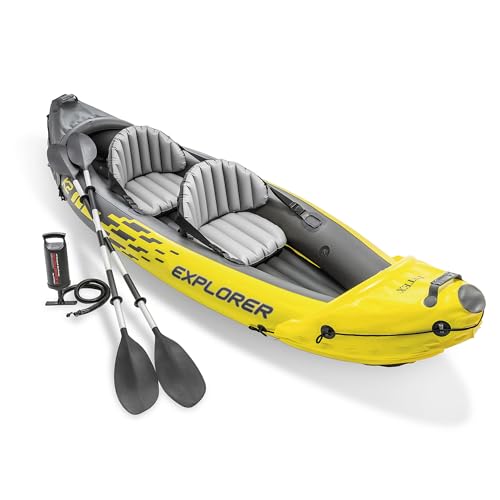
- Two-person design with a 400-pound capacity
- Includes pump, paddles, seats, and removable skeg
- Packs into a carrying bag for transport
Best For: Casual tandem trips on lakes and mild rivers
Best Lightweight Rigid Kayak

- 27-pound Ram-X rigid construction
- Stable multi-chine hull for recreational paddling
- Ergofit backrest and interior flotation blocks
Best For: Solo beginners wanting an easy-to-carry rigid kayak
Best Solo Inflatable
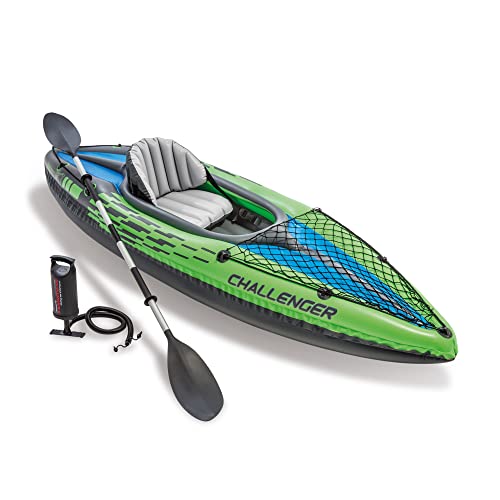
- Portable one-person inflatable design
- Includes paddle, pump, seat, cargo net, and skeg
- Low-profile shape suits lakes and mild rivers
Best For: Solo paddlers prioritizing compact storage and transport
Best Kids’ Recreational Kayak

- Compact hard-shell design for smaller paddlers
- Includes paddle, adjustable footrest, and foldable backrest
- Storage hatches and bungee tie-downs for essentials
Best For: Supervised outings for children over five
Portable Inflatable Pick

- Backpack carry system converts into the seat
- 400-pound maximum capacity
- Multiple air chambers and protected bottom
Best For: Solo lake paddlers seeking easy transport
Youth Starter Pick

- Designed for ages 5 and up with supervision
- Swim-up deck supports re-entry
- 150-pound capacity and five-year warranty
Best For: Young beginners learning recreational paddling
Feature-Packed Inflatable Pick

- Includes paddles, pump, carry bag, and repair patch
- Reinforced PVC with high-pressure inflation
- Storage, skegs, rod holders, and phone mount
Best For: Solo paddlers wanting a complete accessory-rich set
Best Youth Pick

- HDPE shell with UV protection
- Adjustable footrests and included paddle
- Stable, self-bailing design for supervised use
Best For: Young beginners on calm water
Best Portable Option

- 15-pound packable design
- 220-pound capacity with supportive seat
- Includes paddle, pump, bag, and skeg
Best For: Adult beginners, camping, and lake trips
Best Lightweight Youth Design

- 18-pound hard-shell construction
- Reverse chine supports balance
- Paddle included with 115-pound capacity
Best For: Young beginners learning on calm water
Best Tandem Inflatable – Explorer K2
For shoppers comparing kayaks under 300, the Intex Explorer K2 is a practical tandem option for casual lake and mild-river outings. Its inflatable construction packs into the included bag, while the pump, paddles, adjustable seats, and removable skeg make it ready for shared adventures.
Best For: Two-person recreational paddling on lakes and mild rivers.
Pros:
- 400-pound maximum capacity accommodates two paddlers.
- Includes pump, two paddles, seats, skeg, and repair patch.
- Lightweight, compact, and easy to transport after deflation.
- High-buoyancy side chambers and an inflatable I-beam floor support stability.
Cons:
- Inflatable design requires setup and inflation before use.
- Intended for lakes and mild rivers rather than demanding conditions.
- At 35 pounds, it is heavier than some one-person options.
The Explorer K2 stands out when portability and included accessories matter more than rigid-hull performance. Its tandem layout and 400-pound capacity make it a strong value-focused choice for relaxed outings with a partner.
Best Lightweight Rigid Kayak – Pelican Argo 80X
Among kayaks under 300, the Pelican Argo 80X is a straightforward rigid sit-in kayak for solo recreational paddling. Its 27-pound Ram-X construction is relatively easy to handle, and the stable multi-chine hull is designed for approachable performance.
Best For: Solo beginners and recreational paddlers who prefer a lightweight rigid kayak.
Pros:
- Lightweight 27-pound construction is easier to carry.
- Twin-arched multi-chine hull promotes a stable ride.
- Ergofit backrest supports a comfortable seating position.
- Built-in flotation blocks add buoyancy.
Cons:
- 200-pound maximum capacity limits heavier paddlers and gear.
- Seats only one person.
- Accessories are limited to the kayak itself.
The Argo 80X favors simplicity and manageable handling over extra bundled equipment. Its stable hull, lightweight build, and lifetime limited warranty against manufacturer defects make it an appealing solo recreational choice.
Best Solo Inflatable – Challenger K1
The Intex Challenger K1 is a useful pick for kayaks under 300 when compact storage and solo portability are priorities. This inflatable model includes a high-output pump, paddle, adjustable seat, cargo storage net, and removable skeg for lake and mild-river use.
Best For: Solo recreational paddlers who need a portable kayak with included setup gear.
Pros:
- Folds into a carry bag for convenient transportation.
- Includes an 86-inch paddle, pump, adjustable seat, and skeg.
- Low-profile design is intended for easy paddling.
- SuperStrong PVC is designed for impact and abrasion resistance.
Cons:
- 220-pound capacity leaves limited room for heavy gear.
- Inflation is required before each outing.
- Designed for lakes and mild rivers, not rough-water conditions.
The Challenger K1 is best suited to casual solo use where a compact package matters. Its removable skeg can help directional stability, while the included accessories reduce the need for separate starter purchases.
Best Kids’ Recreational Kayak – 6.5-Foot Sit-In Kayak
For families searching kayaks under 300, this compact hard-shell kayak is scaled for smaller paddlers. It has a 120-pound capacity, adjustable footrest, foldable backrest, paddle, storage compartments, and a stable sit-on-top design for supervised pool, lake, river, or calm-sea outings.
Best For: Children over five using a kayak under adult supervision.
Pros:
- Compact 74-inch length and 25.4-pound weight suit smaller paddlers.
- Four-position footrest and foldable backrest support comfort.
- Front and rear storage hatches, bungee ties, and cup holders add utility.
- Front handle, rear casters, and side handles simplify moving it.
Cons:
- 120-pound capacity is intended for smaller users.
- Not suitable for unsupervised use.
- Its compact size may be restrictive for larger paddlers.
This kayak is a specialized option rather than an all-purpose adult boat. Its smaller dimensions, stability-focused hull, storage features, and included paddle make it practical for supervised family recreation and introductory paddling.
Portable Inflatable Pick – Sevylor QuickPak K1
Sevylor Kayak with Backpack Portable and Lightweight Outdoor 1 Person Kayak with 5 Minute Set Up
Check Price On AmazonIf you want one of the more portable kayaks under 300, the Sevylor QuickPak Inflatable Kayak stands out for its backpack-style carry system. Its 400-pound capacity, multiple air chambers, and lake-oriented PVC construction make it a practical choice for solo recreational outings.
Best For: Solo lake paddlers who prioritize portability, back support, and onboard storage.
Pros:
- Backpack system converts into the kayak seat for easier transport.
- Multiple air chambers help maintain flotation if one chamber is punctured.
- Includes a backrest, adjustable foot rest, and bungee-secured storage area.
- 21-gauge PVC and a tarpaulin bottom provide protection for lake use.
Cons:
- Inflatable construction requires setup before paddling.
- Designed for one person and weighs 20.3 pounds.
- The supplied notes do not indicate that a paddle is included.
The QuickPak is a sensible pick when carrying convenience matters as much as time on the water. Its generous capacity and comfort features add versatility, while its inflatable format is best suited to paddlers who do not need a rigid kayak.
Youth Starter Pick – Lifetime Dash 66
Among kayaks under 300, the Lifetime Dash 66 is a straightforward youth option for supervised recreational paddling. Its sit-on-top design, molded re-entry grips, and multiple footrest positions are intended to support young beginners ages five and up.
Best For: Children ages 5 and up learning basic kayaking with adult supervision.
Pros:
- Recommended for ages five and up with adult supervision.
- Swim-up deck and molded hand grips assist with re-entry.
- Multiple footrest positions accommodate different-size paddlers.
- Ergonomic cockpit is designed to enhance balance and motor skills.
Cons:
- Paddle is not included.
- 150-pound maximum capacity limits it to smaller paddlers.
- It is a youth kayak rather than a full-size adult model.
The Dash 66 focuses on beginner-friendly handling and easier re-entry rather than high capacity or touring features. Its five-year limited warranty is another practical advantage for families shopping for a dedicated youth kayak.
Feature-Packed Inflatable Pick – INTEX Excursion Pro K1
For shoppers comparing kayaks under 300, the INTEX Excursion Pro K1 offers a complete one-person setup with paddles and a high-output pump included. Its reinforced PVC construction, high-pressure inflation, removable skegs, and accessory mounts make it well equipped for recreational adventures.
Best For: Solo paddlers who want included accessories, adjustable seating, and gear-storage options.
Pros:
- Includes two 86-inch aluminum oars, a high-output pump, carry bag, and repair patch.
- Three-ply SuperTough PVC is designed to resist abrasion, impact, and sunlight.
- Two removable skegs support maneuverability in deep or shallow water.
- Adjustable bucket seat, storage areas, rod holders, and camera or phone mount add versatility.
Cons:
- 220-pound maximum capacity is lower than some larger recreational kayaks.
- At 31.2 pounds, it is heavier than the Sevylor QuickPak listed here.
- It has a 90-day limited manufacturer warranty.
The Excursion Pro K1 is a strong choice when the goal is an inflatable package that is ready to outfit for the water. Its included paddles and pump reduce extra purchases, while the 10-foot profile and adjustable features give solo users a capable recreational platform.
Best Youth Pick – Lifetime Cadet Youth Kayak
For families comparing kayaks under 300, the Lifetime Cadet is a purpose-built youth option with a paddle included. Its stable hull, adjustable footrests, and 100-pound capacity make it suited to supervised lake and calm-river outings for children ages five and up.
Best For: Young beginners who need a stable, easy-to-carry kayak for supervised calm-water paddling.
Pros:
- Durable HDPE construction with UV protection.
- Multiple footrest positions accommodate growing paddlers.
- Reverse chine, twin fins, and self-bailing scupper holes support stability, tracking, and drainage.
- Rear swim-up deck assists with re-entry from the water.
Cons:
- 100-pound maximum capacity limits it to smaller paddlers.
- Designed for youth use and requires responsible adult supervision.
- At 16.9 pounds, it is lightweight but still a rigid kayak to transport.
The Cadet stands out when stability and beginner-friendly features matter more than adult capacity. Its included paddle and five-year limited warranty add practical value for family use.
Best Portable Option – 1-Person Inflatable Kayak
Among kayaks under 300, this inflatable model is a practical choice for adults who prioritize portability. The 15-pound, 9-foot design includes a paddle, pump, carry bag, and removable skeg for casual lake trips, camping, and calm-water recreation.
Best For: Adult beginners who want a compact kayak set that is easy to carry, inflate, and store.
Pros:
- Lightweight design packs into the included carry bag.
- Supports up to 220 pounds and includes an inflatable seat with backrest.
- Removable skeg helps with directional stability and tracking.
- Complete set includes paddle, hand pump, carry bag, and cargo net.
Cons:
- Inflation takes approximately 10 minutes before use.
- Intended for calm-water recreational paddling rather than challenging conditions.
- Inflatable construction requires setup and pack-down after each outing.
This kayak offers strong convenience for travelers and occasional paddlers. Its PVC body and reinforced fabric components provide a practical recreational setup, while the compact storage format avoids the burden of transporting a hard shell.
Best Lightweight Youth Design – Lifetime Youth Wave Kayak
For shoppers seeking kayaks under 300 for a young paddler, the Lifetime Youth Wave offers a lightweight hard-shell format with a paddle included. Its ergonomic cockpit, reverse chine, and swim-up step are designed to support balance and beginner confidence under adult supervision.
Best For: Children ages five and up learning basic paddling skills in calm water with an adult nearby.
Pros:
- Lightweight 18-pound hard-shell design with molded finger handles.
- Reverse chine enhances stability for beginners.
- Swim-up step supports easier re-entry from the water.
- Includes a paddle and supports up to 115 pounds.
Cons:
- 115-pound capacity limits use to smaller paddlers.
- Requires adult supervision for the recommended young age group.
- Single-person youth design is not suitable for carrying an additional passenger.
The Youth Wave is a straightforward option for introducing children to kayaking. Compared with an inflatable model, its hard-shell construction needs more space to transport and store, but it provides a simple, ready-to-paddle setup.
How We Picked the Best Kayaks Under 300
We evaluated these kayaks by looking at the features that matter most at this price: hull stability, intended user, portability, setup time, included paddles or oars, pump availability, seating, storage, and overall practicality. The selection includes inflatable models for easy transport, compact hard-shell kayaks for straightforward launching, and youth designs with proportions suited to smaller paddlers.
Because budget kayaks are generally intended for recreational use, buyers should match each model to calm, sheltered water unless the manufacturer specifically states otherwise. Weight capacity, paddler size, and local boating requirements should always be checked before use.
Quick Comparison
| Kayak Type | Best For | Main Advantage | Potential Trade-Off |
|---|---|---|---|
| Inflatable tandem | Couples and families | Portable with included pump | Requires inflation and drying |
| Inflatable solo | Travel and casual outings | Compact storage | More setup before launching |
| Hard-shell recreational | Frequent local use | Quick launch and simple upkeep | Needs more storage space |
| Youth kayak | Children and smaller paddlers | Manageable size and weight | Limited adult usability |
Key Buying Factors for Kayaks Under 300
Inflatable or Hard Shell
Inflatable kayaks are usually the better choice for apartment dwellers, travelers, and anyone without roof-rack or garage space. Look for durable PVC, multiple air chambers, a reliable pump, and a design that can be fully dried before storage. Hard-shell kayaks are faster to launch and do not require inflation, but they are heavier and harder to transport.
Stability and Intended Water
Wide recreational kayaks tend to feel steadier for beginners, fishing, and relaxed paddling. Sit-in designs can provide more protection from splashes, while open recreational layouts may be easier to enter and exit. These budget models are generally best for calm lakes, ponds, and slow-moving rivers—not rough ocean conditions or strong currents.
Capacity, Comfort, and Included Gear
Confirm the maximum weight capacity includes the paddler, clothing, water, and equipment. Adjustable seats can improve comfort on longer outings, while included paddles, oars, pumps, skegs, and carry bags can add meaningful value. Youth kayaks should be selected according to the child’s size and skill level, not simply the lowest price.
Storage and Maintenance
Inflatable kayaks need time to inflate, rinse, dry, and pack away. Hard shells should be stored on a rack or supported evenly to prevent distortion. Whichever style you choose, inspect valves, seams, handles, drain plugs, and hardware regularly.
Who Should Buy Which Kayaks Under 300?
- Choose a tandem inflatable if you want room for two paddlers, occasional family use, and easier transport.
- Choose a solo inflatable if compact storage, road trips, and simple portability matter most.
- Choose a hard-shell recreational kayak if you live near a calm launch spot and want to get on the water without pumping.
- Choose a fishing-oriented or sit-in model if you value a more enclosed feel and need a stable platform for relaxed casting.
- Choose a youth kayak only for an appropriately sized child, with adult supervision and a properly fitted personal flotation device.
For most first-time buyers, the best option is the model that fits the paddler and storage situation—not necessarily the one with the most accessories. Prioritize safe capacity, suitable water conditions, comfortable seating, and dependable portability.