The best heart rate monitor depends on how you plan to use it. Chest straps typically deliver highly responsive workout data, while watches, fingertip oximeters, and personal ECG devices serve different health-tracking needs.
We compared 10 options across accuracy, connectivity, comfort, battery life, water resistance, and intended use to help you choose the right device for training or at-home monitoring.
Best 10 Heart Rate Monitor Picks for 2026
Most Accurate Pick

- Highly accurate heart rate measurement
- Bluetooth, ANT+, and 5 kHz connectivity
- Waterproof with up to 400 hours of battery life
Best For: Accuracy-focused athletes and broad device compatibility
Best Everyday Garmin Strap

- Real-time heart rate and HRV data
- Up to one year of battery life
- Machine-washable strap with 3 ATM water rating
Best For: Routine training with Garmin devices and apps
Best Rechargeable Value
Wahoo TRACKR Heart Rate Monitor

- ANT+ and Bluetooth connectivity
- Rechargeable battery with over 100 hours of active life
- Slim strap with useful status LEDs
Best For: Connected workouts with rechargeable convenience
Best Advanced Training Data

- Adds running dynamics and HRV data
- Records watch-free workouts and swim heart rate
- Rechargeable battery lasts up to two months
Best For: Data-driven runners and multisport Garmin users
Best for Sports Comfort
COROS Armband Heart Rate Monitor

- Comfortable, breathable armband design
- Pairs with up to three Bluetooth devices
- Up to 38 hours of workout operation
Best For: Workout-focused users who prefer an armband
Best for Rhythm Checks
KardiaMobile 1-Lead EKG Monitor

- Provides results in about 30 seconds
- Works with most smartphones
- No subscription or wireless pairing required
Best For: Portable personal heart-rhythm checks
Best for Connected Training
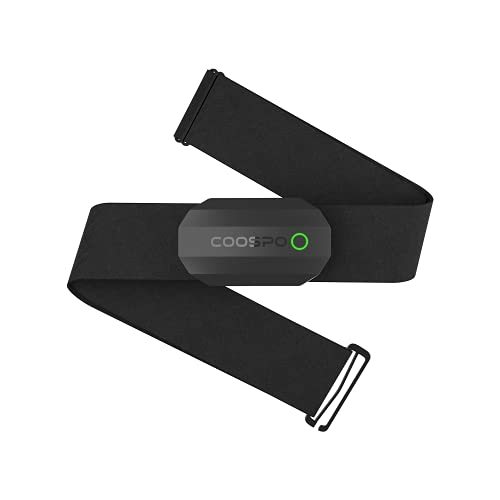
- Supports Bluetooth and ANT+
- Up to 300 hours of battery life
- Compatible with many fitness apps and devices
Best For: Multi-device runners, cyclists, and indoor trainers
Reliable Spot Checks
Innovo Deluxe iP900AP Pulse Oximeter

- Measures pulse rate and SpO2
- Plethysmograph and perfusion index
- Includes batteries and lanyard
Best For: Portable home, fitness, aviation, and outdoor spot checks
All-Day Tracking
MorePro Fitness Tracker Smart Watch

- 24/7 heart rate monitoring
- 120+ sport modes and sleep tracking
- Up to 7 days of normal-use battery
Best For: Everyday fitness, wellness, sleep, and notification tracking
Simple Everyday Checks
JKS50B Fingertip Pulse Oximeter

- Large OLED pulse and SpO2 display
- One-button portable operation
- Includes batteries and lanyard
Best For: Simple home, workout, hiking, and travel spot checks
Most Accurate Pick – Polar H10 Heart Rate Monitor
The Polar H10 is a strong choice if you want a highly accurate heart rate monitor for training, fitness equipment, and compatible apps. It supports Bluetooth, ANT+, and 5 kHz connections, with simultaneous Bluetooth and ANT+ use for added flexibility.
Best For: Athletes and fitness users who prioritize measurement accuracy, broad compatibility, and waterproof performance.
Pros:
- Recognized for precise heart rate measurement
- Supports Bluetooth, ANT+, and 5 kHz connections
- Waterproof and includes internal memory for multiple hours
- Battery life is rated up to 400 hours
Cons:
- Requires a CR2025 button-cell battery
- Chest-strap design may not suit users who prefer wrist-based monitoring
The Polar H10 stands out as a versatile heart rate monitor with strong connectivity and long battery life. Its chest strap and accuracy-focused design make it especially practical for structured training.
Best Everyday Garmin Strap – Garmin HRM 200
The Garmin HRM 200 is a practical heart rate monitor for users who want real-time heart rate and heart rate variability data across compatible Garmin devices, fitness equipment, smartphones, and apps. Its replaceable battery and machine-washable strap support regular use.
Best For: Garmin users seeking a straightforward, durable chest strap for daily workouts.
Pros:
- Transmits real-time heart rate and HRV data
- Works with Garmin watches, cycling computers, equipment, and apps
- Offers up to one year of battery life
- Machine-washable strap simplifies cleaning
Cons:
- Its broadest compatibility is centered on compatible Garmin and app ecosystems
- Uses a replaceable battery rather than a rechargeable design
With a durable build, 3 ATM water rating, and long battery life, the HRM 200 is a sensible everyday heart rate monitor for Garmin-focused training setups.
Best Rechargeable Value – Wahoo TRACKR Heart Rate Monitor
The Wahoo TRACKR is a convenient heart rate monitor for users who want accurate real-time data without relying on disposable batteries. It connects through ANT+ and Bluetooth and is designed to work with smartphones, fitness equipment, training apps, and accessories.
Best For: Connected training and users who prefer a rechargeable heart rate monitor with a comfortable strap.
Pros:
- Provides real-time heart rate data for training
- Offers ANT+ and Bluetooth connectivity
- Rechargeable battery provides over 100 hours of active use
- LEDs indicate heart rate detection, battery status, and connection
Cons:
- Listed as a one-size strap
- Battery life is shorter than some replaceable-battery alternatives
The TRACKR combines broad wireless connectivity with a slim, secure strap and rechargeable power. Its status LEDs are useful for confirming that your training setup is connected.
Best Advanced Training Data – Garmin HRM 600
The Garmin HRM 600 is an advanced heart rate monitor for data-driven athletes. Beyond real-time heart rate and HRV, it supports running dynamics, workout recording without a watch, swim data storage, and daily metrics that sync to the Garmin Connect smartphone app.
Best For: Serious runners and multisport athletes who want detailed performance data and watch-free workout recording.
Pros:
- Captures heart rate and HRV data in real time
- Supports running dynamics such as stride length and vertical oscillation
- Records activities without a watch and syncs with Garmin Connect
- Stores heart rate data during swimming and uses a rechargeable battery
Cons:
- Many advanced metrics require a compatible Garmin smartwatch
- Rechargeable battery lasts up to two months
- More features may be unnecessary for basic heart rate tracking
The HRM 600 is the most feature-rich option here for Garmin users who want training analysis across running, indoor workouts, team sports, and swimming. It makes the most sense when you will use its advanced ecosystem features.
Best for Sports Comfort – COROS Armband Heart Rate Monitor
The COROS Heart Rate Monitor is a practical heart rate monitor for workouts and sports when you prefer an armband over a traditional chest strap. Its soft, breathable band, wear detection, and Bluetooth connectivity make it convenient for training sessions, while the rechargeable battery provides up to 38 hours of operation.
Best For: Athletes and fitness users who want a comfortable armband heart rate monitor for workouts and compatible Bluetooth devices.
Pros:
- Soft, breathable armband is designed for comfortable sports use.
- Can pair with up to three devices simultaneously through Bluetooth.
- Offers up to 38 hours of operation and automatic wear detection.
- Sensor can be removed for quick band cleaning.
Cons:
- Bluetooth only; it is not compatible with ANT+.
- Designed for sports and activities rather than daily heart-rate tracking.
- USB charging cable is included, but a Type-C adapter is not.
This is a strong choice if comfort and flexible device pairing matter more than ANT+ support or all-day monitoring. Check the large-band sizing carefully, which fits arms from 9.4 to 16.9 inches.
Best for Rhythm Checks – KardiaMobile 1-Lead EKG Monitor
KardiaMobile is a compact personal heart rate monitor designed for quick rhythm checks with a smartphone. Place your fingers on its sensors and receive results in about 30 seconds, without a subscription, Bluetooth, Wi-Fi, cords, or a computer.
Best For: Smartphone users who want a portable, FDA-cleared personal monitor for checking whether a heart rhythm appears normal or may indicate AFib or another arrhythmia.
Pros:
- Provides 30-second results through a simple finger-placement process.
- Works with most smartphones.
- Requires no subscription, Bluetooth, Wi-Fi, cords, or PC.
- Uses a compact design with a battery rated for about 12 months.
Cons:
- It is a one-lead EKG monitor rather than a continuous workout heart-rate tracker.
- Requires a compatible smartphone for use.
- The supplied notes do not specify compatibility with every smartphone model.
KardiaMobile is better suited to occasional rhythm assessments than live exercise monitoring. Its simple, cable-free operation makes it appealing for users who want quick readings in a compact device.
Best for Connected Training – COOSPO H808S Chest Strap
The COOSPO H808S is a chest-strap heart rate monitor built for real-time exercise data. It supports both Bluetooth 4.0 and ANT+, works with sports watches, bike computers, and fitness apps, and uses a replaceable CR2032 battery rated for up to 300 hours.
Best For: Runners, cyclists, and indoor-training users who need broad device and app compatibility with a long-lasting chest-strap sensor.
Pros:
- Supports both Bluetooth and ANT+ connections.
- Works with devices and apps including Peloton, Strava, Zwift, Wahoo Fitness, and Polar Beat.
- Offers up to 300 hours of battery life with a replaceable CR2032 battery.
- IP67 waterproof construction supports exercise use.
Cons:
- The electrode areas should be moistened before use.
- The strap is recommended for replacement after six months or 300 washes.
- Users must connect the sensor within the app rather than through the phone’s standard Bluetooth menu.
Choose this model if cross-platform connectivity and battery longevity are priorities. It requires a little more setup and maintenance than an armband, but the dual-mode transmission makes it versatile for connected training.
Reliable Spot Checks – Innovo Deluxe iP900AP Pulse Oximeter
If you want a straightforward heart rate monitor for quick spot checks, the Innovo Deluxe iP900AP combines pulse-rate readings with blood oxygen measurements. Its plethysmograph and perfusion index provide additional feedback while the adjustable display and audible alerts make readings easier to follow.
Best For: Athletes, aviators, outdoor enthusiasts, and home users who need portable pulse and SpO2 checks.
Pros:
- Measures pulse rate and SpO2 with stated accuracy of +/-2%.
- Plethysmograph and perfusion index help confirm signal quality.
- Includes adjustable brightness, pulse detection beeps, and an auditory alarm.
- Comes with two AAA batteries and a lanyard.
Cons:
- It is a fingertip device rather than a continuous wearable heart rate monitor.
- It does not include Bluetooth connectivity.
- Measurements require staying still during use.
The iP900AP is a practical choice when you value reading feedback and ready-to-use accessories over smartwatch features or continuous tracking.
All-Day Tracking – MorePro Fitness Tracker Smart Watch
For shoppers seeking a wearable heart rate monitor with broader wellness features, the MorePro Fitness Tracker provides 24/7 heart rate tracking alongside activity, sleep, and on-demand blood oxygen monitoring. It also adds notifications, sport modes, and practical smartwatch tools for everyday use.
Best For: Users who want wrist-based heart rate and activity tracking, sleep insights, workout modes, and smart notifications.
Pros:
- Offers 24/7 heart rate monitoring and real-time workout metrics.
- Supports 120+ sport modes, step counting, distance, calories, and training time.
- Tracks sleep and provides on-demand blood oxygen checks.
- IP68 waterproof design and up to seven days of normal-use battery life.
Cons:
- The health features are described as not for medical use.
- Blood pressure monitoring is included, but the supplied notes do not provide accuracy specifications.
- Requires a compatible Android or iOS smartphone for its connected features.
This is the most feature-rich option here for ongoing wrist-based tracking, though it is better suited to wellness and fitness reference than medical monitoring.
Simple Everyday Checks – JKS50B Fingertip Pulse Oximeter
The JKS50B is a compact heart rate monitor for quick pulse and oxygen checks at home or outdoors. Its one-button design, large OLED digits, and waveform bar make the results easy to view, while automatic shutoff helps conserve the included batteries.
Best For: Adults, fitness users, hikers, skiers, and anyone wanting an uncomplicated portable pulse oximeter.
Pros:
- Large display shows SpO2, pulse rate, and signal strength.
- Waveform bar graph offers a visual indication of pulse strength.
- Compact design and one-button operation are convenient for travel.
- Includes two AAA batteries, a lanyard, and an instruction manual.
Cons:
- It provides spot readings rather than continuous heart rate tracking.
- The supplied notes list a 70%–100% SpO2 measuring range.
- Users need to remain still for dependable readings.
Choose the JKS50B if clear visibility and simple operation matter more than app connectivity or smartwatch-style features.
How We Picked the Best Heart Rate Monitors
We focused on devices that measure heart rate in a practical, clearly defined way and considered how each fits into real-world use. Key criteria included sensor design, connection options such as Bluetooth and ANT+, comfort during movement, battery or charging demands, water resistance, app compatibility, and the clarity of the recorded data.
The list includes chest-strap monitors for exercise, wearable trackers for broader wellness metrics, personal ECG equipment for rhythm checks, and fingertip pulse oximeters that also display pulse rate. These categories are not interchangeable, so the intended use matters as much as the feature list.
Quick Comparison
| Device type | Best for | Typical strengths |
|---|---|---|
| Chest strap | Training and live workout data | Responsive readings, broad fitness-app compatibility |
| Fitness tracker or watch | All-day wellness tracking | Heart rate trends, sleep, steps, and convenience |
| Personal ECG monitor | On-demand rhythm checks | Portable recordings that may help identify irregular rhythms |
| Pulse oximeter | Spot checks at rest | Pulse and blood oxygen readings on a small display |
Key Heart Rate Monitor Buying Factors
Sensor Accuracy and Response
For intervals, cycling, running, and other changing-intensity workouts, a well-fitted chest strap generally responds faster than wrist-based optical sensors. For casual trend tracking, a watch or band may be more convenient. No consumer device should replace professional diagnosis.
Connectivity and Compatibility
Check whether the monitor supports Bluetooth, ANT+, or both, and confirm compatibility with your watch, phone, bike computer, or training platform. Multiple connection types provide more flexibility, especially if you switch between devices.
Comfort, Fit, and Durability
A strap should stay secure without restricting breathing, while a wearable should be comfortable enough for overnight use if sleep tracking is important. Water resistance is useful for sweaty workouts and swimming, but verify the manufacturer’s rating before submerging any device.
Battery Life and Data Features
Long battery life reduces maintenance, while rechargeable models can simplify ownership. Consider whether you need only live heart rate, or also want sleep, blood oxygen, blood pressure estimates, ECG recordings, workout storage, and app-based trend reports.
Who Should Buy Which Heart Rate Monitor?
For Serious Training
Choose a chest-strap Heart Rate Monitor if you prioritize fast, consistent workout readings and compatibility with sports watches or training apps. This is usually the strongest category for structured intervals and performance analysis.
For Everyday Wellness
A fitness tracker or smartwatch is a better fit when you want heart rate trends alongside steps, sleep, calories, and notifications. It offers convenience, although wrist readings may be less responsive during intense activity.
For Rhythm Spot Checks
Consider a personal ECG monitor if your goal is to record an on-demand rhythm strip rather than continuously track exercise intensity. Discuss unusual or concerning results with a qualified healthcare professional.
For Occasional Readings
A fingertip pulse oximeter can be useful for quick pulse and oxygen saturation checks at rest. Look for a readable display, stable placement, and clear instructions, and do not rely on a single reading to make medical decisions.