The best headlamps for hiking keep your hands free while providing dependable light for early starts, late finishes, campsite tasks, and unexpected delays on the trail. The right model balances brightness with comfort, battery life, weather resistance, and packability.
This roundup compares 10 options across rechargeable and AAA-powered designs, including ultralight headlamps, high-output models, wide-beam lights, and budget-friendly multipacks.
Best 10 Headlamps for Hiking Picks for 2026
Best High-Output Pick
Coast XPH30R Rechargeable Headlamp

- 1,200-lumen Turbo output
- Twist-focus beam control
- Detachable magnetic-base design
Best For: Bright, flexible trail lighting and camp tasks
Best Ultralight Pick
Nitecore NU20 Classic Headlamp

- Weighs only 1.34 ounces
- 360 lumens with 119-yard beam
- USB-C charging and red light
Best For: Ultralight backpacking and everyday trail use
Best Value Two-Pack
Energizer PRO-400 Rechargeable Headlamps

- Two headlamps in one package
- Seven modes with night vision
- 400-lumen output with Smart Dimming
Best For: Pairs, families, and backup lighting
Best Weatherproof Battery Pick
BLACK DIAMOND Cosmo 350 Headlamp

- IP67 waterproof protection
- AAA or BD 1500 battery compatible
- 350 lumens with red night vision
Best For: Wet-weather hikes and flexible battery planning
Best for Easy Setup

- 1200 lumens with focused and wide-area beams
- Red and green night modes
- IP67 protection and 3000mAh rechargeable battery
Best For: Hikers needing high brightness and strong weather protection
Best Versatile Value
Blukar Rechargeable 2000L Headlamp
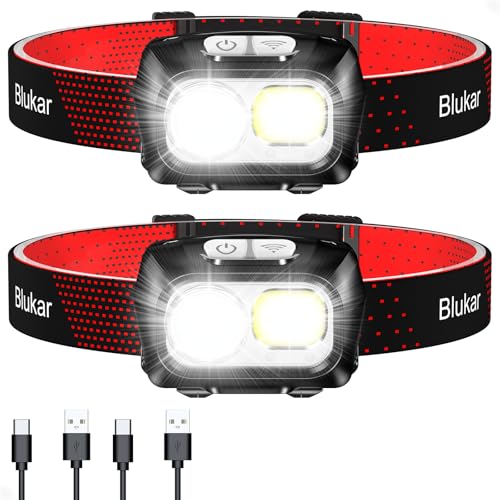
- Spotlight and floodlight modes up to 2000 lumens
- Eight modes with motion-sensor control
- USB-C rechargeable and 45-degree adjustable
Best For: Hikers wanting flexible beams and hands-free controls
Best Budget Emergency Pick
Energizer PRO-260 LED Headlamp

- 260-lumen spot, wide, and red light modes
- Includes three AAA batteries
- Up to 35 hours of stated runtime
Best For: Casual hikers and emergency kits
Best Rechargeable Value
Lightweight 300-Lumen Headlamp

- 300 lumens with up to a 500-foot light path
- Five white- and red-light modes
- USB rechargeable with up to 30 hours of runtime
Best For: Hikers seeking a lightweight rechargeable headlamp
Best Backup 2-Pack
Battery-Powered Headlamps for Hiking

- Two headlamps included
- Seven modes with red light and 45-degree tilt
- Uses replaceable AAA batteries
Best For: Hikers wanting a backup-friendly two-pack
Best Wide-Beam Design
230-Degree Motion-Sensor Headlamp

- 230-degree wide beam for broad visibility
- Motion-sensor hands-free control
- Rechargeable and weighs about 2.47 ounces
Best For: Hikers needing wide-area illumination and hands-free control
Best High-Output Pick – Coast XPH30R Rechargeable Headlamp
For hikers who want substantial brightness and adjustable beam control, the Coast XPH30R is a versatile choice among headlamps for hiking. Its twist-focus optic shifts between short- and long-range viewing, while Turbo mode provides up to 1,200 lumens for demanding situations.
Best For: Hikers who prioritize powerful illumination, beam flexibility, and a detachable light for camp or repair tasks.
Pros:
- Up to 1,200 lumens with multiple brightness levels and Turbo mode
- Twist-focus beam adjusts from short- to long-range viewing
- USB-C rechargeable, detachable, and equipped with a magnetic base
- IP54 water resistance and 1-meter drop protection
Cons:
- Heavier than ultralight hiking headlamps
- IP54 protection is less comprehensive than fully waterproof designs
- Turbo output is intended for critical situations rather than extended use
The XPH30R stands out when brightness and adaptability matter more than minimum weight. Its detachable body and magnetic base also make it useful around camp, though backpackers seeking the lightest setup may prefer a smaller model.
Best Ultralight Pick – Nitecore NU20 Classic Headlamp
At just 1.34 ounces, the Nitecore NU20 Classic is an appealing option for hikers counting every gram. This compact headlamp delivers up to 360 lumens, USB-C charging, a red auxiliary light, and a low mode rated for up to 97 hours.
Best For: Backpackers, runners, and hikers who want a very lightweight rechargeable headlamp with red-light and emergency modes.
Pros:
- Very light 1.34-ounce design for comfortable all-day wear
- USB-C rechargeable with charging in just over an hour
- Includes white, red, reading, SOS, and Beacon lighting options
- IP66 waterproof rating and 1-meter impact resistance
Cons:
- 360-lumen maximum is less powerful than high-output alternatives
- Its compact form may provide less versatility for hands-on tasks
- Supplied runtime details vary by lighting mode
The NU20 Classic is especially well suited to weight-conscious hikers who still want useful lighting flexibility. Its long low-mode runtime and red light add practical value for camp use and preserving night vision.
Best Value Two-Pack – Energizer PRO-400 Rechargeable Headlamps
The Energizer PRO-400 two-pack gives hikers a practical way to equip two people or keep a spare available. Each headlamp offers up to 400 lumens, seven modes with Smart Dimming, and red and green night-vision settings for hiking, camping, and general outdoor use.
Best For: Couples, groups, families, or shoppers who want two rechargeable headlamps in one package.
Pros:
- Two headlamps provide convenient shared use or backup coverage
- Seven modes include red and green night-vision settings
- Up to 400 lumens with Smart Dimming technology
- Shatterproof lens and IPX4 water resistance
Cons:
- IPX4 protection is limited compared with waterproof models
- Supplied specifications list a relatively short four-hour runtime
- Less focused on premium beam control or ultralight construction
For households and hiking partners, the PRO-400 offers useful functionality without requiring a second purchase. It is a sensible choice for routine outings, but wet-weather or extended-trip users may want stronger water protection or longer runtime.
Best Weatherproof Battery Pick – BLACK DIAMOND Cosmo 350 Headlamp
The BLACK DIAMOND Cosmo 350 is a dependable option for hikers who prefer replaceable batteries and robust weather protection. It produces up to 350 lumens, includes dimming, strobe, and red night-vision modes, and can run on either three AAA batteries or the rechargeable BD 1500 battery.
Best For: Hikers who want strong water protection, familiar AAA batteries, and the option to upgrade to a rechargeable power source.
Pros:
- IP67 waterproof design rated for submersion up to 1 meter for 30 minutes
- Dual-fuel compatibility with AAA batteries or the BD 1500 Li-ion battery
- 350 lumens with dimming, strobe, and red night-vision modes
- Low-profile, adjustable design for hiking and running
Cons:
- AAA batteries add weight and require replacement
- Rechargeable BD 1500 battery is an optional power solution
- Lower maximum output than the 1,200-lumen Coast model
The Cosmo 350 balances dependable trail lighting with unusually strong water protection and flexible power options. It is a good fit for wet-weather hikes and trips where carrying spare AAA batteries is preferable to relying solely on charging.
Best for Easy Setup – Orion Pro 1200-Lumen Headlamp
For hikers who want strong illumination and weather protection, the Orion Pro is a versatile choice among headlamps for hiking. Its 1200-lumen output, focused and wide-area beams, and red and green night modes make it adaptable for trails, campsites, and changing conditions.
Best For: Hikers needing high brightness, multiple light colors, and cold-weather protection.
Pros:
- Bright 1200-lumen output with focused and wide-area lighting.
- Red and green night modes add flexibility for nighttime use.
- IP67-rated protection helps guard against rain, splashes, and dust.
- Lightweight 5.64-ounce design with a rechargeable 3000mAh battery.
Cons:
- The built-in battery is non-removable.
- Its feature set may be more than casual users need.
The Orion Pro stands out when brightness, durability, and adaptable lighting matter most. Its rechargeable battery and IP67 protection make it a strong option for demanding hikes and variable weather.
Best Versatile Value – Blukar Rechargeable 2000L Headlamp
The Blukar is a flexible option for shoppers comparing headlamps for hiking, especially if hands-free controls and multiple beam choices are priorities. It combines XPG and COB lighting, eight modes, motion sensing, USB-C charging, and a 45-degree adjustable mount.
Best For: Hikers who want adjustable lighting, sensor control, and rechargeable convenience.
Pros:
- Offers spotlight and floodlight options with up to 2000 lumens.
- Eight lighting modes include white, red, and SOS settings.
- Motion-sensor modes allow hands-free on/off control.
- USB-C rechargeable battery and washable, adjustable headband.
Cons:
- Its IPX5 rating provides less stated protection than IP67-rated alternatives.
- Listed runtime is up to five hours in the described modes, so longer trips may require charging.
With broad lighting flexibility and convenient sensor operation, the Blukar is well suited to hikers who value versatility. Its rechargeable design keeps battery replacement simple for regular outdoor use.
Best Budget Emergency Pick – Energizer PRO-260 LED Headlamp
The Energizer PRO-260 is a straightforward choice among headlamps for hiking when dependable basic illumination and long battery life matter more than maximum brightness. It provides spot, wide, and red light modes, uses included AAA batteries, and offers IPX4 water resistance.
Best For: Casual hikers, emergency kits, and users who prefer replaceable batteries.
Pros:
- Multiple high and low spot, wide, and red light modes.
- Includes three Energizer MAX AAA batteries.
- Up to 35 hours of stated runtime.
- Impact-resistant up to one meter with a shatterproof lens.
Cons:
- Its 260-lumen output is lower than the other listed options.
- IPX4 water resistance is intended for lighter exposure than higher-rated models.
- It uses disposable AAA batteries rather than USB-C or built-in rechargeable power.
The PRO-260 makes sense for occasional trail use and emergency preparedness. It is less powerful than premium alternatives, but its long stated runtime, included batteries, and simple controls keep it practical.
Best Rechargeable Value – Lightweight 300-Lumen Headlamp
If you want rechargeable headlamps for hiking, this Lepro model offers useful range, multiple lighting options, and a lightweight fit without relying on disposable batteries. Its USB charging and 45-degree adjustable angle make it practical for trails, campsites, and other outdoor tasks.
Best For: Hikers who want a lightweight, rechargeable headlamp with white and red-light modes.
Pros:
- 300-lumen output with a stated light path of up to 500 feet
- Five modes, including three white-light settings and two red-light settings
- USB rechargeable with up to 30 hours of continuous lighting
- Lightweight 2.86-ounce design with a 45-degree adjustable angle
Cons:
- USB power adapter is not included
- IPX4 protection is intended for splashes and rain, not submersion
This is a well-rounded choice for everyday hiking and camping, especially if you value long stated runtime and rechargeable convenience. The red-light modes are also useful when you want to reduce glare around camp.
Best Backup 2-Pack – Battery-Powered Headlamps for Hiking
For hikers who prefer replaceable batteries, this two-pack provides a practical way to keep one headlamp in your pack and another in a vehicle or emergency kit. The 200-lumen output, red-light mode, and adjustable tilt cover common close- and medium-range trail tasks.
Best For: Hikers who want a two-pack and the convenience of swapping AAA batteries instead of recharging.
Pros:
- Includes two headlamps for backup or shared use
- Seven lighting modes, including white light, strobe, and red light
- 45-degree pivot helps aim the beam where needed
- Lightweight design with an adjustable, washable headband
Cons:
- AAA batteries are required but not included
- Listed runtime is up to 10 hours
- Rated as water resistant rather than fully waterproof
This set makes sense when redundancy matters or when you regularly outfit more than one person. It is less convenient than a rechargeable model for frequent use, but replaceable batteries can be useful when access to USB charging is limited.
Best Wide-Beam Design – 230-Degree Motion-Sensor Headlamp
This rechargeable headlamp stands out among headlamps for hiking with a 230-degree wide beam designed to illuminate more of your surroundings without constant head movement. It also combines a focused spotlight, motion-sensor control, and a lightweight foldable design for hands-free outdoor use.
Best For: Hikers who prioritize broad area lighting and hands-free control for camp, repair, or trail tasks.
Pros:
- 230-degree wide beam provides broad viewing coverage
- Motion-sensor mode lets you switch the light on or off with a hand wave
- Rechargeable design with a lightweight 2.47-ounce body
- Six lighting modes, including COB, XPE, strobe, and motion-sensor settings
Cons:
- Listed runtime is up to 6 hours
- IPX4 protection covers splashing water but not submersion
- Motion sensing may be unnecessary for hikers who prefer simple button controls
The wide beam is the main reason to choose this model: it can be helpful when navigating camp or working with both hands. Consider its shorter stated runtime if you plan extended trips without opportunities to recharge.
How We Picked the Best Headlamps for Hiking
We focused on the features that matter most outdoors: useful beam output, battery and charging design, weight, weather resistance, comfort, controls, and lighting modes. We also included a range of prices and formats so hikers can choose between compact trail gear, versatile camping lights, and backup headlamps for a household or group.
Brightness claims are not the only measure of performance. Beam shape, runtime, battery condition, and how easily the light can be adjusted often matter more during real hikes. Products with red-light modes, multiple brightness settings, rechargeable batteries, or replaceable AAA cells receive particular consideration for practical versatility.
Quick Comparison
| Type | Best For | Main Advantage | Potential Trade-Off |
|---|---|---|---|
| Ultralight rechargeable | Fastpacking and day hikes | Low weight and convenient USB charging | Usually less spare-battery flexibility |
| High-output rechargeable | Technical trails and campsite use | Strong illumination and broad versatility | Shorter runtime at maximum brightness |
| AAA-powered | Emergency kits and remote trips | Easy battery replacement | May weigh more with batteries installed |
| Multipack | Families and shared gear | Lower cost per headlamp | May offer fewer premium controls |
Key Buying Factors for Headlamps for Hiking
Brightness and Beam Pattern
For walking established trails, moderate brightness is often sufficient. Higher output helps with route finding, uneven terrain, and camp chores, but it can drain the battery quickly. A focused beam reaches farther, while a flood or wide beam is better for close-up tasks. Adjustable focus is useful when one headlamp must handle both situations.
Runtime and Power Source
Rechargeable headlamps are convenient and reduce disposable-battery waste, especially when you can charge from a power bank. AAA models remain valuable for multi-day trips and emergency use because fresh batteries can be carried separately. Check runtime at the brightness level you expect to use rather than relying only on the maximum-lumen figure.
Comfort, Weight, and Controls
A lightweight body and stable, adjustable strap reduce bounce and pressure during long hikes. Large buttons are easier to operate with gloves. Lockout functions can prevent accidental activation in a pack, while motion sensors may be convenient but should not replace dependable physical controls.
Weather Resistance and Light Modes
Look for a water-resistance rating suited to your conditions. IPX4 generally handles splashes and rain, while higher ratings offer more protection against heavy exposure. Red light can preserve night vision and reduce disturbance around camp, and dimming or strobe modes add flexibility.
Who Should Buy Which Headlamps for Hiking?
Choose an ultralight rechargeable model if weight and pack size are your top priorities for hiking, running, or fastpacking. Choose a high-output rechargeable headlamp if you need strong illumination for rough trails, camping, or repairs. Choose an AAA-powered model for remote trips, emergency preparedness, or situations where charging is unreliable. Choose a two-pack if you need lights for multiple people, want a spare, or are building a versatile home-and-camping kit.
Before buying, compare the listed weight with batteries or the rechargeable cell installed, confirm the charging connector, and check whether the stated water-resistance rating matches your intended use. For most hikers, a comfortable fit, dependable runtime, and simple brightness control are more valuable than the highest headline lumen number.