When severe weather cuts power or disrupts phone service, a dependable emergency radio can help your household receive alerts, find information, and stay connected.
These emergency radios for families combine weather-band reception with practical backup features such as hand cranks, solar charging, flashlights, and USB power banks. The right choice depends on your family’s communication, charging, and portability needs.
Best 10 Emergency Radios for Families Picks for 2026
High-Capacity Weather Hub
12000mAh Hand-Crank Solar Radio

- Seven NOAA weather channels plus AM/FM reception
- 12000mAh battery with USB device charging
- Flashlight, reading lamp, SOS alarm, and IPX6 design
Best For: Families building a versatile home or outdoor emergency kit
Family Communication Kit

- Four rechargeable FRS radios with 22 channels
- NOAA alerts, VOX, flashlights, and LCD screens
- Includes four headsets, clips, lanyards, and batteries
Best For: Families needing multiple radios for local coordination
Preparedness Bundle
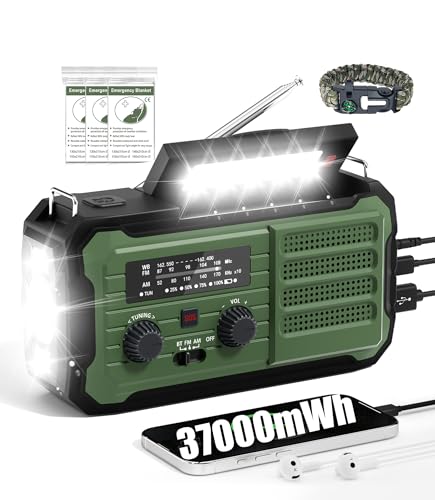
- 37000mWh battery with solar and hand-crank charging
- Automatic scanning across seven NOAA channels
- Includes thermal blanket and survival paracord bracelet
Best For: Families wanting a radio plus lightweight preparedness accessories
Premium Outdoor Communicator
Midland ER310PRO Weather Radio
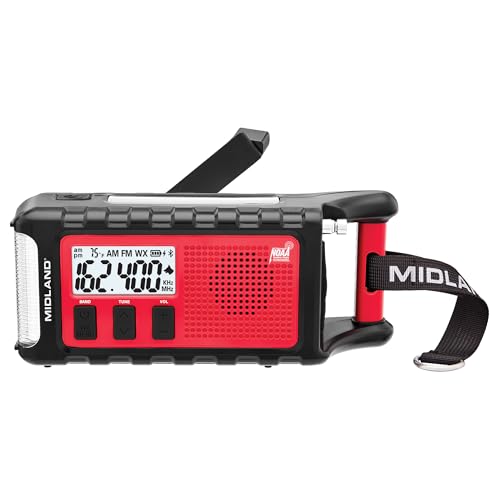
- Automatic seven-channel NOAA weather scan and alerts
- Solar, hand-crank, and 10000mAh power-bank functions
- Bluetooth, 130-lumen flashlight, beacon, and rescue siren
Best For: Families wanting emergency coverage with everyday Bluetooth utility
Best Compact Pick

- NOAA, AM, and FM reception
- Three power sources plus 2000mAh charging bank
- Compact body with bright LED flashlight
Best For: Portable family emergency kits and power outages
Best Feature-Rich Pick

- NOAA weather scan and alerts
- Solar power and six included AA batteries
- SOS flashlight and ultrasonic dog whistle
Best For: Preparedness kits needing extra signaling features
Best Warranty Pick
FosPower A1 Emergency Weather Radio

- NOAA, AM, FM, and weather-band reception
- 2000mAh power bank with crank, solar, and AAA power
- Flashlight, reading light, SOS alarm, and limited lifetime warranty
Best For: Home emergency stations and extended outages
Best High-Capacity Pick
Leaton 10000mAh Emergency Radio

- Large 10000mAh internal battery
- Solar, hand-crank, and USB-C charging
- Manual NOAA tuning with versatile lighting
Best For: Families prioritizing backup power and compact emergency lighting
Best Alert-Focused Pick
Raynic Automatic NOAA Emergency Radio

- Automatic NOAA alert scanning
- Six charging options and LCD display
- Includes SOS alarm, lights, and headphone jack
Best For: Families wanting automated weather alerts and flexible charging
Best Compact Budget Pick

- Lightweight 7.55-ounce design
- Solar, USB, and hand-crank charging
- 140-lumen flashlight with SOS alarm
Best For: Families needing a small radio for cars, go-bags, and basic kits
High-Capacity Weather Hub – 12000mAh Hand-Crank Solar Radio
For families comparing emergency radios for families, this model combines NOAA, AM, and FM reception with several ways to stay powered. Its large battery, lighting, USB charging, and water-resistant design make it a versatile home, car, camping, or blackout-kit option.
Best For: Families wanting one high-capacity radio for weather updates, lighting, device charging, and outdoor emergencies.
Pros:
- 12000mAh battery can power the radio, lights, SOS function, and provide backup USB charging.
- Receives seven NOAA weather broadcasts along with AM/FM stations.
- Includes an 8500mm² solar panel, hand crank, Type-C input, flashlight, reading lamp, and 120dB SOS alarm.
Cons:
- Its 1.6-pound weight is higher than that of a basic portable radio.
- NOAA reception requires the radio to be powered on and tuned to a NOAA station.
This is a feature-rich choice when family preparedness calls for more than weather reception. The large battery and multiple power options are useful during extended outages, while the IPX6 water-resistant design adds flexibility for rainy outdoor conditions.
Family Communication Kit – Four-Pack NOAA Walkie Talkies
For households that need to coordinate during outings or when cellular service is unavailable, this four-pack offers a practical communication setup. These emergency radios for families include FRS channels, NOAA weather alerts, rechargeable batteries, headsets, and hands-free VOX operation.
Best For: Families, groups, and camping parties that need several radios for local communication.
Pros:
- Four radios include four 1500mAh batteries, headsets, belt clips, and lanyards.
- Offers 22 FRS channels, NOAA weather alerts, channel scanning, keypad lock, and VOX.
- USB-C charging works with power banks, computers, cars, and other USB outlets.
Cons:
- They are not water resistant.
- Advertised range varies by conditions, with buildings, trees, and hills reducing distance.
- The package does not include a US wall plug.
This kit is more focused on family-to-family communication than on broadcasting news or weather information. The included headsets and four-radio format are useful for coordinated activities, but users should expect shorter range in built-up or obstructed areas.
Preparedness Bundle – 10000mAh Solar Weather Radio
This emergency radio for families pairs a rechargeable weather radio with basic survival accessories. It offers hand-crank and solar charging, automatic NOAA weather scanning, device charging, lighting, and an SOS alarm, along with a thermal blanket and multi-tool paracord bracelet.
Best For: Families who want a compact emergency-radio bundle with a few additional signaling and survival accessories.
Pros:
- 37000mWh rechargeable capacity with hand-crank, solar, and internal battery charging options.
- Automatically scans seven NOAA weather channels, including while in standby mode.
- Includes a flashlight, headphone jack, USB port, SOS alarm, thermal blanket, and paracord bracelet.
Cons:
- The supplied details do not specify dimensions, water-resistance rating, or radio-band coverage beyond NOAA weather reception.
- Accessory usefulness may vary depending on the family’s existing emergency supplies.
This bundle stands out for families assembling a broader preparedness kit rather than buying a radio alone. Automatic weather scanning is especially convenient, while the included blanket and bracelet add lightweight signaling and basic outdoor utility.
Premium Outdoor Communicator – Midland ER310PRO Weather Radio
The Midland ER310PRO is a polished option for families comparing emergency radios for families and wanting everyday entertainment alongside emergency features. It combines NOAA weather scanning and alerts with AM/FM reception, Bluetooth streaming, solar and hand-crank charging, a power bank, and rescue signaling.
Best For: Families wanting a branded emergency radio that also works as a Bluetooth speaker and device charger.
Pros:
- NOAA Weather Scan automatically searches seven weather channels and locks onto the strongest signal.
- Provides solar and hand-crank charging plus a 10000mAh power bank for external devices.
- Includes Bluetooth streaming, a 130-lumen CREE LED flashlight, Morse-code beacon, and rescue dog siren.
Cons:
- It is larger than some compact emergency radios at 8.1 inches long.
- The supplied details do not list a water-resistance rating.
- Bluetooth streaming is useful for entertainment but depends on a paired phone or tablet.
This is a strong fit for households that want emergency functionality without giving up everyday usefulness. Automatic weather scanning and multiple charging methods support preparedness, while Bluetooth and the power bank make the radio practical outside of emergencies.
Best Compact Pick – RunningSnail Hand Crank Radio
For families building a practical emergency kit, the RunningSnail hand crank radio combines NOAA, AM, and FM reception with several backup power options. Its compact design, phone-charging capability, and bright flashlight make it a versatile choice for outages, storms, camping, and evacuation situations.
Best For: Families wanting a lightweight, rechargeable emergency radio with multiple power sources.
Pros:
- Receives NOAA, AM, and FM broadcasts with a retractable antenna.
- Offers hand-crank, solar, and built-in rechargeable-battery power.
- Includes a 2000mAh power bank for emergency USB device charging.
- Compact 5-inch design and bright 1W LED flashlight are easy to store or carry.
Cons:
- Its 2000mAh battery may provide limited charging capacity for larger devices.
- The radio is water repellent rather than fully waterproof.
This is a well-rounded option for families who prioritize portability and flexible charging. It is especially convenient when storage space is limited, though households needing a larger battery or stronger weather protection may want to compare alternatives.
Best Feature-Rich Pick – Midland ER310 Emergency Radio
The Midland ER310 is a practical choice for families seeking a dedicated emergency radio with multiple preparedness features. It combines AM/FM reception, weather scanning and alerts, a flashlight, SOS signaling, and an ultrasonic dog whistle in one unit.
Best For: Families who want extra signaling and preparedness features in addition to basic weather-radio access.
Pros:
- Includes NOAA weather scan and alert functionality.
- Provides multiple power sources, including solar power and six included AA batteries.
- Features an SOS emergency flashlight and ultrasonic dog whistle.
- Supports USB connectivity for compatible smartphones and tablets.
Cons:
- Supports AM/FM bands but does not list a separate weather-band tuner in the supplied specifications.
- It is not water resistant.
- At 16 ounces, it is heavier than some compact emergency radios.
The ER310 stands out when a family values signaling tools and included battery backup. Its lack of water resistance means it should be stored in a protected location, particularly in areas prone to heavy rain or flooding.
Best Warranty Pick – FosPower A1 Emergency Weather Radio
The FosPower A1 is a strong contender among emergency radios for families because it pairs NOAA, AM, FM, and weather-band access with a 2000mAh power bank. Its crank, solar, and AAA-battery options help maintain access to broadcasts, lighting, and emergency charging during a prolonged outage.
Best For: Families wanting broad broadcast access, dual lighting, and a long warranty.
Pros:
- Receives NOAA emergency broadcasts along with AM, FM, and weather-band signals.
- Offers solar, hand-crank, and four AAA-battery power options.
- Includes a 2000mAh power bank, 1W flashlight, and four-LED reading light.
- Backed by a limited lifetime warranty and designed with water resistance.
Cons:
- Requires four AAA batteries when crank or solar power is not being used.
- Its 310-gram weight and larger body are less pocket-friendly than the smallest radios.
With broad radio coverage, two light sources, and a limited lifetime warranty, the FosPower A1 is suited to a family emergency station or home preparedness bin. It is a little larger than ultra-compact models, but the added features can be useful during extended outages.
Best High-Capacity Pick – Leaton 10000mAh Emergency Radio
For families comparing emergency radios for families, the Leaton stands out when backup charging capacity matters. Its 10000mAh internal battery can provide approximately 1–1.5 iPhone 14 charges, while solar, hand-crank, and USB-C charging offer added flexibility during outages.
Best For: Families wanting a compact emergency radio with a large battery, lighting, and splash resistance for home or outdoor kits.
Pros:
- 10000mAh rechargeable battery with USB phone-charging output.
- Three lighting modes plus a built-in reading lamp.
- IPX6 water-resistant design with compass and compact size.
- Supports solar, hand-crank, and USB-C charging.
Cons:
- NOAA listening requires manual tuning.
- It does not provide SAME or automatic NOAA alerts.
- IPX6 protection is for splashes and spray, not immersion.
The Leaton is a strong choice when power-bank capacity and versatile lighting are higher priorities than automated weather alerts. Its large battery is useful, but actual phone-charging results vary with conversion loss and device efficiency.
Best Alert-Focused Pick – Raynic Automatic NOAA Emergency Radio
The Raynic is a practical option for families comparing emergency radios for families who want weather notifications without continuously monitoring a broadcast. Its automatic NOAA alert feature, digital tuning, LCD display, and multiple charging methods make it well suited to preparedness at home or outdoors.
Best For: Families who value automatic NOAA alerts, clear digital controls, and several backup power options.
Pros:
- Automatically scans for and announces NOAA emergency alerts, including in standby mode.
- Digital tuning and a large LCD display show frequencies and battery level.
- Six charging options include AC, USB, hand crank, solar, rechargeable battery, and AAA batteries.
- Includes a flashlight, reading lamp, SOS alarm, USB output, and headphone jack.
Cons:
- AAA batteries are not included.
- Its IPX3 water resistance is more limited than higher-rated models.
- At about 1.2 pounds, it is less pocket-friendly than the compact Esky.
For households that want automated warning capability, the Raynic is the most feature-focused choice in this group. The LCD and digital tuning also make it easier to operate than a fully manual radio, while the headphone jack can help avoid disturbing others.
Best Compact Budget Pick – Esky Pocket Emergency Radio
For families seeking emergency radios for families that are easy to store in a car, suitcase, or go-bag, the Esky offers a lightweight design and straightforward core features. It combines AM/FM/NOAA reception, solar and hand-crank charging, a 2000mAh battery, flashlight, and SOS alarm in a small package.
Best For: Families wanting a lightweight backup radio for basic emergency lighting, weather updates, and portable kits.
Pros:
- Very compact and lightweight at about 7.55 ounces.
- Three charging methods: USB, solar, and hand crank.
- Built-in 140-lumen, three-LED flashlight and SOS alarm.
- Battery provides approximately 20 hours of flashlight use or 9 hours of radio use when fully charged.
Cons:
- Its 2000mAh battery offers less capacity than the larger models.
- The supplied notes do not indicate automatic NOAA alerts or digital tuning.
- It lacks the Raynic’s headphone jack and broader charging selection.
The Esky is a sensible minimalist option for distributing radios across family emergency kits or keeping one in each vehicle. Its smaller battery limits backup charging capacity, but the low weight and bright flashlight make it convenient for basic preparedness.
How We Picked the Best Emergency Radios for Families
We focused on features that matter during outages, storms, evacuations, and other disruptions: NOAA weather-band access, AM/FM reception, dependable backup charging, battery capacity, flashlight usefulness, portability, and phone-charging capability. We also included a mix of dedicated weather radios and two-way radios so families can match the product to their emergency plan.
Hand-crank and solar charging are valuable when wall outlets are unavailable, but they work best as backup methods rather than instant replacements for a fully charged battery. Models with larger batteries may provide more phone-charging capacity, while compact radios are easier to keep in an emergency kit or vehicle.
Quick Comparison
| Feature | What to look for | Why it matters |
|---|---|---|
| Weather alerts | NOAA Weather Radio and alert functions | Provides timely storm and hazard information |
| Backup charging | Hand crank, solar panel, USB input, or replaceable batteries | Offers options when the power grid is down |
| Battery capacity | Measured in mAh or mWh | Indicates potential runtime and phone-charging capacity |
| Communication | AM/FM/SW radio or two-way FRS communication | Supports news listening or family coordination |
| Emergency lighting | Bright flashlight or multiple LEDs | Helps with nighttime movement and visibility |
Key Buying Factors for Emergency Radios for Families
Weather Reception and Alerts
Prioritize NOAA capability if your household lives in an area affected by hurricanes, tornadoes, winter storms, floods, or wildfires. An alert feature can be especially useful when nobody is actively listening, although reception varies by location and terrain.
Charging and Power
Choose a radio with more than one charging method. A USB-rechargeable battery is convenient for routine use, while a hand crank provides an independent fallback. Solar charging can help during extended outages but is slower and depends on daylight. If phone charging is important, compare battery ratings and confirm that the radio includes a suitable USB output.
Family Communication and Usability
Two-way radios can be more useful than broadcast-only models when family members need to communicate around a property or during an evacuation. Look for simple controls, readable indicators, durable construction, and a size that every household member can operate.
Lighting, Audio, and Portability
A built-in flashlight adds value, but check whether it is a focused beam or several low-power LEDs. Consider headphone support if you want quiet listening, and choose a lightweight design for go-bags. Keep the radio charged and test its stations, alert settings, flashlight, and charging ports before an emergency.
Who Should Buy Which Emergency Radios for Families?
Choose a feature-rich crank-and-solar radio with a larger battery if your priority is extended outages and occasional phone charging. A compact NOAA radio is a better fit for a minimalist home kit, apartment, or vehicle. Families that need direct room-to-room or outdoor communication should consider rechargeable FRS walkie-talkies, ideally alongside a separate weather-alert radio. If nighttime readiness is the main concern, select a model with a strong flashlight or multiple LEDs. Regardless of style, keep one radio accessible, maintain its charge, and pair it with spare cables, batteries where supported, and a household emergency plan.