Cold weather can sharply reduce battery performance, especially in RVs, boats, and off-grid solar systems. Choosing the right battery helps you keep power available when temperatures drop.
Below, we focus on the best options for winter reliability, with an emphasis on low-temperature charging protection, self-heating features, and dependable deep-cycle performance.
Best 10 Deep Cycle Batteries for Winter Use Picks for 2026
Heavy-Duty Heated Lithium
12V 314Ah Self-Heating Battery

- Self-heating pad supports cold-weather charging
- IP67 sealed for dust and water resistance
- High 314Ah capacity for demanding systems
Best For: Cold-climate RV, marine, and off-grid power systems
Reliable Cold-Weather AGM

- Discharge performance rated from -4 to 140°F
- Sealed AGM design with stable chemistry
- Low self-discharge for storage
Best For: Winter discharge use in RVs, cabins, and backup setups
Ultra-Large Winter-Use LiFePO4
12V 600Ah High-Capacity Battery

- 600Ah capacity with 7.2 kWh reserve
- 200A BMS with low-temp cutoff protection
- Series and parallel expansion supported
Best For: Large off-grid or home storage systems in cold weather
Winter-Ready AGM Choice
Weize 12V 100Ah AGM Deep Cycle Battery

- Sealed AGM construction with maintenance-free use
- 1-3% monthly self-discharge for storage
- Charging/discharging ranges listed for cold weather
Best For: RV, solar, and marine users who want an AGM battery for cold-season use
Cold-Weather Lithium Pick
LiTime 12V 100Ah Self-Heating RV Battery

- Self-heating modes support cold-weather charging
- Bluetooth app monitoring for battery status
- Lightweight 22.71 lb LiFePO4 build
Best For: RV and camper owners who need lithium power that can handle winter charging
High-Cycle Winter Lithium
12V 100Ah Group 31 LiFePO4 Battery

- Low-temp charge cut-off at 32°F protects cells
- 15,000+ cycle rating for long service life
- Lightweight Group 31 drop-in format
Best For: People who want a Group 31 lithium battery with winter charging protection
Winter-Ready Power Hub
LiTime 12V 320Ah Mini Self-Heating LiFePO4 Battery

- 2 heating modes for cold-weather charging
- 4096Wh capacity with 2560W continuous output
- Bluetooth app monitoring and IP65 protection
Best For: Large RV, marine, and off-grid systems needing winter-capable storage
Fast-Heating Compact Choice
Redodo 12V 100Ah Self Heating LiFePO4 Battery

- 100W dual-pad heating for faster cold-weather charging
- Low-temp cut-off protection for winter safety
- Lightweight 23.32 lb design with 4000-cycle rating
Best For: Lightweight winter-ready RV, solar, and marine setups
Rapid Warm-Up Group 31 Pick
Redodo 12V 100Ah Self-Heating Deep Cycle Battery
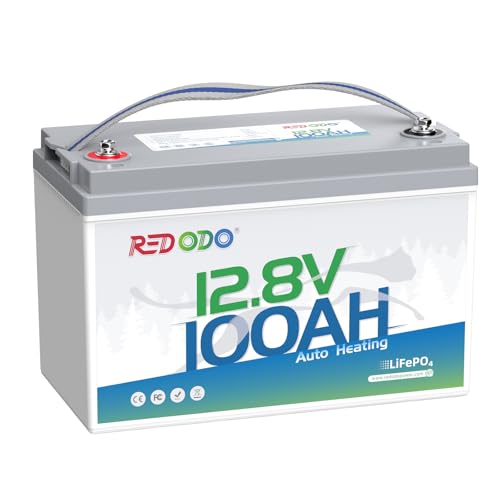
- Heats cells from 14°F to 41°F in about 30 minutes
- 100W dual pads and low-temp cut-off protection
- 23.32 lb Group 31 battery with 100A BMS
Best For: Group 31 users needing faster winter charging and protection
Winter-Ready Compact LiFePO4 – 12V 100Ah Low-Temp RV Battery
If you’re comparing deep cycle batteries for winter use, this 12V 100Ah LiFePO4 option is built for cold-weather RVs, boats, and solar storage. Its low-temperature protection adds an important layer of safety when charging in freezing conditions, while the 100A BMS helps manage everyday protection and reliability.
Best For: RV owners, boaters, and solar users who want a compact lithium battery with low-temp protection.
Pros:
- Low-temperature protection helps guard charging in winter conditions.
- 100A BMS supports battery protection during regular use.
- 12V 100Ah size works well for RV, boat, and solar setups.
- Rechargeable LiFePO4 design is made for deep-cycle applications.
Cons:
- Single-battery capacity may be limited for larger off-grid loads.
- The notes do not list an IP rating or self-heating feature.
For shoppers who want a straightforward winter-capable lithium battery, this model focuses on low-temp protection rather than extra premium features. It’s a practical fit when you need dependable cold-weather charging support without moving up to a larger system.
Heavy-Duty Heated Lithium – 12V 314Ah Self-Heating Battery
Among deep cycle batteries for winter use, this 12V 314Ah LiFePO4 stands out for its built-in self-heating pad and IP67 sealing. It is designed for cold climates, snow camping, marine conditions, and off-grid systems where protection from water, dust, and low temperatures matters.
Best For: RV, marine, and off-grid users who need a high-capacity battery with self-heating and waterproof protection.
Pros:
- Built-in self-heating pad activates below 0°C during charging.
- IP67 rating protects against dust, water, and brief submersion.
- Grade A cells and smart BMS support safety and long cycle life.
- Large 314Ah capacity is suited to demanding power needs.
Cons:
- Self-heating only operates during charge cycles.
- Higher-capacity design may be more than casual users need.
This is a strong pick if winter performance is a top priority and you want more than just low-temp cutoff protection. The combination of self-heating, sealed construction, and expandable system support makes it well suited to tougher cold-weather installs.
Reliable Cold-Weather AGM – 12V 100Ah Deep Cycle AGM
If you want deep cycle batteries for winter use without moving to lithium, this 12V 100Ah AGM battery is a solid alternative. Renogy highlights improved discharge performance from -4 to 140°F, plus a sealed design and stable chemistry that reduce troubleshooting in RV and cabin setups.
Best For: Buyers who want a safe, sealed AGM battery for winter discharging in RVs or cabins.
Pros:
- Improved electrolyte formula supports discharge in extreme temperatures.
- Sealed AGM construction offers higher chemical stability.
- Works with series and parallel configurations.
- Low monthly self-discharge helps storage readiness.
Cons:
- Lead-acid AGM is heavier than comparable lithium options.
- Warranty is shorter than many premium lithium batteries.
This battery makes sense when you want proven AGM reliability and cold-weather discharge performance in a familiar form factor. It is a practical choice for users who value simplicity and safety over the longer cycle life and lower weight of lithium.
Ultra-Large Winter-Use LiFePO4 – 12V 600Ah High-Capacity Battery
For shoppers comparing deep cycle batteries for winter use at a larger scale, this 12V 600Ah LiFePO4 battery offers serious storage capacity plus low-temperature protection. Its built-in 200A BMS helps manage overcharge, overheating, and cold-weather cutoff behavior for off-grid, RV, solar, and home storage applications.
Best For: High-demand users who need a large-capacity battery with cold-weather cutoff protection.
Pros:
- 600Ah capacity delivers a large 7.2 kWh energy reserve.
- Built-in 200A BMS adds protection against common battery faults.
- Low-temperature cutoff prevents charging below 0°C and discharging below -20°C.
- Supports series and parallel expansion for bigger systems.
Cons:
- Very heavy at 107.8 lb, so installation is less convenient.
- Notes state battery performance requires temperatures of 5°C or higher.
This model is best viewed as a large-scale power solution rather than a portable winter battery. If your setup needs substantial storage with built-in cold-weather safeguards, it offers a lot of capacity in one unit.
Winter-Ready AGM Choice – Weize 12V 100Ah AGM Deep Cycle Battery
If you want deep cycle batteries for winter use and prefer a proven AGM option, this Weize 12V 100Ah battery is built around low maintenance and stable cold-weather performance. It is sealed, supports storage with a low self-discharge rate, and lists charging and discharging temperature ranges that make it a practical fit for RVs, solar, marine, and off-grid systems that may sit unused between trips.
Best For: Buyers who want a sealed AGM deep cycle battery for RV, solar, or backup power in cold seasons.
Pros:
- Sealed AGM design helps prevent acid leakage and reduces upkeep.
- Low self-discharge of 1-3% per month is useful for longer storage periods.
- Works across RV, solar, trolling motor, marine, camping, and UPS applications.
- Rated for charging down to 14°F (-10°C) and discharging to 5°F (-15°C).
Cons:
- Heavier than lithium alternatives at 57 pounds.
- Cold-weather charging is still limited by the stated temperature range.
- Only a 1-year warranty.
Overall, this is the straightforward choice if you want a familiar deep-cycle AGM battery with cold-weather specs and easy drop-in use. It is not the lightest or longest-lasting option, but it offers dependable lead-acid utility for seasonal winter setups.
Cold-Weather Lithium Pick – LiTime 12V 100Ah Self-Heating RV Battery
For deep cycle batteries for winter use, this LiTime 12V 100Ah self-heating LiFePO4 stands out because it is designed specifically to handle cold charging needs. The battery includes two heating modes, Bluetooth monitoring, and a lightweight build, making it a strong option for RV owners who want a modern battery that stays manageable in freezing conditions.
Best For: RV and trailer owners who need a lithium battery with self-heating support for cold weather charging.
Pros:
- Self-heating design includes regular and energy-efficient modes for cold-weather charging.
- Bluetooth 5.0 lets you monitor battery status in the LiTime app.
- Much lighter than lead-acid at 22.71 pounds.
- Rated for 4000+ deep cycles and a 10-year life.
Cons:
- Not intended for starting batteries, golf carts, or jacks.
- Requires compatible charging to activate Bluetooth after first receipt or switching off.
- Higher-tech feature set may be more than needed for simple battery swaps.
This is a strong winter-focused upgrade if cold charging is your main concern. The self-heating feature gives it a clear advantage over standard lithium and lead-acid batteries when temperatures drop.
High-Cycle Winter Lithium – 12V 100Ah Group 31 LiFePO4 Battery
If you are comparing deep cycle batteries for winter use and want a compact lithium upgrade, this 12V 100Ah Group 31 LiFePO4 battery offers low-temperature charge protection and a wide discharge range. It is built for RVs, boats, and home energy systems, with a lightweight form factor that makes it easy to replace a traditional Group 31 lead-acid battery.
Best For: Users who want a Group 31 lithium battery with cold-weather protection and long cycle life.
Pros:
- Automatic low-temperature cut-off helps prevent charging below 32°F (0°C).
- Very high cycle life, with 15,000+ cycles at 60% DOD.
- Lightweight at 24 pounds and sized for BCI Group 31 boxes.
- Supports fast charging and system expansion up to 4S4P.
Cons:
- Does not include self-heating, only low-temperature charging protection.
- Best fit is tied to Group 31 dimensions and compatible setups.
- Charging requires the correct LiFePO4 charging profile.
This battery makes sense if you want lithium performance without giving up cold-weather safeguards. It is especially appealing for buyers focused on long service life and a drop-in Group 31 replacement.
Winter-Ready Power Hub – LiTime 12V 320Ah Mini Self-Heating LiFePO4 Battery
If you need deep cycle batteries for winter use that can keep larger loads running, this LiTime 12V 320Ah battery is built for cold-weather reliability. Its self-heating system and low-temp protection are designed to support charging in chilly conditions, while the 4096Wh capacity and 2560W continuous output make it a strong fit for RV, marine, and off-grid power needs.
Best For: RV owners, boaters, and off-grid users who need a high-capacity battery with self-heating support for winter trips.
Pros:
- 2 heating modes, including an energy-efficient option for cold-weather charging
- Large 320Ah / 4096Wh capacity with 2560W max continuous output
- 35% smaller and 70% lighter than three lead-acid 12V 100Ah batteries
- Bluetooth 5.0 and LiTime app for real-time monitoring
Cons:
- At 57.3 lbs, it is still a substantial battery to handle and install
- Best suited to systems that can use its large capacity and output
Overall, this is a strong pick if winter performance and high storage are both priorities. The self-heating design, cold-weather protection, and durable IP65 build make it practical for demanding seasonal use.
Fast-Heating Compact Choice – Redodo 12V 100Ah Self Heating LiFePO4 Battery
For buyers comparing deep cycle batteries for winter use, this Redodo 12V 100Ah model focuses on quick heating and cold-temp protection in a light package. The 100W dual-pad heating system activates below 41°F and is designed to resume charging once the battery warms up, making it a practical option for RV, solar, marine, and off-grid setups in cold conditions.
Best For: RV, solar, and marine users who want a lightweight self-heating battery with faster winter warm-up.
Pros:
- 100W dual heating pads for faster warm-up in cold weather
- Low-temp cut-off protection helps prevent charging and discharging in unsafe conditions
- Only 23.32 lbs, making it far easier to move and install than AGM batteries
- 100A BMS and Grade A cells with 4000 cycles at 100% DOD
Cons:
- Not intended for starter batteries, golf carts, or high-power devices
- 100Ah capacity may be too small for users needing longer runtime
This model stands out if you value portability and reliable cold-weather charging more than sheer capacity. It combines solid safety features with a compact build that fits well in winter-ready mobile power systems.
Rapid Warm-Up Group 31 Pick – Redodo 12V 100Ah Self-Heating Deep Cycle Battery
If you’re shopping for deep cycle batteries for winter use and want a Group 31-sized option, this Redodo 12V 100Ah battery emphasizes fast heating and low-temp protection. Its dual 100W heating pads can warm the cells from 14°F to 41°F in about 30 minutes, and the battery is designed to stop charging below freezing and stop discharging in extreme cold.
Best For: Users who want a Group 31-format self-heating lithium battery for RV, marine, or solar applications.
Pros:
- Dual 100W heating pads heat faster than lower-power alternatives
- Low-temp cut-off helps protect the battery in freezing conditions
- Lightweight 23.32 lb build is much easier to handle than AGM
- 100A BMS and Grade A cells support long service life and strong protection
Cons:
- Not suitable for starter batteries or golf carts
- 100Ah capacity may not meet the needs of larger power-hungry systems
This is a practical winter-ready choice if you want fast recovery in the cold without adding much weight. The combination of rapid heating, built-in protection, and Group 31 versatility makes it easy to slot into common mobile and off-grid setups.
How We Picked the Best Deep Cycle Batteries for Winter Use
For Deep Cycle Batteries for Winter Use, we prioritized cold-weather charging protection, usable capacity, battery chemistry, safety features, and overall suitability for RV, marine, and solar applications. We also favored models with low self-discharge, robust BMS protection, and clear winter-friendly design features such as self-heating or low-temp cutoff.
Quick Comparison
In general, LiFePO4 batteries offer lighter weight, deeper usable capacity, and better cycle life, while AGM batteries remain a simpler plug-and-play choice for users who want proven performance in colder conditions without a battery management system. Self-heating LiFePO4 models are especially useful for regular winter charging, while low-temp protected batteries are a strong fit for occasional cold-weather use.
Key Buying Factors for Deep Cycle Batteries for Winter Use
Cold-Weather Charging Behavior
Not every battery can safely charge below freezing. If your setup will see sub-32°F temperatures, look for low-temperature protection or self-heating so the battery can warm itself before charging begins.
Battery Chemistry
LiFePO4 batteries usually deliver more usable energy and longer service life, but they need proper cold-weather safeguards. AGM batteries are more forgiving in simple setups and can be a practical choice if you want straightforward winter performance.
Capacity and Real-World Runtime
Winter conditions often increase power demand through heating, lighting, and longer generator or inverter use. Choose capacity with margin, especially if you power a furnace fan, trolling motor, or inverter loads.
Protection and Installation Fit
Check the BMS rating, terminal style, size, and enclosure protection. For marine or exposed installs, weather resistance and vibration tolerance matter more than raw amp-hours alone.
Who Should Buy Which Deep Cycle Batteries for Winter Use?
If you want the simplest winter-ready upgrade, an AGM battery is often the least complicated option. If you need lighter weight, faster charging, and longer cycle life, choose a LiFePO4 model with self-heating or low-temperature protection. For larger off-grid or RV systems, higher-capacity batteries can reduce depth of discharge and improve winter reserve power. Match the battery to your charging source, climate, and daily load so you get dependable performance all season long.