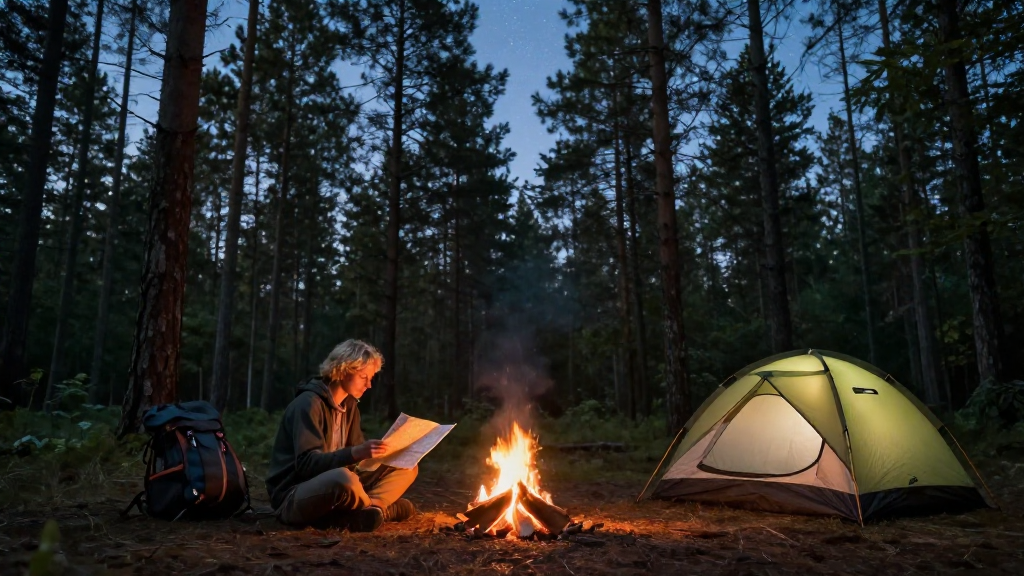
In today’s digital age, many outdoor enthusiasts heavily rely on technology for navigation. However, camping without GPS can be a thrilling adventure that reconnects you with nature and hones your survival skills.
Why Camp Without GPS?
Camping without GPS might seem daunting, but it offers a range of benefits:
- Enhances navigation skills: You will learn to read topographic maps and use a compass, skills essential for any adventurer.
- Encourages mindfulness: With fewer distractions, you can immerse yourself in the serene surroundings of the great outdoors.
- Promotes teamwork: Group camping often requires collaboration in navigation, enhancing group dynamics.
- Increases appreciation for nature: Without the constant chirping of notifications, your senses become more attuned to the beauty of your surroundings.
What Equipment Do You Need for Camping Without GPS?
Preparation is key to a successful camping trip. Here’s a list of essential gear you’ll want to have when navigating camping without GPS:
-
Topographic Maps: These maps provide detailed information about terrain, elevation, and trails. Familiarize yourself with reading these before your trip.
-
Compass: A reliable compass is crucial. It can help you orient your map and find your way, even when visibility is poor.
-
Whistle: In emergencies, a whistle can signal for help far better than shouting.
-
First Aid Kit: Safety should always be your priority.
-
Flashlight or Headlamp: Especially when venturing in the dark, a light source is essential.
-
Multi-tool or Knife: Useful for various tasks, from meal prep to minor repairs.
-
Notebook and Pencil: Jot down notes for navigation or record your experiences.
How to Read a Topographic Map?
Learning to read topographic maps is a crucial skill when camping without GPS. Here are the steps to help you navigate:
-
Understand Contour Lines: These lines indicate elevation changes. Close lines represent steep terrain, while widely spaced lines indicate gentle slopes.
-
Identify Landmarks: Familiarize yourself with notable features in your area, like rivers or mountain peaks, which can help orient you.
-
Know Your Scale: Understand the map’s scale to gauge distances accurately. For example, a 1:24,000 scale map means one inch on the map equals 24,000 inches in reality.
-
Use Grid Coordinates: Some topographic maps have a grid system. Learn to find your location using the grid for precise navigation.
How Do You Use a Compass?
Using a compass effectively is vital when camping without GPS. Here’s a simple guide:
-
Hold the compass level: Ensure it is flat to get an accurate reading.
-
Find North: Rotate the compass until the magnetic needle aligns with the North marker. This shows you which direction is north.
-
Set a Bearing: To navigate to a specific point, point the direction of travel arrow at your destination. Rotate the compass housing until the needle is inside the orienting arrow. The bearing on the compass can now guide you.
-
Follow the Bearing: Keep that bearing by adjusting your direction as you walk.
What are Some Tips for Off-Grid Navigation?
Here are some practical tips for successful off-grid navigation while camping without GPS:
-
Always Plan: Prepare your route ahead of time, ensuring you have all necessary maps and information. Consider potential hazards and obstacles along the way.
-
Share Your Plans: Inform friends or family about your itinerary and expected return time. This adds a layer of safety.
-
Use Landmarks: Familiarize yourself with major natural features in the area, like rivers and mountains, to help orient and reassure you while navigating.
-
Backtrack if Necessary: If you feel lost, retrace your steps to a familiar landmark instead of forging ahead.
-
Practice Makes Perfect: Before hitting the trails, practice using your compass and maps in a local area.
How Can You Navigate at Night?
Navigating while camping without GPS can become especially challenging after dark. Here are some strategies:
-
Use a Headlamp: A reliable light source is your best ally during nighttime navigation.
-
Practice Night Navigation Skills: Familiarize yourself with your compass and map during daylight before trying at night.
-
Identify Nighttime Landmarks: Recognize distinct features that can be seen at night, as natural markers can help orient you.
-
Follow a Straight Line: When moving in the dark, keep your focus straight ahead to avoid getting disoriented.
What Should You Include in Your Camping Checklist?
When camping without GPS, being organized is essential. Here’s a handy checklist for your trip:
- Shelter: Tent, tarp, or hammock.
- Sleeping gear: Sleeping bag, sleeping pad, or extra blanket.
- Cooking equipment: Portable stove, cookware, utensils, and food.
- Water supplies: Water bottles and a purification method.
- Warm clothes: Dress according to the weather and include layers.
- Fire-making tools: Waterproof matches or a lighter.
- Emergency gear: Whistle, first aid kit, and bear spray (if needed).
How Do You Stay Safe While Camping Without GPS?
Safety should always be your top priority when camping without GPS. Here are some golden rules:
-
Set camp near a water source: While this is beneficial, ensure it’s not too close to reduce flooding risks.
-
Be mindful of the weather: Keep an eye on the forecast and adjust your plans accordingly.
-
Know local wildlife: Understand potential wildlife dangers and how to stay safe.
-
Travel with a buddy: Never go alone; having someone else provides support and safety.
Conclusion
Camping without GPS can be an enriching experience that reconnects you with nature while fostering crucial navigation skills.
By using a compass, reading a topographic map, and preparing smartly, you can navigate confidently and enjoy the serenity of the outdoors.
Remember, modern technology is a handy tool, but the true adventure lies in embracing the wilderness without it!
The next time you plan a camping trip, consider stepping into the wild and experiencing the thrill of navigating camping without GPS!