The right wading boots can make long days on the river safer, more comfortable, and less tiring. The best pair balances traction, drainage, support, fit, and durability for the water and terrain you fish most often.
We’ve selected 10 wading boots for different needs, from versatile interchangeable soles and dependable rubber designs to lightweight options and rugged boots for surf, sand, and technical streambeds.
Best 10 Wading Boots Picks for 2026
Budget-Friendly Traction

- Felt or cleated sole options
- Water-draining mesh and PVC upper
- Cushioned, supportive ankle-height design
Best For: Anglers seeking affordable, versatile traction
Rugged Felt Protection

- Quick-draining nylon weave upper
- Reinforced toe, heel, and side panels
- Felt sole with buffed edges
Best For: Anglers wanting durable felt-sole protection
Lightweight River Comfort

- 1.3 pounds per boot
- OrthoLite insoles and EVA midsoles
- Quick-draining, slip-resistant rubber design
Best For: Anglers combining hiking with river wading
Interchangeable Sole Versatility

- Felt and Kling-On soles included
- OmniTrax 3.0 interchangeable system
- Water channels and hydrophobic materials
Best For: Anglers needing adaptable traction across conditions
Best All-Around Pick

- Waterproof upper with toe and heel reinforcement
- Neoprene lining and EVA midsole for comfort
- Compatible with select Simms traction accessories
Best For: Anglers wanting waterproof boots with adaptable traction
Best for Reef and Beach Use
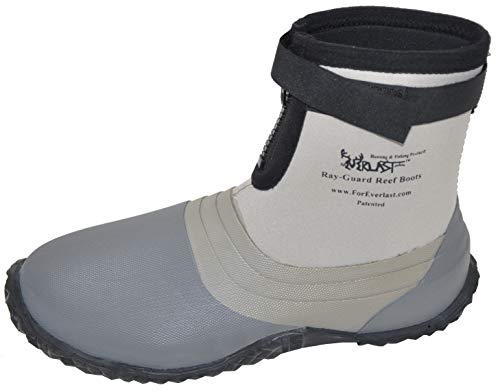
- Four-layer vulcanized rubber hard sole
- Drainage vent helps remove excess water
- Cuff and zipper provide a secure fit
Best For: Reef, beach, river-bottom, and boat-deck use
Best Traction Choice

- Choose cleated or felt outsole options
- Drainage ports help release water and block grit
- Protective toe, heel, and ankle-support features
Best For: Anglers needing terrain-specific traction and drainage
Stud-Ready River Traction
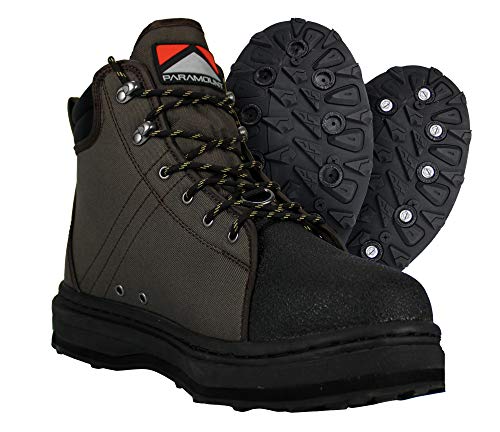
- Cleated rubber outsole accepts included steel studs
- Reinforced toe cap and stiff midsole
- Padded collar with speed-lace closure
Best For: Fly fishing on slick rocks and muddy river banks
Lightweight All-Around Grip
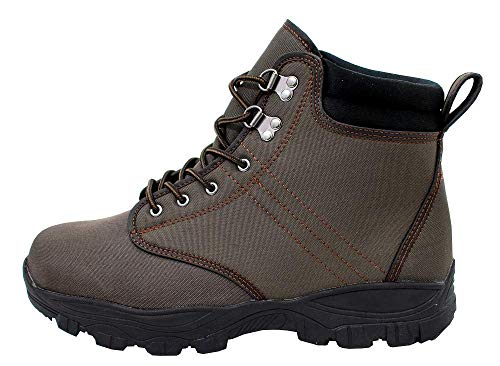
- Felt or lugged outsole options
- Water-draining 1000-denier nylon upper
- Padded collar and EVA midsole
Best For: Anglers seeking versatile traction and easy lacing
Sand-Blocking Surf Protection

- 5mm neoprene shell for snug coverage
- Cleated rubber athletic outsole
- Gusseted zipper helps keep grit out
Best For: Surf fishing and sandy or rocky coastal terrain
Budget-Friendly Traction – FROGG TOGGS Hellbender
The FROGG TOGGS Hellbender is a practical choice for anglers seeking wading boots with a choice of cleated or felt soles. Its water-draining mesh and PVC upper, protective toe and heel caps, and cushioned midsole are suited to full days around wet rocks, gravel, mud, and debris.
Best For: Anglers who want affordable wading boots with a selectable sole for varied fishing environments.
Pros:
- Available with felt or cleated soles for different terrain.
- Water-draining mesh and PVC upper helps shed water.
- Padded ankle collar, polyurethane midsole, and wide wading last support comfort and stability.
- Speed laces with a locking clip make fitting quick and secure.
Cons:
- The listed warranty is limited to 60 days.
- They are described as not water resistant, despite the water-draining construction.
- The ankle-height design provides less coverage than taller boots.
The Hellbender emphasizes useful fishing features without an overly complex design. Choose the sole style according to your typical footing, and consider the limited warranty and ankle-height coverage before buying.
Rugged Felt Protection – BARE Kermode 2
The BARE Kermode 2 is a straightforward felt-sole option among wading boots, combining a rugged nylon weave with reinforced anti-abrasion protection. Its quick-draining upper and reinforced toe, heel, and side panels are designed for use across varied terrain.
Best For: Anglers who prioritize felt traction and reinforced protection on mixed terrain.
Pros:
- Rugged nylon weave allows water to drain quickly.
- Reinforced toe and heel caps extend to the side panels to reduce wear.
- Buffed felt sole edges are designed to help prevent fraying.
- Two-tone nylon weave and synthetic leather panels add structure.
Cons:
- Only a felt sole is specified, offering less sole versatility than interchangeable designs.
- The supplied notes provide limited information about cushioning or insole support.
- The ankle-height profile offers limited lower-leg coverage.
The Kermode 2 focuses on durability and felt-sole traction rather than a long list of comfort features. It is a sensible fit for anglers who know felt suits their regular fishing surfaces.
Lightweight River Comfort – Foxelli Wading Boots
Foxelli Wading Boots – Lightweight Fly Fishing Boots for Men, Rubber Sole Wading Shoes
Check Price On AmazonFoxelli wading boots are built for anglers who move between trails and riverbeds. The lightweight microfiber and nylon upper, removable OrthoLite insoles, EVA midsoles, rubber protection, and drainage ports balance walking comfort with practical wet-surface performance.
Best For: Anglers who want lightweight, flexible wading boots for hikes, river crossings, and all-day wear.
Pros:
- Lightweight design weighs 1.3 pounds per boot.
- OrthoLite insoles and shock-absorbing EVA midsoles help reduce fatigue.
- Slip-resistant rubber outsole tread channels water and debris.
- Drain ports, pull loop, lace hooks, and kick-log support practical use.
Cons:
- They are not insulated or fully waterproof.
- Thicker socks or cold-weather layers may require sizing up.
- The rubber sole does not offer the interchangeable sole flexibility of some alternatives.
Foxelli’s main advantage is its trail-to-water versatility. The drainage and comfort features suit moderate conditions, while anglers facing colder weather should plan around the uninsulated construction and sock thickness.
Interchangeable Sole Versatility – Korkers Greenback
The Korkers Greenback stands out among wading boots for its included interchangeable felt and Kling-On sticky rubber soles. Its OmniTrax 3.0 system, internal water channels, midsole ports, and hydrophobic materials are aimed at adaptable traction and faster drying between fishing trips.
Best For: Anglers who want to switch between felt and sticky rubber traction for changing conditions.
Pros:
- Includes both plain felt and Kling-On sticky rubber soles.
- OmniTrax 3.0 supports interchangeable sole options.
- Internal channels and midsole ports help remove water and excess weight.
- Hydrophobic materials are designed to speed drying and help reduce invasive-species spread.
Cons:
- At 2 pounds 7 ounces per pair in size 9, it is not the lightest option listed.
- Korkers recommends sizing up from a normal street-shoe size.
- The supplied details list a four-pound item weight, so buyers should verify the current specification.
The Greenback is the strongest choice here for sole adaptability. Its interchangeable system adds practical flexibility, though the recommended sizing adjustment and comparatively substantial weight are worth accounting for.
Best All-Around Pick – Simms Freestone Rubber Boot
Simms Men's Freestone Boot - Rubber Gunmetal 13 | Neoprene Lined, Lightweight, Scratch Resistant
Check Price On AmazonThe Simms Freestone Rubber is a practical choice among wading boots for anglers who want waterproof construction, underfoot cushioning, and a rubber outsole that supports optional cleat and stud configurations. Its calf-high design and reinforced toe and heel add useful coverage for varied conditions.
Best For: Anglers seeking waterproof rubber wading boots with comfort-focused construction and adaptable traction options.
Pros:
- Waterproof construction with a synthetic scratch-leather upper
- Reinforced toe and heel for added protection
- Partial neoprene lining supports comfort and easier on/off
- Rubber outsole works with compatible Simms cleats and studs
Cons:
- Optional cleats or studs are not included in the supplied details
- Calf-high construction may provide more coverage than some anglers need
The Freestone Rubber balances protection, comfort, and waterproofing in a versatile design. It is especially appealing if you may want to customize traction later with compatible Simms accessories.
Best for Reef and Beach Use – Ray-Guard Reef Wading Boot
The ForeverLast Ray-Guard is one of the more specialized wading boots in this roundup, built for uneven river bottoms, reefs, beaches, and boat decks. Its hard sole, ankle support, drainage vent, and secure cuff-and-zipper closure target wet environments where protection and water management matter.
Best For: Anglers and outdoor users navigating rocky reefs, uneven river bottoms, beaches, or boat decks.
Pros:
- Four-layer vulcanized rubber sole helps protect against sharp underwater terrain
- Lightweight design with strong ankle support
- Inside-sole vent helps drain excess water
- Hook-and-loop cuff plus zipper allows a more secure fit
Cons:
- Listed as water resistant rather than waterproof
- Ankle-high design provides less shaft coverage than taller wading boots
- Designed around hard-sole protection rather than interchangeable fishing traction
The Ray-Guard stands out when hard-soled protection and drainage are higher priorities than tall coverage. The cuff and zipper can also help create a more personalized fit in active shoreline settings.
Best Traction Choice – FROGG TOGGS Deep Current Boot
The FROGG TOGGS Deep Current is a rugged option among wading boots, with a choice of rubber cleated or felt outsoles depending on your fishing environment and local regulations. It adds drainage ports, toe and heel protection, ankle support, and a broad platform for navigating rocky and muddy terrain.
Best For: Anglers who want to select between cleated and felt traction for rocky shores, river bottoms, wet logs, and mud.
Pros:
- Available with either a cleated or felt outsole
- Micro-screen drainage ports release water while helping keep out sand and grit
- Toe and heel protection helps guard against stubs and sharp rocks
- Large heel pull and durable lacing support easier use
Cons:
- Listed as not water resistant
- Felt use may be restricted in some states or fishing areas
- Only a 60-day manufacturer warranty is specified in the supplied details
The Deep Current is a strong fit for anglers who need purpose-built traction and drainage rather than waterproofing. Choosing the outsole carefully is important, especially where felt regulations apply.
Stud-Ready River Traction – Paramount Outdoors Stonefly
Paramount Outdoors Stonefly Cleated Sole Wading Boot, Rubber Bottom Wading Shoe (12)
Check Price On AmazonThe Paramount Outdoors Stonefly is a versatile choice among wading boots for anglers who need dependable grip on moving water, slick rocks, and muddy banks. Its cleated rubber outsole accepts the included steel studs, while reinforced construction helps protect the foot in demanding river conditions.
Best For: Fly fishing in rivers and streams where adjustable traction and toe protection are priorities.
Pros:
- Cleated rubber outsole can be used with or without the included steel studs.
- Reinforced Rock Jam toe cap and stiff midsole provide lasting protection.
- Padded collar, heel pull, and speed-lace closure support comfortable use and easy removal.
- Gravel-guard D-ring attachment point helps secure compatible wader protection.
Cons:
- Designed for stockingfoot wader booties rather than standalone wear.
- At 1.65 kg, it may feel substantial compared with lighter footwear.
- Listed as not water resistant.
The Stonefly stands out for its configurable traction and reinforced build. It is a practical pick when riverbed grip and protection matter more than minimal weight.
Lightweight All-Around Grip – FROGG TOGGS Rana Elite
FROGG TOGGS Men's Rana Elite Waterproof Wading Boots for Fishing in Felt or Lugged Waders
Check Price On AmazonThe FROGG TOGGS Rana Elite is one of the more adaptable wading boots for anglers who want traction without an overly complicated fit. It is offered with either felt or lugged outsoles, and its water-draining nylon upper helps keep the boot light and nimble during fishing trips.
Best For: Anglers who want a choice of outsole style, cushioned support, and a quick-to-adjust lace system.
Pros:
- Available with felt or lugged outsoles for different traction preferences.
- Water-draining 1000-denier nylon upper helps reduce bulk and moisture retention.
- Padded collar, EVA midsole, and one-piece outsole provide comfort and support.
- Polymer lace loops and brass speed hooks make tightening straightforward.
Cons:
- Listed as not water resistant.
- Outsole choice requires deciding between the felt and lugged versions before purchase.
- The product is designed with a flat heel and ankle-height shaft rather than extended coverage.
With its outsole options and easy speed-lace system, the Rana Elite is a flexible choice for anglers who value convenience. The draining upper and EVA cushioning further suit active days on the water.
Sand-Blocking Surf Protection – FROGG TOGGS Aransas II
The FROGG TOGGS Aransas II is a purpose-built option among wading boots for surf and sand. Its 5mm neoprene shell, cleated rubber athletic outsole, and snug closure system are designed to provide traction while helping keep sand and grit out.
Best For: Surf anglers and beach users who need neoprene coverage, cleated traction, and protection on rocky or sandy surfaces.
Pros:
- 5mm neoprene shell provides a snug, supportive fit.
- Cleated one-piece rubber outsole offers traction on varied surfaces.
- Reinforced toe and heel caps improve protection around rocky terrain.
- Adjustable ankle strap and gusseted front zipper help limit sand and grit entry.
Cons:
- Listed as not water resistant despite its neoprene construction.
- The 5mm neoprene shell may feel warmer in spring and summer conditions.
- Its ankle-height design provides less shaft coverage than taller fishing boots.
The Aransas II is especially well matched to surf and sand, where grit control and reliable outsole traction are important. Its zipper, ankle strap, and reinforced caps give it a practical coastal-focused design.
How We Picked the Best Wading Boots
We focused on practical features that affect performance in real fishing conditions: sole design, traction, materials, ankle support, weight, waterproof construction, comfort, and expected durability. The roundup includes felt, rubber, cleated, and interchangeable-sole models so you can compare boots for slippery rocks, muddy banks, boat access, surf, and mixed terrain.
We also considered fit and intended use. A lightweight boot may be preferable for hiking between access points, while a more heavily built design can provide better protection and stability in fast water or rough conditions. Always check the manufacturer’s sizing guidance, particularly when wearing neoprene waders or thick socks.
Quick Comparison
| Best For | Look For | Recommended Type |
|---|---|---|
| All-around river fishing | Balanced support and durable traction | Rubber or cleated sole |
| Changing conditions | Swappable sole systems | Interchangeable felt and rubber-style soles |
| Slippery rock | High-contact traction | Felt, where legally permitted |
| Muddy or mixed terrain | Stud-ready or aggressive tread | Cleated rubber sole |
| Long walks to the water | Lower weight and flexible construction | Lightweight rubber boot |
| Surf and sand | Waterproof protection and secure fit | Neoprene or reinforced surf boot |
Key Buying Factors for Wading Boots
Sole Type and Traction
Felt can provide strong grip on wet, smooth rock but is restricted or prohibited in some waterways because it may transport invasive organisms. Rubber soles are more versatile and easier to clean, while cleated designs can improve purchase in mud, loose gravel, and uneven riverbeds. Interchangeable soles offer the most flexibility if you fish varied locations.
Fit, Support, and Protection
Your boots should hold the heel securely without pinching and leave enough room for wader booties or appropriate socks. Look for reinforced toes, supportive ankle construction, and a firm midsole if you frequently cross rocky water. A snug, stable fit helps reduce fatigue and ankle movement in current.
Weight, Drainage, and Durability
Light boots are easier to hike in, but heavier construction may offer greater abrasion resistance and protection. Drainage matters when boots become submerged, while sealed seams, durable uppers, and corrosion-resistant hardware help extend service life. Rinse boots after use and dry them thoroughly to limit odor, mildew, and material breakdown.
Who Should Buy Which Wading Boots?
- Choose an interchangeable-sole boot if you fish multiple rivers or want one pair for changing surfaces.
- Choose rubber or cleated wading boots for general versatility, easier cleaning, and mixed terrain.
- Choose felt only when it is legal in your area and you prioritize grip on slick rock.
- Choose a lightweight pair if access hikes and all-day comfort matter more than maximum protection.
- Choose a neoprene or surf-oriented boot for beach fishing, sand, shallow water, and exposed shoreline conditions.
Before buying, confirm sole regulations, sizing, compatibility with your waders, and whether the boot is intended for use with studs or replacement soles. The best Wading Boots are the ones that match your local water, walking demands, and preferred level of traction.