Spotting scopes for astronomy can be a smart, compact alternative to a telescope when you want easy setup, portability, and solid views of the Moon and bright planets.
This roundup highlights 10 options that balance aperture, magnification, and image stability so you can choose a scope that fits your observing style and budget.
Best 10 Spotting Scopes for Astronomy Picks for 2026
Premium 5-inch Schmidt-Cassegrain
Celestron C5 Astronomy Spotting Scope

- 5-inch Schmidt-Cassegrain optical design
- 1250mm focal length for long-distance viewing
- Camera adaptable with included accessories
Best For: Astronomy users who want a compact, versatile 5-inch scope
Zoom-Friendly Midrange Pick
Gosky DiamondEdge 20-60x80 Spotting Scope

- 20-60x zoom with smooth manual focus
- 80mm objective and BAK4 prism optics
- Includes smartphone adapter and tripod
Best For: Viewers who want a versatile zoom scope for mixed use
Compact Astronomy Crossover
Celestron C70 Mini Mak Spotting Scope

- 70mm Maksutov-Cassegrain design
- 25-75x built-in zoom eyepiece
- Portable 2 lb body with tabletop tripod
Best For: Travelers who want a compact scope for skywatching and daytime use
Budget Zoom Starter
SVBONY SV28 25-75x70 Spotting Scope
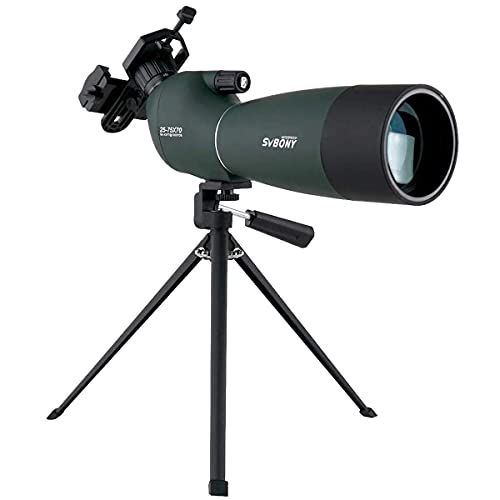
- 25-75x zoom for easy magnification changes
- 70mm objective with waterproof build
- Includes tripod and phone adapter
Best For: Beginners wanting an affordable starter scope with accessories
Phone Digiscoping Adapter
tridaptor 3-Axis Phone Mount for Scopes

- 3-axis alignment for better eyepiece centering
- All-metal build helps prevent phone sagging
- Bluetooth remote reduces shake when shooting
Best For: Users who want steadier smartphone photos through compatible spotting scopes
High-Brightness Spotter
SVBONY SV28 100mm 25-75x Spotting Scope

- 100mm aperture for brighter, more detailed views
- 25-75x zoom for flexible long-range observing
- Includes tripod, phone adapter, covers, and case
Best For: Shoppers who want a bright, bundled spotting scope setup
Ultra Zoom Spotter
30-90x92 UHD Spotting Scope Kit

- Wide 30-90x zoom range for flexible viewing
- BAK4 prisms aim for bright, sharp images
- Includes phone adapter, tripod, and bag
Best For: Buyers who want a high-zoom kit with accessories included
Grab-and-Go Mak Design
SVBONY SV41Pro 80mm Spotting Scope

- Compact 280mm Maksutov-Cassegrain tube
- 80mm objective with 28-84x zoom
- Dual-speed focus for lunar and planetary viewing
Best For: Portable Moon-and-planet observing
Large-Aperture Zoom Kit
Premium 25-75x85 Spotting Scope

- 25-75x zoom with large 85mm objective
- BAK4 prisms and FMC coatings
- Tripod and smartphone holder included
Best For: Users wanting a bright all-in-one viewing kit
Value Accessory Bundle
M MIXIO 20-60x80 Spotting Scope Kit

- 20-60x zoom with 80mm objective
- Tripod, phone adapter, and bag included
- Retractable sunshade and waterproof build
Best For: Entry-level Moon viewing and general observation
Premium 5-inch Schmidt-Cassegrain – Celestron C5 Astronomy Spotting Scope
If you want spotting scopes for astronomy that can also pull double duty on land, the Celestron C5 brings a serious 5-inch Schmidt-Cassegrain design with a long 1250mm focal length. It is built for bright, sharp views of distant targets and is compact enough to carry more easily than many 5-inch optical systems.
Best For: Observers who want a compact, camera-adaptable scope for astronomy, digiscoping, and long-distance viewing.
Pros:
- 5-inch aperture with 1250mm focal length for detailed long-range viewing
- Compact 6 lb design makes it easier to transport and store
- Includes 6×30 erect image finderscope and water-resistant carrying case
- Camera adaptable for telephoto use and digiscoping
Cons:
- Requires optional T-adapter and T-ring for camera attachment
- Manual focus and equatorial mount may feel less simple than a basic spotting setup
This is the most astronomy-forward option in the group, especially if you value optical reach and portability in one package. It stands out as a versatile choice for nights under the stars and daytime observation alike.
Zoom-Friendly Midrange Pick – Gosky DiamondEdge 20-60×80 Spotting Scope
For buyers comparing spotting scopes for astronomy, the Gosky DiamondEdge offers a practical 20-60x zoom range and an 80mm objective lens that is designed to deliver brighter, sharper images. Its waterproof, fog-proof build and included tripod make it a flexible choice for long-range viewing and casual stargazing.
Best For: Users who want a zoom-capable scope with a smartphone adapter and stable tripod for versatile viewing.
Pros:
- 20-60x variable magnification for flexible viewing
- 80mm fully multi-coated objective with BAK4 prism for clearer images
- Waterproof and fog-proof nitrogen-filled construction
- Includes smartphone adapter, tripod, carrying case, and covers
Cons:
- Best suited to casual stargazing rather than dedicated astronomy use
- Heavier accessory setup than a bare-bones scope
Its strength is convenience: you get a useful zoom range, a solid optical package, and the accessories needed to start using it right away. That makes it a strong all-around pick if you want one scope for multiple outdoor uses.
Compact Astronomy Crossover – Celestron C70 Mini Mak Spotting Scope
If you want spotting scopes for astronomy in a compact travel-friendly form, the Celestron C70 Mini Mak is built for both daytime use and night-sky viewing. With a 70mm Maksutov-Cassegrain design, 700mm focal length, and built-in 25-75x zoom eyepiece, it is a flexible option for Moon, Jupiter, Saturn, and general terrestrial spotting.
Best For: Travelers and beginners who want one compact scope for both astronomy and daytime observation.
Pros:
- 70mm Maksutov-Cassegrain design with 700mm focal length
- Works for celestial targets like the Moon, Jupiter, and Saturn
- Built-in 25-75x zoom eyepiece adds viewing flexibility
- Very portable at 2 pounds and includes tabletop tripod and case
Cons:
- Smaller 70mm aperture limits light gathering versus larger scopes
- Tabletop tripod is less substantial than a full-size mount
This model makes the most sense when portability matters as much as optical versatility. It is a compact, no-fuss way to get into both astronomy and general spotting without carrying a larger setup.
Budget Zoom Starter – SVBONY SV28 25-75×70 Spotting Scope
The SVBONY SV28 is a practical entry-level choice if you are shopping for spotting scopes for astronomy on a budget and want a simple zooming setup. Its 25-75x magnification, 70mm objective lens, and included phone adapter and tripod make it easy to set up for casual viewing, range spotting, or light stargazing.
Best For: Beginners who want an affordable zoom scope with a tripod and phone adapter.
Pros:
- 25-75x zoom range for flexible viewing
- 70mm objective lens gathers decent light for its size
- Includes phone adapter, tripod, case, and cleaning cloth
- Waterproof design with extendable sunshade for glare control
Cons:
- 60-day warranty is short compared with some competitors
- Best as a beginner scope rather than a premium astronomy tool
It is the most straightforward budget option here, especially if you want the basics bundled in one box. The SV28 is best viewed as a starter scope that keeps setup simple while leaving room to upgrade later.
Phone Digiscoping Adapter – tridaptor 3-Axis Phone Mount for Scopes
If you want to document views through spotting scopes for astronomy, the tridaptor is a practical digiscoping adapter built to help line up a smartphone with the eyepiece more precisely. Its 3-axis adjustment gives you left/right, up/down, and forward/back positioning, which is useful when you’re trying to reduce vignetting and keep the camera centered on the image.
Best For: Astronomers and scope users who want a rigid phone adapter for cleaner photos and videos through standard eyepieces.
Pros:
- 3-axis alignment helps with centering and eye-relief adjustments.
- All-metal aluminum construction is designed to resist phone sagging.
- Bluetooth remote lets you trigger shots without touching the phone.
- Fits most phones and many eyepieces from 22mm to 61mm outer diameter.
Cons:
- Not suitable for shorter eyepiece models.
- You need to measure your eyepiece before buying.
- Adapter only; it does not include the scope itself.
For anyone comparing spotting scopes for astronomy, this is less about optics and more about getting usable phone captures from an existing scope. If you already have compatible eyepieces, the metal build and fine adjustment make it a stronger choice than basic clamp-style adapters.
High-Brightness Spotter – SVBONY SV28 100mm 25-75x Spotting Scope
The SVBONY SV28 is a large-aperture spotting scope built for long-range viewing, with a 100mm objective and a 25-75x zoom eyepiece. For spotting scopes for astronomy, that bigger lens and FMC coating are aimed at brighter viewing and more visible detail, especially when light is limited.
Best For: Buyers who want a bright, all-in-one spotting scope package for long-range observation and occasional smartphone capture.
Pros:
- 100mm aperture is designed for brighter views and more detail.
- 25-75x zoom gives flexibility for scanning and closer inspection.
- FMC coating helps improve light transmission.
- Package includes tripod, phone adapter, covers, case, and cleaning cloth.
Cons:
- At 2560 g, it is relatively heavy.
- Included tripod is a desktop model, so taller outdoor use may need an upgrade.
- Best results depend on pairing it with a suitable full-size tripod.
This model stands out if you want a complete starter kit rather than buying each piece separately. The large 100mm lens is the main selling point, but the accessory bundle also makes it easier to get set up quickly for viewing and phone-based recording.
Ultra Zoom Spotter – 30-90×92 UHD Spotting Scope Kit
This 30-90×92 UHD spotting scope is built for users who want a wide magnification range in a portable package. For spotting scopes for astronomy, the BAK4 prisms and UHD-style clarity claims make it a strong option when you want sharp, bright viewing and the ability to zoom in on distant details.
Best For: Observers who want a high-zoom spotting scope kit with a phone adapter and tripod included.
Pros:
- 30-90x zoom range offers a wide adjustment window.
- BAK4 prisms are designed for sharp, bright, clear images.
- Waterproof and shock-resistant construction adds durability.
- Includes upgraded phone adapter, tripod, and carrying bag.
Cons:
- High zoom ranges can be more demanding to stabilize.
- Kit weight may be a consideration for travel.
- Best used with the included tripod or another stable support.
If you want a more complete ready-to-go package, this one covers the basics well. Its combination of high magnification, protective design, and included accessories makes it appealing for buyers who want convenience as much as reach.
Grab-and-Go Mak Design – SVBONY SV41Pro 80mm Spotting Scope
If you want spotting scopes for astronomy that are easy to carry and simple to set up, the SVBONY SV41Pro stands out as a compact Mak-style option. Its 800mm focal length, 80mm objective, and 28-84x zoom eyepiece make it a practical choice for lunar and planetary viewing, especially if you value portability and quick focusing over a bulky tube.
Best For: Travelers and casual astronomy observers who want a lightweight grab-and-go scope for the Moon and planets.
Pros:
- Compact Maksutov-Cassegrain design with a short 280mm tube and 1.8kg setup
- 80mm objective lens and FMC coating help improve brightness and detail
- 28-84x zoom eyepiece gives flexible magnification for astronomy and daytime use
- Dual-speed focus makes fine adjustment easier for lunar and planetary targets
Cons:
- Finderscope is not included, even though a dovetail base is reserved for one
- Best suited to lunar and planetary observing rather than deep-sky work
- WiFi camera compatibility depends on separately sold SVBONY cameras
Overall, this is a flexible all-round spotting scope that leans heavily toward portability and convenience. If you want a scope that can handle astronomy sessions without making setup a chore, the SV41Pro is a sensible option.
Large-Aperture Zoom Kit – Premium 25-75×85 Spotting Scope
Among spotting scopes for astronomy, this 25-75×85 model is built for users who want a large objective lens and a wide zoom range in a complete kit. The 85mm front lens, BAK4 prisms, FMC coatings, and dual-focus system are aimed at brighter views and easier targeting, while the included tripod and phone holder add convenience for extended viewing.
Best For: Buyers who want a big-aperture spotting scope kit for bright, steady views and easy smartphone digiscoping.
Pros:
- 25-75x zoom and 85mm objective lens support detailed long-range observation
- BAK4 prisms and FMC coatings are designed for strong light transmission and color accuracy
- Dual-focus system helps with fast targeting and finer clarity adjustments
- Includes a rotating tripod and smartphone holder for hands-free viewing and capture
Cons:
- Model details list the objective lens diameter as 85 centimeters, which appears inconsistent
- Larger setup is less grab-and-go than more compact spotting scopes
- Primarily described for wildlife and outdoor use, so astronomy-specific features are limited
This is a feature-rich option if you want a bright, adaptable scope kit with useful accessories included. For casual astronomy use, it makes the most sense when your priority is aperture, zoom flexibility, and stable viewing support.
Value Accessory Bundle – M MIXIO 20-60×80 Spotting Scope Kit
If you are comparing spotting scopes for astronomy and want a ready-to-use package, this 20-60×80 kit covers the basics well. The 80mm objective lens, 20-60x zoom, 1000m field of view, and included tripod and phone adapter make it a convenient choice for lunar viewing and other long-distance observing tasks.
Best For: Entry-level users who want a complete spotting scope kit for Moon viewing and general outdoor observation.
Pros:
- 20-60x magnification with an 80mm objective lens offers versatile viewing
- BAK4 prism optics and multi-layer coated lenses are designed for brighter, sharper images
- Includes tripod, phone adapter, carrying bag, caps, cleaning cloth, and manual
- Daily waterproofing, retractable sunshade, and retractable eyepiece improve everyday usability
Cons:
- Advertising text mixes BAK4 roof prism and Porro prism wording, which is inconsistent
- More of a general-purpose outdoor scope than a dedicated astronomy instrument
- Best performance is likely for lunar and bright-object viewing rather than faint deep-sky targets
This kit is strongest on convenience: it arrives with the accessories many buyers would otherwise have to add separately. If your priority is a straightforward, budget-conscious way to try astronomy viewing with a spotting scope, it is a practical pick.
How We Picked the Best Spotting Scopes for Astronomy
We focused on Spotting Scopes for Astronomy that offer usable optical quality, practical magnification ranges, and hardware that helps keep the image steady. We also considered objective size, eyepiece flexibility, angled versus straight viewing, and whether a tripod or phone adapter adds real value.
Quick Comparison
For astronomy, bigger objective lenses generally help with brightness and detail, but they also add size and weight. Lower to mid-range zooms are often more useful than extreme magnification, since the atmosphere and tripod stability usually limit what you can actually resolve.
Key Buying Factors for Spotting Scopes for Astronomy
Aperture and Brightness
Look for at least 70mm if you want a more capable all-around view, while 80mm and above can improve lunar detail and brightness. Larger apertures can help, but they only pay off if the optics are well made.
Magnification Range
Zoom numbers can be misleading. A scope advertised at 75x or 90x is not automatically better than a steadier 20-60x model. For astronomy, clean low-end views are often more useful than pushing power to the maximum.
Optical Design
Many Spotting Scopes for Astronomy use refractor or Maksutov-style designs. Maksutov models can be attractive for compactness and sharper high-power views, while traditional spotting scopes may be easier for mixed daytime and nighttime use.
Mounting and Stability
A good tripod matters as much as the scope itself. If you plan to observe the Moon, planets, or terrestrial targets at night, prioritize a stable mount, smooth controls, and an angled body that is comfortable for longer sessions.
Digiscoping Support
If you want to capture lunar photos or share views through a phone, a phone adapter can be a useful add-on. Just remember that adapters help with convenience, not optical performance.
Who Should Buy Which Spotting Scopes for Astronomy?
Beginners who want one scope for both day and night use should favor mid-sized models in the 70mm to 80mm range. Viewers who care most about portability may prefer compact Maksutov-style options. If you want maximum image brightness and are willing to carry more gear, larger 85mm to 100mm scopes can be worth considering. For most buyers, the best choice is the model that balances aperture, stability, and ease of use rather than the one with the biggest zoom number.