The best handheld GPS devices for geocaching make it easier to follow coordinates, navigate wooded trails, and stay oriented when phone service disappears. The right model depends on how much mapping detail, satellite accuracy, battery life, and outdoor durability you need.
We compare 10 options ranging from straightforward entry-level units to feature-rich navigators with electronic compasses, altimeters, expanded satellite support, cameras, and solar charging.
Best 10 Handheld Gps Devices for Geocaching Picks for 2026
Reliable Trail Companion

- Sunlight-readable 2.2-inch color display
- TopoActive maps with routable trails
- Up to 25 hours on two AA batteries
Best For: Straightforward hiking and geocaching navigation
Geocaching Specialist

- Dedicated geocaching GPS design
- Three-meter stated GPS accuracy
- Waterproof, sunlight-readable color screen
Best For: Casual users wanting simple cache-finding controls
High-Accuracy Navigator
- Multi-band and expanded GNSS support
- 2.6-inch sunlight-readable display
- Compass, altimeter, and TopoActive maps
Best For: Geocaching in forests, steep terrain, and urban canyons
Long-Life Cache Finder

- Up to 168 hours in standard mode
- Automatic Geocaching Live cache updates
- Multi-GNSS support and IPX7 water resistance
Best For: Extended geocaching trips with smartphone pairing
Camera-Ready Navigator

- 3-inch sunlight-readable multi-touch display
- GPS/GLONASS with compass and altimeter
- 8MP camera plus wireless geocache sharing
Best For: Touchscreen-focused geocachers who want built-in photography
Trail-Tested Essential

- Up to 25 hours on two AA batteries
- Preloaded routable TopoActive maps
- Compact design with compass and altimeter
Best For: Geocachers seeking long runtime and uncomplicated trail navigation
Connected Mapping Specialist
- Geocaching Live supports mobile syncing and updates
- GPS, GLONASS, and Galileo support
- 3-inch display with BirdsEye and TOPO maps
Best For: Connected geocachers who want satellite imagery and advanced mapping
Best Solar Pick

- Solar charging can extend battery life substantially
- Multi-band GPS supports improved positional accuracy
- Geocaching Live updates work through Garmin Explore
Best For: Long hikes and app-connected geocaching
Best Large-Screen Option

- 3-inch sunlight-readable color touchscreen
- Built-in 3.2MP camera with 4x digital zoom
- Barometric altimeter and 3-axis compass
Best For: Feature-focused geocachers who prefer a larger display
Best Budget Simplicity

- Paperless geocaching support
- Up to 20 hours on two AA batteries
- Rugged IPX7 waterproof design
Best For: Beginners seeking straightforward, low-complexity navigation
Reliable Trail Companion – Garmin eTrex 22x
The Garmin eTrex 22x is a practical choice for handheld GPS devices for geocaching when you want a rugged, button-operated navigator with preloaded topographic maps. Its sunlight-readable color screen, GPS and GLONASS support, and expandable storage suit hiking and cycling cache trips.
Best For: Geocachers who want dependable trail navigation, long battery life, and straightforward physical controls.
Pros:
- Sunlight-readable 2.2-inch color display with 240 x 320 resolution
- Preloaded TopoActive maps include routable roads and trails
- Up to 25 hours of battery life with two AA batteries
- 8 GB of internal storage plus a microSD card slot
Cons:
- No touchscreen; navigation uses buttons
- Smaller display than the GPSMAP 65s
- Supplied notes do not specify built-in geocaching features or cache updates
The eTrex 22x emphasizes reliable basics rather than app-driven convenience. It is a solid option for outdoor users who value map storage, physical controls, and a long-running AA-powered design.
Geocaching Specialist – Magellan eXplorist GC
The Magellan eXplorist GC is purpose-built for geocaching and offers a simple way to search for caches with a sunlight-readable 2.2-inch color display. Its high-sensitivity SiRFstarIII GPS is rated for three-meter accuracy, while the waterproof design adds confidence outdoors.
Best For: Casual geocachers seeking a dedicated, easy-to-navigate GPS with simple controls and a waterproof build.
Pros:
- Designed specifically for geocaching
- High-sensitivity GPS with stated three-meter accuracy
- Sunlight-readable color transflective screen
- Waterproof design and included two AA batteries
Cons:
- Older model with only 2 GB of storage
- Battery life is listed at 18 hours
- Supplied notes do not specify current software or update support
The eXplorist GC keeps the focus on core cache-finding functionality and uncomplicated operation. It may appeal to beginners, though its older specifications and limited storage are worth considering before purchase.
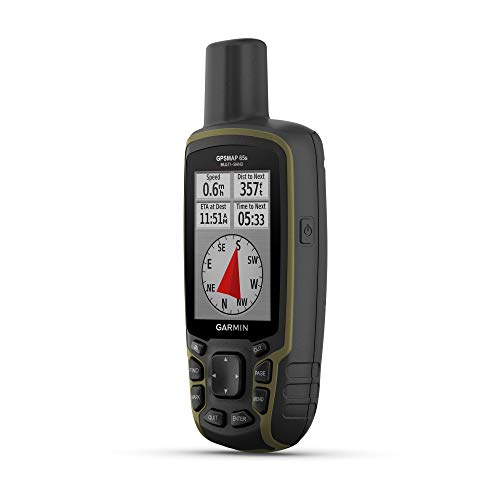
High-Accuracy Navigator – Garmin GPSMAP 65s
For challenging terrain, the Garmin GPSMAP 65s is one of the more capable handheld GPS devices for geocaching. Multi-band technology and expanded GNSS support help improve positioning in forests, steep country, and urban canyons, while the 2.6-inch display and ABC sensors support broader outdoor navigation.
Best For: Experienced geocachers who need enhanced positioning accuracy and navigation tools in difficult environments.
Pros:
- Multi-band technology and expanded GNSS support
- Large 2.6-inch sunlight-readable color display
- Three-axis compass and barometric altimeter
- Includes routable TopoActive mapping and U.S. federal public land maps
Cons:
- Listed battery life is up to 16 hours
- Requires a compatible smartphone for Garmin Explore app features
- Button-operated design may feel less convenient than a touchscreen
The GPSMAP 65s is geared toward demanding outdoor use rather than basic cache hunts. Its strongest advantages are positioning technology, sensors, and map support, making it a compelling pick when terrain or signal conditions are difficult.
Long-Life Cache Finder – Garmin eTrex SE
The Garmin eTrex SE stands out among handheld GPS devices for geocaching with exceptionally long battery ratings and direct Geocaching Live support through the Garmin Explore app. Its compact, sunlight-readable display, multi-GNSS support, digital compass, and IPX7 water resistance make it a versatile choice for extended outings.
Best For: Geocachers who prioritize very long battery life and wireless cache updates from a compatible smartphone.
Pros:
- Up to 168 hours in standard mode and 1,800 hours in expedition mode
- Automatic cache updates with descriptions, logs, and hints through Geocaching Live
- Supports GPS, GLONASS, Galileo, BeiDou, and QZSS
- IPX7 water-resistant design with a digital compass
Cons:
- Two AA batteries are field-replaceable but not included
- Geocaching Live features require a compatible smartphone and Garmin Explore app
- Only 28 MB of listed internal memory
The eTrex SE is particularly attractive for multi-day trips because of its battery endurance and replaceable cells. Its smartphone pairing adds useful cache information, while the button-operated interface keeps the device simple to use outdoors.
Camera-Ready Navigator – Oregon 650
Garmin 010-01066-20 Oregon 650 3-Inch Worldwide Handheld GPS with 8MP Digital Camera
Check Price On AmazonThe Garmin Oregon 650 is a versatile choice among handheld GPS devices for geocaching, combining a large touchscreen with wireless sharing and a built-in camera. Its sunlight-readable display, dual-band GPS/GLONASS positioning, and included rechargeable battery pack make it well suited to detailed outdoor navigation.
Best For: Geocachers who want a touchscreen GPS with photo capture, wireless waypoint sharing, and multiple sensors.
Pros:
- 3-inch sunlight-readable touchscreen supports multi-touch and landscape or portrait viewing.
- GPS/GLONASS positioning is paired with a 3-axis compass, accelerometer, and barometric altimeter.
- 8MP autofocus camera includes an LED flash/torch and digital zoom.
- Supports wireless sharing of routes, tracks, waypoints, geocaches, maps, and photos.
Cons:
- The touchscreen and camera-focused design may be more than needed for simple navigation.
- Rated battery life is up to 16 hours, shorter than the eTrex 32x listed here.
The Oregon 650 stands out for geocachers who value a generous display and integrated imaging. Its 3.5 GB of storage, microSD support, and flexible battery system add practicality for longer outings.
Trail-Tested Essential – eTrex 32x
The Garmin eTrex 32x is a straightforward, rugged option among handheld GPS devices for geocaching. It pairs a compact sunlight-readable color display with TopoActive maps, GPS/GLONASS support, and up to 25 hours of battery life from two AA batteries.
Best For: Geocachers who prioritize long battery life, simple controls, and a compact handheld design.
Pros:
- Up to 25 hours of GPS-mode battery life with two AA batteries.
- Preloaded TopoActive maps include routable roads and trails for cycling and hiking.
- GPS and GLONASS support can improve tracking in more challenging environments than GPS alone.
- Includes an 8 GB internal memory and a microSD card slot for map downloads.
Cons:
- The 2.2-inch display is smaller than the screens on the Oregon 650 and GPSMAP 66s.
- It lacks the Oregon 650’s camera and the GPSMAP 66s’s listed Geocaching Live connectivity.
With its low weight, rugged handheld format, and extended AA-powered runtime, the eTrex 32x is a practical pick for repeated day trips. The 3-axis compass and barometric altimeter also provide useful supplemental outdoor data.
Connected Mapping Specialist – GPSMAP 66s
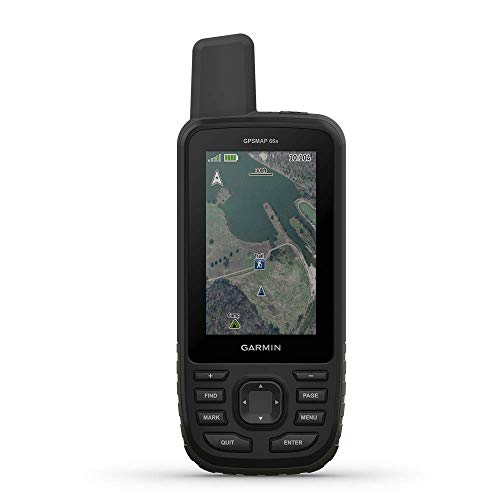
The renewed Garmin GPSMAP 66s is a feature-rich choice among handheld GPS devices for geocaching, with a large sunlight-readable display, multi-GNSS support, and wireless smartphone features. Geocaching Live supports mobile syncing and updates, while BirdsEye imagery and preloaded TOPO U.S. and Canada maps expand its mapping options.
Best For: Geocachers who want connected features, detailed mapping, and support for satellite imagery.
Pros:
- 3-inch sunlight-readable color display is easy to view outdoors.
- Supports GPS, GLONASS, and Galileo, plus a 3-axis compass and barometric altimeter.
- Geocaching Live enables mobile syncing and updates through expanded wireless connectivity.
- Includes access to BirdsEye Satellite Imagery and preloaded TOPO U.S. and Canada maps.
Cons:
- Its listed battery life is up to 15 hours, below the eTrex 32x’s stated runtime.
- This renewed unit has a 90-day limited warranty.
- Control is button-based, which may feel less direct than a touchscreen interface.
The GPSMAP 66s is the strongest fit here for connected geocaching workflows and broader map context. Its renewed condition and shorter stated battery life are worth weighing against its multi-GNSS and wireless capabilities.
Best Solar Pick – Garmin eTrex Solar
For handheld GPS devices for geocaching, the Garmin eTrex Solar stands out with solar charging, multi-band positioning, and direct access to cache updates through the Garmin Explore app. Its compact, button-controlled design is suited to day hikes and changing outdoor conditions.
Best For: Geocachers who want extended battery life, improved positioning accuracy, and app-connected cache information.
Pros:
- Solar charging can provide unlimited battery life in sunny 75,000-lux conditions, or up to 200 hours without solar charging.
- Multi-band GPS is designed to improve positional accuracy.
- Geocaching Live updates can include descriptions, logs, and hints when paired with the Garmin Explore app.
- IPX7 water resistance and a high-contrast display support outdoor use.
Cons:
- Full geocaching updates and app features require a compatible smartphone connection.
- The 2.2-inch screen is smaller than the display on the Oregon 550T.
The eTrex Solar is the most modern and expedition-friendly option in this group. Its solar capability and multi-band GPS are especially useful for longer outings, while Bluetooth connectivity adds convenience for planning and cache updates.
Best Large-Screen Option – Garmin Oregon 550T
Garmin Oregon 550T 3-Inch Handheld GPS Navigator with 3.2MP Digital Camera (U.S. Topographic Maps)
Check Price On AmazonThe Garmin Oregon 550T is a capable choice among handheld GPS devices for geocaching when a larger touchscreen and built-in mapping features matter most. It combines a sunlight-readable 3-inch display with a camera, electronic compass, and barometric altimeter.
Best For: Geocachers who prefer a larger touchscreen and want extra outdoor tools such as a camera and altitude tracking.
Pros:
- Its 3-inch sunlight-readable color touchscreen is larger than the displays on the other listed models.
- The 3.2-megapixel autofocus camera includes 4x digital zoom.
- A barometric altimeter and 3-axis tilt-compensated electronic compass add navigation data.
- The durable, waterproof design is built for outdoor conditions.
Cons:
- Battery life is rated at up to 16 hours, shorter than the other listed devices.
- The model is older, with a 2010 model year.
- Its resistive touchscreen may feel less current than newer control systems.
The Oregon 550T remains appealing for users who value screen size and integrated features over maximum battery endurance. Its camera and topographic-map support make it a versatile option, although its shorter battery life and older platform are worth considering.
Best Budget Simplicity – Garmin eTrex 10
The Garmin eTrex 10 keeps handheld GPS devices for geocaching straightforward with a rugged body, paperless geocaching support, and a worldwide basemap. Its monochrome screen and physical controls emphasize basic navigation and dependable operation rather than advanced connected features.
Best For: Beginners and budget-minded geocachers who want a simple, durable GPS navigator with long AA-battery runtime.
Pros:
- Paperless geocaching support helps organize cache information without relying solely on printed notes.
- GPS, HotFix, and GLONASS support are designed for fast positioning and reliable signal reception.
- IPX7 waterproofing helps protect against rain and splashes.
- Two AA batteries provide up to 20 hours of use.
Cons:
- The 2.2-inch monochrome display has lower resolution than the Oregon 550T’s color screen.
- Its 6 MB of storage and worldwide basemap provide a more basic mapping experience.
- USB connectivity is wired rather than Bluetooth-enabled.
The eTrex 10 is a practical entry-level pick for geocachers who value simplicity, water resistance, and replaceable-battery convenience. Choose it when advanced maps, color graphics, and smartphone integration are less important than core navigation.
How We Picked These Handheld Gps Devices for Geocaching
We focused on practical features that matter during real-world geocaching: dependable satellite reception, readable screens, waypoint and route handling, outdoor durability, battery performance, and ease of use. We also considered the differences between basic GPS receivers and advanced models with topographic maps, electronic sensors, multi-band positioning, wireless connectivity, or solar charging.
Because geocachers have different budgets and experience levels, this list includes both simple navigators and more capable units. Older or renewed models can still be useful when their core navigation features meet your needs, but buyers should check included maps, battery condition, software support, and accessory compatibility.
Quick Comparison
- Best for simple, affordable navigation: Garmin eTrex 10.
- Best value for color mapping: Garmin eTrex 22x.
- Best for added directional data: Garmin eTrex 32x or GPSMAP 65s.
- Best for difficult terrain and satellite coverage: Garmin GPSMAP 65s.
- Best for long trips: Garmin eTrex Solar.
- Best for larger map viewing: Garmin GPSMAP 66s or Oregon-series models.
- Best for dedicated geocaching features: Magellan eXplorist GC.
Key Buying Factors for Handheld Gps Devices for Geocaching
Satellite Accuracy and Reception
Look for support for multiple satellite systems when you regularly cache under tree cover, near cliffs, or in urban areas. Multi-band technology can improve positioning in challenging environments, while basic receivers remain adequate for open trails and casual use.
Maps, Screen, and Controls
A monochrome screen keeps costs and power use down, but color mapping is easier for following trails and identifying nearby roads or terrain. Button controls work well in rain and with gloves; touchscreen units can be faster to browse but may be less convenient in wet conditions. Confirm which maps are preloaded and whether additional maps can be installed.
Compass and Altimeter
An electronic compass helps maintain direction while standing still, and an altimeter can provide useful elevation context. These features are especially helpful for route planning, mountainous terrain, and precise approach navigation, but they are not essential for every beginner.
Battery Life and Weather Resistance
Choose a replaceable-battery model for easy field resupply, or consider solar charging for extended trips with regular sun exposure. Check the waterproof rating, port protection, and operating temperature range before relying on a unit for demanding conditions.
Who Should Buy Which Handheld Gps Devices for Geocaching?
Beginners and occasional geocachers should prioritize simple menus, dependable waypoint navigation, and low cost. A basic eTrex-style receiver is often enough if you use a phone for detailed maps and want a dedicated backup.
Frequent trail users will benefit from color maps, better reception, a compass, and longer battery life. These features reduce phone dependence and make multi-cache outings more efficient.
Serious backcountry users should consider advanced Handheld Gps Devices for Geocaching with expanded satellite support, multi-band positioning, robust weather sealing, and strong route-management tools. If you hike far from roads, prioritize reliability and battery flexibility over cameras or other secondary features.