Mountain biking demands more from a GPS device than basic distance tracking. Reliable navigation, elevation data, durable construction, and dependable battery life can make a major difference when you are riding unfamiliar trails or spending all day away from a charger.
We compared 10 GPS watches, bike computers, and bike-focused tracking devices to help you choose the right balance of trail guidance, ride metrics, smart features, and value for your riding style.
Best 10 Gps Watches for Mountain Biking Picks for 2026
Rugged Solar Navigator

- Multi-band GPS, compass, and barometric altimeter
- Rugged 45 mm case with 10 ATM water rating
- Solar charging, flashlight, and safety features
Best For: Long rides and riders wanting a rugged smartwatch
High-Visibility Ride Tracker

- Five-satellite positioning systems for ride tracking
- Over 40 cycling metrics on a 2.6-inch display
- Up to 40 hours of runtime and IPX7 waterproofing
Best For: Data-focused riders wanting a dedicated handlebar computer
Everyday Fitness Companion

- AMOLED display with up to 11 days of battery life
- Cycling app plus more than 30 GPS sports profiles
- Wellness, recovery, music, and notification features
Best For: Everyday fitness users who also track cycling
Elevation-Focused Bike Computer

- Altitude, gradient, ascent, and core ride metrics
- GPS setup needs no wheel sensor or spoke magnet
- 28-hour battery with IPX7 waterproof protection
Best For: Simple, elevation-focused mountain bike tracking
Trail-Friendly Navigation

- 3-inch glove- and rain-friendly touchscreen
- Preloaded off-road maps and eBike routing
- Up to 16 hours of battery life
Best For: Straightforward mountain-bike navigation and ride tracking
Rugged Wrist Navigation
Built-in GPS Military Smart Watch

- Standalone GPS with compass and altimeter tools
- Rugged construction with splash protection
- 7–10 days of stated daily-use battery
Best For: Wrist-based outdoor tracking and everyday smartwatch features
Advanced Trail Training
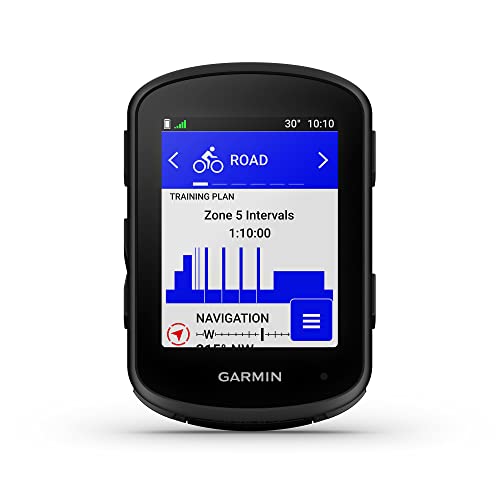
- Multi-band GNSS for challenging environments
- ClimbPro ascent and grade information
- Up to 26 hours of demanding-use battery
Best For: Serious mountain-bike navigation and performance training
Versatile Outdoor Pick
GPS Running Watch for Mountain Biking

- Built-in GPS with route, distance, and pace tracking
- Altimeter, barometer, compass, and biking mode
- Up to 7 days of heavy-use battery life
Best For: Casual riders wanting fitness and smartwatch features
Dedicated Trail Choice
Garmin Edge MTB GPS Bike Computer

- Enduro and downhill profiles with multi-band GPS
- Preloaded Trailforks and TopoActive maps
- MTB metrics including Grit, Flow, and jump data
Best For: Serious trail, enduro, and downhill riders
Ride Security Pick

- Apple Find My tracking with no monthly fee or SIM
- Five rear-light modes and 215-meter visibility
- Up to 60 hours of battery life with IP65 protection
Best For: iPhone users prioritizing bike security and visibility
Rugged Solar Navigator – Instinct 3 Solar
For riders who want a true smartwatch among GPS watches for mountain biking, the Garmin Instinct 3 Solar combines multi-band GPS, elevation tools, rugged construction, and extensive health features. Its solar charging lens can support unlimited battery life under specified sunny-use conditions, making it a strong option for long outdoor adventures.
Best For: Mountain bikers who want a durable, full-featured smartwatch with navigation and long battery potential.
Pros:
- Multi-band GPS with SatIQ, 3-axis compass, and barometric altimeter
- Rugged 45 mm case, 10 ATM water rating, and MIL-STD-810 thermal and shock resistance
- Solar charging lens, built-in flashlight, and incident detection with a compatible smartphone
- Health monitoring, Garmin Pay, smart notifications, and Connect IQ compatibility
Cons:
- Some safety features require a compatible smartphone, setup, and network coverage
- Solar battery claims depend on all-day wear and specified sunlight conditions
- Its 45 mm rugged design may be more substantial than a compact cycling computer
The Instinct 3 Solar is the most capable choice here for riders who want navigation, safety, fitness tracking, and smartwatch features in one rugged device. It is especially appealing for extended rides where charging opportunities may be limited.
High-Visibility Ride Tracker – iGPSPORT BSC100S
The iGPSPORT BSC100S is a handlebar-focused alternative to smartwatch-style GPS watches for mountain biking. It provides more than 40 riding metrics, broad satellite support, wireless sensor connectivity, and a large anti-glare screen for monitoring key data while riding.
Best For: Riders who prefer a dedicated, easy-to-read bike computer with long runtime and sensor support.
Pros:
- Supports GPS, BeiDou, GLONASS, Galileo, and QZSS satellite systems
- Tracks more than 40 metrics, including speed, distance, grade, cadence, and temperature
- Up to 40 hours of battery life with a USB-C charging port
- IPX7 waterproofing and ANT+/Bluetooth 5.0 connectivity for compatible sensors
Cons:
- It is a bike computer rather than a wrist-worn smartwatch
- Advanced ride analysis and sharing require the iGPSPORT app
- The supplied notes do not mention onboard mapping or turn-by-turn navigation
With its large display and extensive cycling metrics, the BSC100S is a practical choice for riders who want ride data directly in front of them. Its long battery life also suits lengthy mountain biking sessions.
Everyday Fitness Companion – vívoactive 5
The Garmin vívoactive 5 brings the convenience of a color AMOLED smartwatch to the GPS watches for mountain biking category. Its built-in GPS includes cycling among more than 30 sports apps, while health, recovery, music, and notification features make it useful both on the trail and away from the bike.
Best For: Riders who want a comfortable everyday smartwatch with cycling tracking and broad wellness features.
Pros:
- Bright AMOLED display and up to 11 days of smartwatch-mode battery life
- Built-in GPS with cycling and more than 30 indoor and GPS sports apps
- Body Battery, sleep coaching, recovery time, heart rate, and stress tracking
- Supports downloaded music for phone-free listening with wireless headphones
Cons:
- The supplied notes do not list a barometric altimeter or dedicated mountain navigation tools
- It is less specifically cycling-focused than the dedicated bike computers in this roundup
- Health metrics are estimates and are not medical measurements
The vívoactive 5 is a balanced pick for riders who want GPS cycling tracking without giving up everyday wellness and smartwatch functions. Choose it when general fitness and lifestyle use matter as much as trail data.
Elevation-Focused Bike Computer – GPS Bike Computer
This compact GPS bike computer is a straightforward option for mountain bikers comparing GPS watches for mountain biking with handlebar-mounted displays. It emphasizes essential ride data plus altitude, gradient, and accumulated ascent, with automatic recording and up to 28 hours of runtime.
Best For: Mountain bikers who want simple elevation and ride tracking without relying on a wheel sensor.
Pros:
- Tracks speed, distance, ride time, temperature, altitude, gradient, and ascent
- Built-in GPS works without a wheel sensor or spoke magnet
- 2.4-inch LCD with automatic backlight for changing light conditions
- Up to 28 hours of battery life and IPX7 waterproofing
Cons:
- The supplied notes do not mention satellite-system compatibility beyond built-in GPS
- It offers a simpler feature set than a full smartwatch
- The display is designed for essential data rather than documented mapping or navigation
For riders who mainly need dependable ride statistics and climbing information, this computer keeps the experience simple. Its barometric altimeter, automatic start and stop, and waterproof build are useful for changing mountain conditions.
Trail-Friendly Navigation – Garmin Edge Explore 2
If you want GPS watches for mountain biking but prefer a dedicated handlebar display, the Garmin Edge Explore 2 offers straightforward cycling navigation. Its 3-inch sunlight-readable touchscreen, off-road maps, and built-in ride tracking make it practical for trail rides and mixed-surface adventures.
Best For: Mountain bikers who prioritize easy navigation, readable maps, and simple setup over advanced training metrics.
Pros:
- Preloaded road, off-road, and indoor activity profiles are ready to use.
- Maps highlight popular trails, roads, searchable points of interest, and eBike routing.
- Built-in GPS tracks distance, speed, elevation, and route position.
- Supports LiveTrack, GroupTrack, incident detection, and optional Varia accessories when paired with a smartphone or compatible devices.
Cons:
- It is a cycling computer rather than a wrist-worn GPS watch.
- Heart-rate, speed, and cadence monitoring require separately sold sensors.
- Some connected features depend on a compatible smartphone or accessory.
The Edge Explore 2 is a sensible choice for riders who want reliable route guidance without a complicated training interface. Its 16-hour battery and dedicated cycling controls suit regular rides, while eBike-specific guidance adds useful context for compatible bicycles.
Rugged Wrist Navigation – Built-in GPS Military Smart Watch
Among GPS watches for mountain biking, this rugged smartwatch stands out for combining standalone outdoor positioning with fitness and smart features. Its built-in navigation tools, sunlight-readable display, and impact-resistant construction are suited to riders who want a wrist-worn option for trails and other outdoor activities.
Best For: Mountain bikers seeking a versatile smartwatch with outdoor sensors, health tracking, and long everyday battery life.
Pros:
- Built-in GPS records pace, distance, and routes without requiring phone pairing for those functions.
- Compass, altimeter, barometer, waypoint return, and weather alerts support outdoor navigation.
- Aluminum-alloy bezel and composite body are designed to resist dust, impact, and temperature extremes.
- Offers 100-plus sports modes, health tracking, Bluetooth calls, and notifications.
Cons:
- The stated 2ATM rating is splash protection, not a high-depth water-resistance rating.
- Some listing details identify GPS geotagging as smartphone-based, so confirm the specific navigation behavior before purchase.
- Its feature set may be more extensive than needed for riders who only want cycling navigation.
This watch is a flexible option for riders who want one device for biking, hiking, and daily use. The 7-to-10-day stated daily-use battery range is convenient, although riders should verify the GPS recording runtime for their typical trail outings.
Advanced Trail Training – Garmin Edge 840
For riders comparing GPS watches for mountain biking with advanced cycling computers, the Garmin Edge 840 is built around detailed navigation and performance analysis. Multi-band GNSS, trail-friendly maps, climb planning, and a long battery rating make it a strong fit for demanding mountain-bike training and route exploration.
Best For: Experienced mountain bikers who want precise positioning, climbing data, adaptive training, and extensive cycling metrics.
Pros:
- Multi-band GNSS is designed to improve positioning accuracy in challenging environments.
- Ride-type-specific maps include popular roads, trails, and searchable points of interest.
- ClimbPro displays ascent and grade information on every ride, even without a loaded course.
- Offers up to 26 hours in demanding use or 32 hours in battery-saver mode.
Cons:
- Several advanced features require compatible power and heart-rate sensors.
- Its training and performance tools may be excessive for casual riders.
- The 2.6-inch screen is smaller than the Edge Explore 2’s 3-inch display.
The Edge 840 is the most training-focused option in this group. Its touchscreen-and-button control scheme, multi-band positioning, and climbing tools are particularly useful when mountain rides involve difficult terrain, longer routes, or structured performance goals.
Versatile Outdoor Pick – GPS Running Watch for Mountain Biking
This feature-packed smartwatch is a flexible option for shoppers comparing gps watches for mountain biking. Its built-in GPS, altimeter, barometer, compass, waterproof construction, and biking sport mode support general trail riding, while the bright AMOLED display and long battery life add everyday convenience.
Best For: Casual mountain bikers who want one wearable for riding, fitness tracking, navigation basics, and daily smartwatch functions.
Pros:
- Built-in GPS tracks distance, pace, route, and calories without requiring a phone during the activity.
- Altimeter, barometer, and digital compass provide useful elevation and outdoor-navigation data.
- 5ATM waterproofing, a shock-resistant metal body, and more than 170 sport modes suit varied outdoor use.
- Battery life is rated for up to 7 days with heavy use or 20 days with light use.
Cons:
- Its GPS and biking features are less specialized than those of a dedicated mountain-bike computer.
- Optimal GPS performance is recommended in open outdoor areas.
- Bluetooth calling and notifications require a paired iOS or Android phone; it is not a standalone phone.
Choose this model if you want broad fitness and smartwatch functionality in addition to basic ride tracking. Riders who need detailed trail maps, downhill metrics, or cycling-specific performance tools may prefer a dedicated bike computer.
Dedicated Trail Choice – Garmin Edge MTB GPS Bike Computer
For riders seeking purpose-built gps watches for mountain biking, the Garmin Edge MTB is actually a handlebar-mounted GPS bike computer designed around trail performance. It combines rugged construction, multi-band GPS, preloaded trail maps, and dedicated enduro and downhill tools in a compact cycling-focused unit.
Best For: Serious mountain bikers, enduro riders, and downhill cyclists who want detailed trail guidance and ride-specific performance metrics.
Pros:
- Purpose-built enduro and downhill profiles include automatic 5 Hz GPS recording and split-time tracking.
- Preloaded Trailforks and TopoActive maps provide trail, fork, elevation, and off-trail mapping information.
- Tracks MTB dynamics such as Grit, Flow, jump speed, and hang time using multiple built-in sensors.
- Offers up to 14 hours of battery life in demanding use or 26 hours in battery-saver mode.
Cons:
- Advanced training insights such as VO2 max and recovery time require compatible heart-rate and power sensors.
- Some safety and connected features require a compatible smartphone and Garmin Connect.
- It is a handlebar-mounted computer rather than a wristwatch.
This is the strongest match for riders prioritizing dedicated mountain-bike navigation and performance analysis. Its maps, trail tools, and rugged 7-button design make it more specialized for technical riding than a general-purpose smartwatch.
Ride Security Pick – GPS Tracker Bike Tail Light
This compact tail light is a different kind of option among gps watches for mountain biking: it tracks the bicycle rather than recording a rider’s route or performance. Compatible with Apple Find My, it adds theft-location support and rear visibility for cyclists who want security and night-riding safety in one accessory.
Best For: Apple users who want an anti-theft bike locator and bright rear light for mountain bikes, commuters, or road bikes.
Pros:
- Works with Apple Find My without a monthly fee or SIM card.
- Five light modes and visibility up to 215 meters improve rear conspicuity in low light.
- Compact 30-gram design mounts to road or mountain bikes with the included hardware.
- USB-C rechargeable battery lasts up to 60 hours and the IP65-rated design handles rain and splashes.
Cons:
- Apple Find My compatibility is limited to iOS; Android devices are not supported.
- It does not provide rider-focused GPS route tracking, maps, elevation data, or cycling metrics.
- Its tracking function depends on the Apple Find My ecosystem rather than a dedicated bike-navigation display.
Consider this device as a security and visibility accessory, not as a replacement for a GPS watch or bike computer. It is particularly useful when locating the bicycle and improving rear visibility matter more than ride-data analysis.
How We Picked the Best Gps Watches for Mountain Biking
We focused on the features that matter most on dirt: GPS reliability, route guidance, elevation and gradient data, battery endurance, water resistance, screen readability, and control during a moving ride. We also considered form factor. A wristwatch works well for riders who want all-day outdoor and fitness tracking, while a handlebar-mounted computer is generally easier to read and operate on technical terrain.
The selection includes dedicated mountain-bike computers, general-purpose GPS smartwatches, entry-level cycling computers, and a bike locator. This gives different riders useful options rather than treating every GPS device as interchangeable.
Quick Comparison
| Device type | Best for | Main advantage |
|---|---|---|
| GPS smartwatch | All-day outdoor use | Wearable navigation, health tracking, and multisport features |
| Mountain-bike computer | Trail-focused riding | Ride-specific metrics and handlebar visibility |
| General cycling computer | Road and trail riders | Simple data screens and route navigation |
| Bike GPS tracker | Security and recovery | Location monitoring when the bike is unattended |
Key Buying Factors for Gps Watches for Mountain Biking
Navigation and GPS Accuracy
Look for turn-by-turn guidance, breadcrumb trails, saved routes, and dependable positioning under tree cover. If you regularly explore unfamiliar networks, route support is more important than a large collection of smartwatch apps.
Trail Metrics and Sensors
Elevation, ascent, descent, gradient, speed, distance, and heart-rate compatibility help you understand both effort and terrain. ANT+ and Bluetooth support are useful if you already use a cadence sensor, power meter, or external heart-rate strap.
Battery and Charging
Match battery claims to your longest rides, not your average outing. Solar charging can extend endurance in suitable conditions, while a cycling computer with a large reserve may be better for repeated navigation days.
Durability and Usability
Choose water resistance and rugged construction for mud, rain, vibration, and accidental impacts. A bright, readable display and physical buttons are especially valuable when gloves, steep climbs, or rough descents make touchscreen controls inconvenient.
Who Should Buy Which Gps Watches for Mountain Biking?
Choose a rugged GPS smartwatch if you want one device for riding, hiking, training, sleep, and everyday wear. These models are the most versatile, especially for riders who do not need a large handlebar display.
Choose a dedicated mountain-bike computer if trail metrics, route guidance, and quick glanceability are your priorities. It is usually the strongest choice for frequent off-road riders and technical trail use.
Choose a basic GPS cycling computer if you mainly need speed, distance, elevation, and occasional navigation without paying for extensive smartwatch features.
Choose a bike tracker as a security supplement rather than a replacement for a ride computer. It helps locate a parked bike, but it will not provide the same training and navigation tools.