If you want dependable backup power, the right battery matters as much as the inverter or charger. For home emergency use, solar storage, and small off-grid systems, deep cycle batteries for home backup need to balance capacity, cycle life, and ease of maintenance.
This roundup highlights 10 options across AGM and LiFePO4 chemistries so you can choose the best fit for your runtime needs, budget, and setup.
Best 10 Deep Cycle Batteries for Home Backup Picks for 2026
Reliable AGM Backup Pick
Renogy 12V 100Ah Deep Cycle AGM Battery

- Sealed AGM construction with minimal maintenance
- Series and parallel support for flexible backup systems
- Wide temperature range and low self-discharge
Best For: Home backup buyers who want a safe, low-maintenance AGM battery
High-Capacity Budget AGM
Mighty Max 12V 110Ah SLA Battery
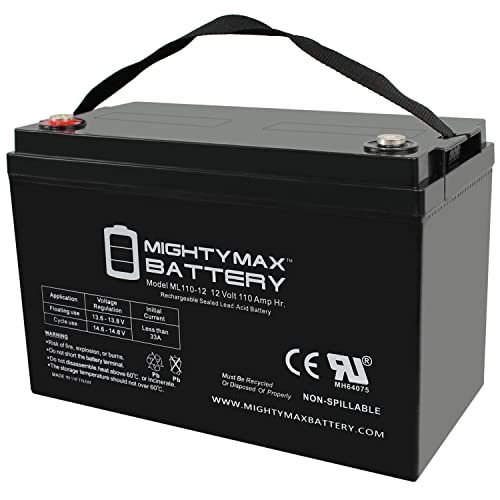
- 110Ah sealed lead-acid battery for backup use
- Maintenance-free and spill-proof AGM-style design
- Can be mounted in any position and resists vibration
Best For: Budget-minded buyers who want a straightforward 12V backup battery
Large-Reserve AGM Option
Renogy 12V 200Ah Deep Cycle AGM Battery

- High 200Ah capacity for longer backup runtime
- Sealed, maintenance-free AGM design
- Strong discharge performance and low self-discharge
Best For: Users who want a larger AGM battery for extended home backup
Lightweight Lithium Backup Choice

- 24 lb lithium battery with built-in 100A BMS
- Rated for 4,000 to 15,000 deep cycles
- Suitable for household backup power and UPS use
Best For: Buyers who want a lightweight lithium battery for home backup
AGM Heavy-Duty Option
Interstate 12V 110Ah Deep Cycle Battery

- 12V 110Ah AGM with spill-proof, maintenance-free design
- Built for deep discharge use and constant cycling
- Heavy 71.5 lb battery with insert terminals
Best For: Backup-style deep cycle use where AGM durability matters
Lightweight Lithium Option
12V 20Ah LiFePO4 Deep Cycle Battery

- 6000+ cycles and a built-in 20A BMS
- About 5 lb with compact, easy-to-place dimensions
- Can expand to a larger parallel battery bank
Best For: Small backup systems and lightweight lithium storage
Reliable AGM All-Rounder
Weize 12V 100Ah Deep Cycle Battery

- 12V 100Ah AGM with maintenance-free operation
- 1-3% monthly self-discharge helps storage readiness
- Works for RV, solar, wind, and UPS systems
Best For: Dependable AGM backup and general off-grid use
Solar Backup Pick
VMAX SLR155 12V 155Ah AGM Deep Cycle Battery

- 155Ah AGM battery for solar-linked backup storage
- Sealed, maintenance-free design safe for indoor use
- Mountable in any position with flexible charging options
Best For: Home backup users wanting higher-capacity sealed AGM storage
Compact Backup Choice
ExpertPower 12V 100Ah AGM Deep Cycle Battery

- 12V 100Ah sealed AGM battery for standby use
- M8 threaded insert terminals for secure connections
- Works with UPS, solar, wind, and sump pump backup
Best For: Smaller home backup systems needing a sealed 12V AGM battery
Reliable AGM Backup Pick – Renogy 12V 100Ah Deep Cycle AGM Battery
If you’re comparing deep cycle batteries for home backup, this Renogy 12V 100Ah AGM is a straightforward sealed lead-acid option for dependable standby power. It’s built for stable discharge, low maintenance, and safe operation, making it a practical fit for backup setups where simplicity matters.
Best For: Homeowners who want a sealed, maintenance-light AGM battery for backup power and basic appliance support.
Pros:
- Sealed AGM design helps reduce troubleshooting and avoids frequent maintenance.
- Supports series and parallel connections for flexible system setups.
- Handles a wide temperature range from -4 to 140°F for more dependable operation.
- Rated for a 1100A max discharge current for powering common household loads.
Cons:
- At 63.9 pounds, it is relatively heavy to move and install.
- 200Ah alternatives may be a better fit if you need longer runtime from a single battery.
Overall, this is a solid AGM choice if you prefer a familiar lead-acid battery with proven safety, low self-discharge, and broad compatibility for backup use. It’s best viewed as a dependable building block rather than the lightest or highest-capacity option.
High-Capacity Budget AGM – Mighty Max 12V 110Ah SLA Battery
Mighty Max Battery 12V 110AH Battery Replacement for AGM-type, 110 Amp, Model# UB 121100
Check Price On AmazonFor shoppers looking at deep cycle batteries for home backup, this Mighty Max 12V 110Ah SLA battery offers a simple sealed lead-acid design with a bit more capacity than a standard 100Ah unit. It’s maintenance-free, spill-proof, and built for wide operating temperatures, which makes it a practical backup battery when you want a conventional AGM-style replacement.
Best For: Buyers who want a sealed 12V backup battery with slightly higher capacity and universal fit.
Pros:
- 110Ah capacity provides a little more reserve than many 100Ah models.
- Sealed AGM/SLA construction is spill-proof and maintenance-free.
- Can be mounted in any position and resists shocks and vibration.
- UL certified and backed by a one-year warranty.
Cons:
- Battery and screws are included only; no wire harness or mounting accessories.
- At 68 pounds, it is heavy for a single-battery solution.
This is a functional no-frills option for backup systems that need a conventional sealed lead-acid battery. The bigger capacity is helpful, but it still makes the most sense for users comfortable with the weight and the accessory limitations.
Large-Reserve AGM Option – Renogy 12V 200Ah Deep Cycle AGM Battery
If you need deep cycle batteries for home backup with more stored energy, this Renogy 12V 200Ah AGM battery stands out for capacity. It uses a sealed maintenance-free design and is built for strong discharge performance, making it a better fit when you want longer runtime from a single battery.
Best For: Backup setups that need a higher-capacity AGM battery for longer runtimes.
Pros:
- 200Ah capacity offers significantly more reserve than 100Ah models.
- Maintenance-free AGM construction helps prevent acid leakage.
- Low self-discharge and wide operating temperature performance support standby use.
- High discharge capability is suited to demanding loads.
Cons:
- At 127.9 pounds, it is very heavy and difficult to handle.
- Renogy notes it should be installed upright unless there is a special reason not to.
For home backup, this is the stronger choice when runtime matters more than portability. The tradeoff is size and weight, so it works best in permanent installations where the extra capacity can be used fully.
Lightweight Lithium Backup Choice – 12V 100Ah LiFePO4 Battery
Among deep cycle batteries for home backup, this 12V 100Ah LiFePO4 battery is the modern lightweight option. It combines a built-in 100A BMS, fast charging support, and a much lower weight than comparable lead-acid batteries, which makes it appealing for backup power systems where easier handling and longer cycle life matter.
Best For: Home backup users who want a lighter lithium battery with long cycle life and built-in protection.
Pros:
- Built-in 100A BMS protects against overcharge, over-discharge, over-current, overheating, and short circuits.
- Much lighter than lead-acid batteries at 24 lbs, which makes installation easier.
- Rated for 4,000 to 15,000 deep cycles for very long service life.
- Can be used for household backup power / UPS and supports series or parallel expansion.
Cons:
- Requires a lithium-compatible charging setup, such as the recommended 14.6V charger.
- Higher-tech lithium batteries may be less familiar to buyers used to AGM batteries.
This battery is the most future-facing choice in the group, especially if you value lighter weight and long-term durability. It’s a strong fit for backup systems where easy installation and repeated cycling are priorities.
AGM Heavy-Duty Option – Interstate 12V 110Ah Deep Cycle Battery
If you need deep cycle batteries for home backup with a rugged AGM build, this Interstate 12V 110Ah battery is a practical sealed-lead-acid option. It’s designed for long, repeated discharge and recharge cycles, and its maintenance-free, spill-proof construction makes it easier to place in utility spaces where you want dependable backup power without regular upkeep.
Best For: Users who want a heavy-duty AGM battery for backup-style energy storage, solar, or other deep-discharge applications.
Pros:
- 12V 110Ah AGM design with maintenance-free, spill-proof VRLA construction
- Built for long life under deep discharge usage and constant cycling
- Suitable for solar, wind, and other large discharging/charging applications
- Professional-grade build from Interstate Batteries with a 1-year performance warranty
Cons:
- Heavy at 71.5 pounds, so placement is less convenient than smaller batteries
- Insert terminals may require attention to matching your setup
- Notes emphasize mobility applications and state it is not a golf cart battery replacement
Overall, this is a solid AGM choice if you want dependable deep-cycle performance and can accommodate the size and weight. It fits best where sealed lead-acid reliability matters more than portability or ultra-compact dimensions.
Lightweight Lithium Option – 12V 20Ah LiFePO4 Deep Cycle Battery
For shoppers comparing deep cycle batteries for home backup, this 12V 20Ah LiFePO4 model stands out for its small size, light weight, and long cycle life. It’s built as an energy-storage battery rather than a starter battery, making it a good fit for compact backup setups, lighting, or small solar systems where space and weight are important.
Best For: Compact backup power, small solar systems, and users who want a lightweight lithium deep-cycle battery.
Pros:
- LiFePO4 chemistry with 6000+ cycles at 80% depth of discharge
- Very light at about 5 pounds, with compact dimensions for easier installation
- Built-in 20A BMS protects against over-charge, over-discharge, short circuit, and overheating
- Expandable up to 4 batteries in parallel for more capacity
Cons:
- 20Ah capacity is modest for larger home backup needs
- Listed as deep cycle energy storage only, not for starting or golf cart use
- Requires proper charging and system planning to scale effectively
This is the strongest pick here if your priority is lithium efficiency in a small package. It’s best when you need a compact battery that can be expanded later rather than a single large-capacity backup unit.
Reliable AGM All-Rounder – Weize 12V 100Ah Deep Cycle Battery
If you want deep cycle batteries for home backup in a familiar AGM format, this Weize 12V 100Ah battery is built for straightforward, maintenance-free use. It uses sealed lead-acid AGM construction with low self-discharge, which is helpful when the battery may sit in storage between outages or periodic use.
Best For: RV, solar, and backup users who want a dependable 12V 100Ah AGM battery with low maintenance.
Pros:
- 12V 100Ah AGM sealed lead-acid battery with maintenance-free operation
- Low self-discharge rate of 1-3% per month supports longer storage
- Designed for RV, solar, wind, marine, camping, and UPS systems
- High max discharge current and well-known AGM technology
Cons:
- At 57 pounds, it is still fairly heavy to move and install
- Temperature ranges should be respected for best life and performance
- One-year warranty only, so long-term coverage is limited
As an AGM all-rounder, this battery is a sensible choice if you want a proven format and a familiar 100Ah size. It’s especially appealing when you want stable backup storage without the complexity of lithium-based systems.
Solar Backup Pick – VMAX SLR155 12V 155Ah AGM Deep Cycle Battery
If you need deep cycle batteries for home backup that can also support solar storage, the VMAX Solar Battery SLR155 is built for sealed, indoor-friendly operation. This 12V 155Ah AGM model is maintenance free, mountable in any position, and designed to work with solar panels, charge controllers, converters, or a vehicle alternator for flexible charging setups.
Best For: Home backup users who want a higher-capacity sealed AGM battery for solar-supported emergency power.
Pros:
- 12V 155Ah capacity gives it more storage than many mid-size backup batteries.
- Sealed AGM construction is maintenance free and safe for indoor use.
- Can be mounted in any position for easier system layout.
- Compatible with solar panels, charge controllers, converters, and alternators.
Cons:
- At 90 pounds, it is heavy to move and install.
- Requires proper charging voltages to match VMAX’s specified 12V setup range.
This is a practical pick if you want a sealed deep-cycle battery with strong storage capacity and broad charging compatibility. The one-year warranty is modest, but the battery’s AGM design and indoor-safe operation make it well suited to backup and renewable-energy setups.
Compact Backup Choice – ExpertPower 12V 100Ah AGM Deep Cycle Battery
For buyers comparing deep cycle batteries for home backup, the ExpertPower 12V 100Ah AGM battery is a straightforward sealed option for standby power and renewable systems. It is designed as a maintenance-free, valve-regulated battery with M8 threaded insert terminals and is listed for use in solar and wind systems, UPS units, security systems, sump pumps, RVs, and emergency lighting.
Best For: Smaller home backup setups that need a sealed 12V 100Ah AGM battery for UPS or emergency power support.
Pros:
- 12V 100Ah capacity fits compact backup and standby systems.
- AGM sealed construction is non-spillable and maintenance free.
- M8 threaded insert terminals support a secure connection.
- Works with solar, wind, UPS, security, sump pump, and RV applications.
Cons:
- Less capacity than larger home-backup batteries in this roundup.
- Weighs 59.52 lbs, so it is still substantial for its size.
This model makes sense if you want a dependable AGM battery without stepping up to a larger, heavier pack. Its broad compatibility with backup and off-grid uses makes it a versatile choice for smaller emergency-power systems.
High-Capacity Option – VEVOR 12V 200Ah AGM Deep Cycle Battery
If your priority is runtime, this VEVOR 12V 200Ah AGM battery is the largest-capacity option here for deep cycle batteries for home backup. It uses a sealed valve-controlled AGM design with no maintenance required, is intended for energy storage rather than starting use, and is described as suitable for RV solar off-grid systems, UPS backup, communication facilities, railway signal systems, and emergency power.
Best For: Larger backup systems that need high-capacity AGM energy storage for extended runtimes.
Pros:
- 200Ah capacity offers the most storage in this roundup.
- Sealed AGM design requires no water or routine maintenance.
- High discharge capability with a 1400A 5-second peak rating.
- Suitable for solar, wind, UPS, and other emergency power applications.
Cons:
- Very heavy at 116.8 pounds.
- Professional charging equipment is required during use.
- Not meant to be used as a starting battery for car ignition.
This is the most capacity-focused choice in the group, but it also demands more from installation and charging. If you want the longest potential runtime from a sealed AGM battery and can accommodate the size and weight, it is a strong backup-energy option.
How We Picked the Best Deep Cycle Batteries for Home Backup
We focused on practical home-backup needs: usable capacity, cycle life, chemistry, maintenance requirements, compatibility with common inverters and solar charge controllers, and overall value. We also favored batteries with clear specifications, strong brand recognition, and formats commonly used in standby power systems.
Quick Comparison: AGM Vs. LiFePO4
AGM batteries are usually easier to add to existing systems, cost less upfront, and work well for occasional backup use. LiFePO4 batteries typically offer more usable capacity, faster charging, and a much longer cycle life, which can make them a better long-term choice if you expect frequent outages or daily solar cycling.
Key Buying Factors for Deep Cycle Batteries for Home Backup
Capacity and Runtime
Look at amp-hours and voltage together, then estimate how much energy your loads actually use. A 100Ah battery may be enough for modem, lights, and small electronics, while larger 150Ah to 200Ah options are better for longer outages or heavier loads.
Cycle Life and Chemistry
If you only need emergency power a few times a year, AGM can be a sensible value buy. If you plan frequent discharge and recharge cycles, LiFePO4 is often the better investment because it usually lasts much longer and maintains performance better over time.
Charging and System Compatibility
Make sure your charger, inverter, and solar controller match the battery chemistry and voltage. LiFePO4 often benefits from a charger profile designed for lithium, while AGM batteries need proper absorb and float settings to avoid undercharging or overcharging.
Size, Weight, and Installation
Check physical dimensions, terminal type, and weight before buying. Larger batteries can be difficult to place in tight battery boxes or utility spaces, and lithium models are much lighter, which can simplify installation.
Who Should Buy Which Deep Cycle Batteries for Home Backup?
If you want the lowest upfront cost and a straightforward replacement for an existing backup system, a 12V AGM model is often the easiest choice. If you want the best long-term value, more usable capacity, and less maintenance, choose a LiFePO4 battery. For compact backup needs, smaller lithium options can support critical loads like routers, lights, and communication gear, while 200Ah-class batteries suit larger home backup banks and extended outages.
In short, match the battery to your outage duration, daily cycling habits, and charging setup. The best choice for one home may be very different from the best choice for another, especially when comparing occasional emergency use with regular solar-backed storage.