When you are far from roads, cell service, and reliable GPS, a dependable compass can be a vital navigation backup. The right model should be accurate, readable in changing light, durable enough for rough conditions, and simple to use under pressure.
We compared 10 compasses for remote areas across sighting features, declination adjustment, portability, construction, and ease of use to help hikers, campers, scouts, and survivalists choose with confidence.
Best 10 Compasses for Remote Areas Picks for 2026
Professional Precision

- Professional mirror compass with accurate sighting
- Global-use balancing, UTM scales, and clinometer
- Low-light capable and battery-free
Best For: Serious hikers and demanding backcountry navigation
All-Weather Signaling
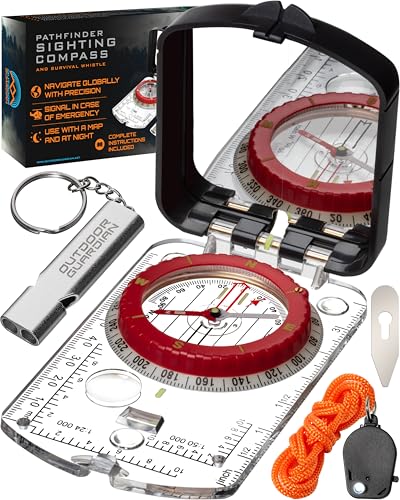
- Global needle with adjustable declination
- Luminous dial, LED light, and survival whistle
- Waterproof mirror compass with clinometer
Best For: Survival kits, scouts, and all-weather hiking
Simple Map Navigation

- Minimalist baseplate compass for map work
- Liquid-filled capsule and steel needle
- Compact, battery-free design
Best For: Recreational northern-hemisphere hiking and orienteering
Rugged Night Navigation

- Waterproof, shockproof metal construction
- Magnified rear sight lens for precise readings
- Glow-in-the-dark markings with pouch and strap
Best For: Budget-conscious campers, scouts, and rugged outdoor use
Reliable Trail Navigator

- Steel needle with jewel bearing
- Map magnifier and transparent baseplate
- Luminous markings; no batteries required
Best For: Northern Hemisphere hiking and orienteering
Accessible Route Finder
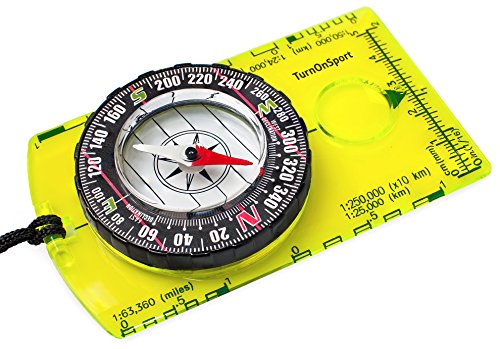
- Liquid-filled magnetic capsule
- 360-degree rotating bezel
- Magnifier and 1:24000 map scale
Best For: Beginners, scouts, and casual map navigation
Hands-Free Direction Aid

- Ultralight 5-gram design
- Clips to straps, sleeves, or map edges
- Waterproof with luminous markings
Best For: Ultralight hiking and hands-free navigation
Rugged Lensatic Pick

- Lensatic sighting system with prism lens and bubble level
- Glow-in-the-dark interface for low-light readings
- Water-resistant aluminum body with carrying accessories
Best For: Hikers and campers seeking a durable, compact lensatic compass
Global Navigation Pick

- Global needle works across both hemispheres
- Adjustable declination and built-in clinometer
- LED light, sighting mirror, and emergency whistle included
Best For: International backcountry travelers and route planners
Simple Waterproof Pick

- Waterproof construction for wet conditions
- Aluminum body for outdoor durability
- Pocket-sized design with included storage bag
Best For: Casual outdoor explorers wanting a basic waterproof compass
Professional Precision – SUUNTO MC-2 Compass
For serious hikers navigating compasses for remote areas, the SUUNTO MC-2 offers a professional mirror design with precise sighting, a clinometer, and global-use balancing. Its no-battery operation and low-light features make it a dependable choice for demanding routes.
Best For: Serious hikers, trekkers, alpine users, and backcountry navigators who want advanced directional tools.
Pros:
- Mirror, sighting hole, and notch support accurate bearings.
- Includes a clinometer and fixed declination adjustment.
- Balanced for global use with Metric UTM scales and an inch ruler.
- Compact, lightweight design with a lanyard and wrist lock.
Cons:
- Its advanced feature set may be more than casual hikers need.
- The fixed declination system is less flexible than an adjustable design.
The MC-2 is a strong premium option when route-finding accuracy and sighting capability matter more than simplicity. Its durable, battery-free construction suits extended outdoor use.
All-Weather Signaling – Pathfinder Sighting Compass
The Pathfinder Sighting Compass is a versatile choice for compasses for remote areas, combining a global needle with adjustable declination, luminous markings, and an LED light. Its waterproof build and emergency signaling tools add practical value for uncertain conditions.
Best For: Campers, scouts, survival trainees, and hikers who want navigation plus emergency signaling features.
Pros:
- Global needle and adjustable declination support accurate navigation.
- Folding mirror, sighting notch, and 3x magnifying lens aid route-finding.
- Includes an LED light, survival whistle, and luminous dial.
- Offers six measurement scales and a clinometer.
Cons:
- The many features may feel less streamlined than a basic map compass.
- The LED requires its own power source, unlike the magnetic compass function.
This is a feature-rich survival-oriented compass for users who value signaling and nighttime visibility alongside ordinary hiking navigation. It is especially practical for training, family outings, and preparedness kits.
Simple Map Navigation – SUUNTO A-10 Compass
For hikers seeking straightforward compasses for remote areas, the SUUNTO A-10 focuses on essential map-and-compass navigation. Its liquid-filled capsule, steel needle, and compact baseplate make it easy to use without batteries.
Best For: Recreational hikers and orienteers who want a simple baseplate compass for northern-hemisphere use.
Pros:
- Minimalist design is fast and simple to use.
- Liquid-filled capsule supports stable operation.
- High-grade steel needle uses a jewel bearing.
- Includes inch and centimeter scales with a fixed declination setting.
Cons:
- Balanced for northern-hemisphere use rather than global navigation.
- It lacks the mirror sighting and advanced features of the MC-2.
The A-10 is a sensible pick when you want dependable basic navigation without extra complexity. It works best for map reading, recreational hiking, and orienteering in its intended hemisphere.
Rugged Night Navigation – Sportneer Compass
The Sportneer Compass is built for outdoor users comparing compasses for remote areas on a budget. Its metal construction, waterproof and shockproof design, magnified rear sight lens, and glow-in-the-dark markings support navigation in rough and low-light conditions.
Best For: Campers, scouts, hunters, and beginners who want a rugged sighting compass with portable accessories.
Pros:
- Metal base and cover provide waterproof and shock-resistant construction.
- Rear sight lens magnifies the dial for easier readings.
- Fluorescent markings support navigation after light exposure.
- Includes a strap and carrying pouch.
Cons:
- At 7.2 ounces, it is heavier than the other listed options.
- The notes do not list a warranty.
- The fluorescent markings require prior exposure to light.
This compass offers practical ruggedness and useful low-light visibility for general outdoor navigation. Its heavier metal build may appeal to durability-focused users, while the included pouch improves portability.
Reliable Trail Navigator – Compact Hiking Compass
For hikers comparing compasses for remote areas, the SUUNTO A-30 offers a practical balance of map-reading features and low-light visibility. Its transparent baseplate, magnifying lens, metric scales, and luminous markings support straightforward navigation without batteries.
Best For: Hiking, trekking, orienteering, and map-based navigation in the Northern Hemisphere.
Pros:
- High-grade steel needle with a jewel bearing for accurate readings.
- Transparent baseplate and magnifying lens help with map work.
- Luminescent markings support use in low-light conditions.
- Lightweight 1.6-ounce design requires no batteries.
Cons:
- Balanced for Northern Hemisphere use.
- Uses a fixed declination rather than an adjustable declination setting.
The A-30 is a capable, compact choice when you want a traditional compass with useful map-reading aids and low-light markings. Its fixed declination is the main limitation to consider for demanding navigation.
Accessible Route Finder – Scout Orienteering Compass
Among compasses for remote areas, the TurnOnSport Orienteering Compass stands out as a lightweight, approachable option for route practice and basic map navigation. Its liquid-filled capsule, rotating bezel, magnifying glass, and 1:24000 scale provide useful fundamentals for hikers, campers, and scouts.
Best For: Beginners, scouts, families, and casual hikers learning compass-and-map navigation.
Pros:
- Liquid-filled capsule helps the magnetic needle swing freely toward north.
- Rotating 360-degree bezel supports bearing work.
- Magnifying glass and 1:24000 ruler scale assist with map reading.
- Lightweight handheld design includes a lanyard for carrying.
Cons:
- Plastic construction may be less suited to demanding expeditions than more specialized designs.
- Its 30-day warranty is relatively limited.
This is a sensible entry-level compass for building navigation skills and carrying as basic outdoor gear. More experienced users heading into challenging terrain may prefer a compass with additional specialized adjustments.
Hands-Free Direction Aid – Micro Adventure Compass
For compact compasses for remote areas, the SUUNTO Multifunctional Compass is designed to stay out of the way while keeping directional information accessible. It can attach to a sleeve, watch strap, backpack strap, or map edge, and its waterproof construction and luminous markings suit active outdoor use.
Best For: Hikers, trail runners, cyclists, and adventurers who want an ultralight backup or hands-free directional reference.
Pros:
- Supercompact 5-gram design is easy to carry.
- Clip mounting supports attachment to clothing, straps, or a map edge.
- Waterproof construction and luminous markings support outdoor and low-light use.
- Rotating bezel adjusts in 10-degree increments and requires no batteries.
Cons:
- Small dimensions provide fewer map-reading features than a full-size baseplate compass.
- Balanced for Northern Hemisphere navigation.
The Micro Compass is best viewed as a portable directional tool rather than a full map-navigation instrument. Its tiny, clip-on design is particularly useful when weight and hands-free carrying matter most.
Rugged Lensatic Pick – Pocket Survival Compass
Compass, Hiking Compass for Survival with Lensatic – Water-Resistant Durable and Pocket-Sized
Check Price On AmazonFor hikers comparing compasses for remote areas, this pocket-sized lensatic model emphasizes readable bearings, durability, and low-light use. Its water-resistant aluminum construction and included carrying accessories suit camping, hiking, and mountaineering.
Best For: Hikers and campers who want a compact, rugged compass with enhanced sighting features.
Pros:
- Lensatic function, prism lens, bubble level, and clear scales support more precise readings.
- Fluorescent markings and a glow-in-the-dark interface aid nighttime navigation.
- Water-resistant aluminum construction is designed for rough outdoor conditions.
- Includes a carrying case, lanyard, or pouch for convenient transport.
Cons:
- The 91-day warranty is relatively brief.
- At 0.22 kg, it is heavier than an ultralight pocket compass.
This is a practical choice when rugged construction and sighting assistance matter more than minimum weight, especially for users navigating in variable light.
Global Navigation Pick – LED Orienteering Compass
Among compasses for remote areas, this BIJIA model stands out for worldwide use and route-planning features. Its global needle, adjustable declination, sighting mirror, clinometer, LED light, and emergency whistle provide useful tools for backcountry navigation and safety.
Best For: International hikers, backpackers, and mountaineers who need a feature-rich navigation compass.
Pros:
- Global needle is designed to balance accurately in both hemispheres.
- Adjustable declination and map scales support more accurate map navigation.
- Built-in clinometer helps assess slope angles and terrain steepness.
- LED lighting, luminous markings, and an included emergency whistle add low-light and safety functionality.
Cons:
- Its feature-rich design may be more equipment than casual users need.
- The stated dimensions are larger than some minimalist pocket compasses.
With a one-year warranty and a weight of only 3.2 ounces, this is the most versatile option here for users who travel across hemispheres or regularly plan routes in challenging terrain.
Simple Waterproof Pick – Tactical Outdoor Compass
For shoppers seeking straightforward compasses for remote areas, this pocket-sized tactical model focuses on basic outdoor portability and waterproof construction. Its aluminum material and included bag make it easy to carry for climbing, biking, exploring, and other outdoor activities.
Best For: Outdoor users who want a simple waterproof compass for general exploration.
Pros:
- Waterproof construction is suited to wet outdoor conditions.
- Aluminum material is intended for durable outdoor use.
- Pocket-sized design is convenient for carrying on excursions.
- Included bag provides basic storage and transport.
Cons:
- The supplied notes do not specify advanced features such as declination adjustment, a sighting mirror, or luminous markings.
- Details about weight, accuracy, and included navigation scales are not provided.
This option makes the most sense for buyers prioritizing waterproof portability and a simple carry setup, while users planning technical navigation may prefer a model with more documented features.
How We Picked the Best Compasses for Remote Areas
We focused on features that matter when navigation becomes more demanding: directional accuracy, readable markings, magnetic-needle performance, adjustable declination, durability, and ease of carrying. Sighting mirrors, luminous components, clinometers, global or northern-hemisphere needles, and protective cases were also considered where relevant.
Because no single compass suits every trip, the selection includes professional sighting models, compact baseplate designs, lensatic options, and affordable beginner-friendly compasses. Product claims should still be checked against the manufacturer’s current specifications, especially for water resistance and needle compatibility.
Quick Comparison
| Type | Best For | Features to Look For |
|---|---|---|
| Sighting compass | Precise bearings and route planning | Mirror, adjustable declination, luminous markings |
| Baseplate compass | Hiking and map navigation | Clear scale, stable needle, lightweight design |
| Lensatic compass | Compact survival carry | Folding sight, durable case, readable dial |
| Global or multifunction compass | Travel and varied environments | Needle balance, clinometer, waterproof construction |
Key Buying Factors for Compasses for Remote Areas
Declination Adjustment
Magnetic north and true north differ by location. A compass with adjustable declination lets you correct for that difference, improving map-and-compass accuracy without relying on mental calculations.
Needle Design and Compatibility
Standard northern-hemisphere needles work well in their intended regions, while global needles are more versatile for travel. Look for a needle that settles quickly and remains stable when held level.
Readability in Poor Light
Luminous markings or a built-in light can help at dusk, in dense forest, or during emergencies. A clear bezel and legible degree markings are equally important in daylight.
Durability and Carrying Comfort
For remote trips, favor water-resistant or waterproof construction, a protective housing, and a lanyard or case. Keep the compass away from phones, metal tools, magnets, and vehicle dashboards, which can affect readings.
Skill Level and Navigation Style
Sighting mirrors and clinometers add capability but require practice. Beginners may be better served by a simple baseplate compass with clear instructions, while experienced navigators can benefit from more precise sighting features.
Who Should Buy Which Compasses for Remote Areas?
Serious hikers and professionals: Choose a sighting compass with adjustable declination, luminous markings, and a sturdy construction for accurate bearings and route work.
Most recreational hikers: A compact baseplate model is usually the best balance of simplicity, weight, and map-navigation usefulness.
Scouts, beginners, and families: Look for an affordable, easy-to-read compass with a stable needle and straightforward controls rather than advanced features you may not use.
Survival and emergency kits: A pocket-sized lensatic or durable waterproof compass with a lanyard makes a practical backup, provided you practice taking and following bearings before an emergency.
Whichever model you choose, pair it with a topographic map and learn basic skills such as orienting the map, taking a bearing, correcting declination, and triangulating your position. A quality compass is most valuable when you know how to use it.