Cold temperatures, gloves, snow glare, and limited visibility can make reliable navigation more difficult. The best compasses for cold weather remain readable, durable, and easy to operate when conditions turn harsh.
This roundup compares military-style lensatic models, compact hiking compasses, wrist-mounted designs, and multifunction navigation tools to help you choose the right option for winter hiking, camping, backpacking, or emergency use.
Best 10 Compasses for Cold Weather Picks for 2026
Extreme-Weather Standard
Cammenga 3H Tritium Lensatic Compass

- Operates from -50°F to 150°F
- Tritium illumination lasts over 12 years
- Waterproof, shockproof, and sand-proof
Best For: Severe cold, survival, and rugged outdoor navigation
Wrist-Mounted Cold Check
Sun Company ArmArmour 3 Compass

- Thermometer reads down to -30°F
- Luminous liquid-filled compass
- Protective hinged cover and adjustable strap
Best For: Winter activities needing wrist-mounted direction and temperature readings
Lightweight Trail Navigator

- Luminous markings for low light
- Magnifying lens aids map reading
- Lightweight, mechanical, and battery-free
Best For: Lightweight hiking and orienteering in the northern hemisphere
Rugged Field Backup

- Shockproof, water-resistant, and sand-proof
- Tritium lights work over 12 years without batteries
- Includes pouch, lanyard, and storage case
Best For: Winter camping, survival kits, and rugged field navigation
Rugged Glow Compass
Sportneer Metal Orienteering Compass

- Waterproof, shock-resistant metal construction
- Magnified rear sight lens for precise readings
- Glow-in-the-dark markings plus strap and pouch
Best For: Rugged hiking, camping, scouting, and low-light navigation
Simple Trail Navigator
SUUNTO A-10 Compact Hiking Compass

- Liquid-filled capsule for stable operation
- Compact baseplate with inch/cm scales
- Battery-free design for simple navigation
Best For: Recreational hiking, trekking, trail running, and map reading
Field-Ready Survival Compass
Military Lensatic Sighting Compass
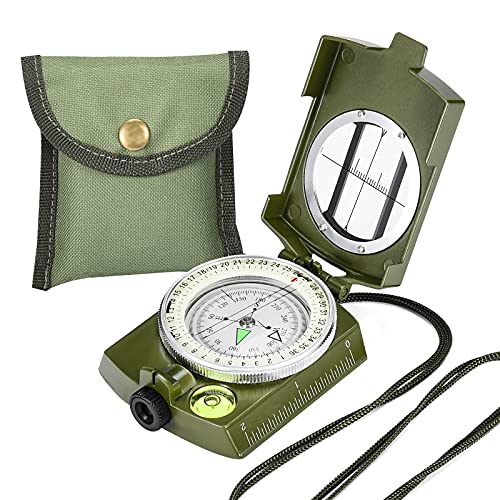
- Waterproof and shakeproof military construction
- Damping oil and bubble level support stable readings
- Glow interface, canvas pouch, and detachable lanyard
Best For: Survival kits, expeditions, tactical gear, and harsh outdoor use
Cold-Ready Lensatic Pick

- Water-resistant aluminum build
- Lensatic features for precise readings
- Glow-in-the-dark visibility
Best For: Hikers, campers, and mountaineers needing a compact, rugged compass
Rugged Navigation Choice
Eyeskey Military Sighting Compass

- Waterproof aluminum-alloy construction
- Luminous liquid-filled dial
- Sighting and tripod-mount features
Best For: Hikers, hunters, scouts, and navigators wanting a versatile rugged compass
Lightweight Map-Reading Pick

- Waterproof acrylic construction
- 1:24000 map scale and magnifier
- Very light and easy to carry
Best For: Beginners, kids, scouts, and backpackers learning map navigation
Extreme-Weather Standard – Cammenga 3H Tritium Lensatic Compass
For compasses for cold weather, the Cammenga 3H stands out with an operating range from -50°F to 150°F. Its military-grade, waterproof, shockproof, sand-proof construction and self-powered illumination make it suited to demanding navigation conditions.
Best For: Cold-weather hiking, survival kits, backpacking, and users who want a rugged lensatic compass.
Pros:
- Rated for temperatures as low as -50°F.
- Seven tritium micro lights provide illumination for over 12 years without batteries.
- Waterproof, shockproof, damage-resistant, and sand-proof construction.
- Includes a pouch, lanyard, storage case, instructions, and warranty card.
Cons:
- The handheld military-style design is less compact than a simple baseplate compass.
- Its listed dimensions and protective construction may add bulk to a lightweight kit.
This is the strongest choice here for severe winter exposure and rough handling. Choose it when temperature range and durability matter more than minimum weight.
Wrist-Mounted Cold Check – Sun Company ArmArmour 3 Compass
The Sun Company ArmArmour 3 combines a luminous compass with a thermometer that reads down to -30°F. For compasses for cold weather, its wrist-mounted format keeps basic direction and temperature information accessible while a hinged cover helps protect the compass and reduce glare.
Best For: Winter hikers, skiers, and outdoor users who want a compact wrist compass with temperature monitoring.
Pros:
- Thermometer reads to -30°F.
- Luminous 20mm liquid-filled compass supports low-light reading.
- Hinged cover helps protect the compass and limit glare.
- Adjustable 22mm tactical strap fits most adults and children.
Cons:
- The compass is smaller than full-size handheld navigation models.
- Its supplied notes do not specify a broader operating-temperature range for the compass itself.
This model is a practical convenience pick for cold outings where wrist access and temperature awareness are useful. It is less suited to users seeking a full military-style navigation instrument.
Lightweight Trail Navigator – Suunto A-30 Compass
The Suunto A-30 is a compact mechanical baseplate compass with luminous markings, a magnifying lens, and metric scales. Among compasses for cold weather, it offers a lightweight, battery-free option for hiking and low-light map work, though the supplied notes do not give a specific cold-temperature rating.
Best For: Hikers, trekkers, and orienteers who prioritize a light, simple compass for map-based navigation.
Pros:
- Luminescent markings support low-light use.
- Magnifying lens and transparent baseplate assist with map reading.
- Mechanical design requires no batteries.
- Weighs 1.6 ounces and includes metric scales.
Cons:
- It is balanced for northern hemisphere use and has a fixed declination.
- No specific operating-temperature range is provided in the supplied details.
- Its plastic material may be less rugged than the metal military-style alternatives.
The A-30 is the best lightweight navigation choice in this group. It works well for ordinary winter trail use, but shoppers facing extreme cold should favor a model with an explicitly stated low-temperature range.
Rugged Field Backup – Cammenga 3HCS Tritium Compass
The Cammenga 3HCS is a military-grade lensatic compass built for field use, with shockproof, water-resistant, and sand-proof construction. Its seven tritium lights provide non-battery illumination, making it a dependable option among compasses for cold weather when low-light navigation and rugged storage are priorities.
Best For: Survival kits, winter camping, and users who want a durable military-style compass with included carrying accessories.
Pros:
- Shockproof, water-resistant, and sand-proof design.
- Seven tritium micro lights illuminate the compass for over 12 years without batteries.
- Includes a waterproof pouch, lanyard, instructions, and clam-shell case.
- Designed for accurate field navigation and trusted by the US Military.
Cons:
- The 16-ounce weight is substantial for a minimalist hiking setup.
- The supplied notes say water-resistant rather than specifying a full operating-temperature range.
- Its lensatic format may take more practice than a simple baseplate compass.
This is a sensible rugged backup for winter and survival-oriented kits. It offers durable protection and long-lasting illumination, but the heavier build may be unnecessary for casual day hikes.
Rugged Glow Compass – Sportneer Metal Orienteering Compass
For shoppers comparing compasses for cold weather, the Sportneer stands out for its metal construction, waterproof and shock-resistant design, and glow-in-the-dark markings. The rear sight lens magnifies the dial for more precise readings, while the included strap and pouch make it convenient to carry.
Best For: Hikers, campers, scouts, and anyone who wants a durable compass for rugged, low-light outdoor use.
Pros:
- Metal base and cover provide waterproof, shock-resistant durability.
- Rear sight lens magnifies the dial for precise readings.
- Fluorescent north indicator and dial markings glow after light exposure.
- Includes a strap and carrying pouch for portable storage.
Cons:
- At 7.2 ounces, it may feel slightly heavy for children.
- The compass must be kept level for the magnetic needle to rotate freely and read accurately.
Its rugged build and nighttime visibility make it a practical choice when cold-weather trips may also involve wet conditions, rough terrain, or limited daylight.
Simple Trail Navigator – SUUNTO A-10 Compact Hiking Compass
The SUUNTO A-10 is a straightforward option among compasses for cold weather, with a liquid-filled capsule designed for stable operation and a high-grade steel needle with jewel bearing. Its compact baseplate format supports map-and-compass navigation without batteries.
Best For: Recreational hikers, trail runners, mountain bikers, and travelers who prefer a lightweight, uncomplicated compass.
Pros:
- Liquid-filled capsule helps provide stable operation.
- High-grade steel needle and jewel bearing support accurate navigation.
- Compact baseplate design includes inch/cm scales.
- Requires no batteries and includes a one-year manufacturer warranty.
Cons:
- Balanced for northern hemisphere use.
- Uses a fixed declination design.
- Plastic construction is less ruggedly specified than metal alternatives in this roundup.
Choose the A-10 when portability and ease of use matter more than military-style construction. Its liquid-filled capsule and simple operation suit everyday outdoor navigation.
Field-Ready Survival Compass – Military Lensatic Sighting Compass
For demanding trips, this military lensatic compass is one of the more rugged compasses for cold weather and harsh outdoor conditions. Its waterproof and shakeproof construction, damping oil, bubble level, and fluorescent interface are designed to support stable, visible readings in challenging environments.
Best For: Emergency preparedness, tactical gear, expeditions, camping, and outdoor users who want a lensatic compass with carrying options.
Pros:
- Waterproof and shakeproof military-style construction.
- Damping oil helps stabilize the pointer.
- Built-in bubble level is intended to improve accuracy and reduce errors.
- Includes a canvas pouch and detachable neck lanyard.
Cons:
- Its listed dimensions are relatively large for a compact compass.
- The lensatic design may be less immediately simple than a basic recreational baseplate compass.
This model is a strong fit when durability, sighting features, and nighttime visibility are priorities. The pouch and detachable lanyard also make it easy to attach to a belt, backpack, or tactical setup.
Cold-Ready Lensatic Pick – Durable Pocket Compass
Compass, Hiking Compass for Survival with Lensatic – Water-Resistant Durable and Pocket-Sized
Check Price On AmazonFor shoppers comparing compasses for cold weather, this pocket-sized lensatic model combines water-resistant aluminum construction with features intended to support accurate readings in demanding outdoor conditions. Its illuminated interface also helps when winter outings extend into low light.
Best For: Hikers, campers, and mountaineers who want a compact, durable compass with nighttime readability.
Pros:
- Water-resistant aluminum construction is designed for rough conditions.
- Lensatic function, prism lens, bubble level, and clear scales support precise readings.
- Fluorescent and glow-in-the-dark elements improve visibility in low light.
- Includes a carrying case, lanyard, or pouch for convenient portability.
Cons:
- The 91-day warranty is relatively short.
- Its military-style lensatic design may be more feature-rich than casual users need.
This is a practical choice when durability, water resistance, and visibility matter more than having the lightest possible map compass.
Rugged Navigation Choice – Eyeskey Military Sighting Compass
Among compasses for cold weather, the Eyeskey stands out for its waterproof aluminum-alloy body and liquid-filled design. Its luminous dial, adjustable marching line, and sighting features are useful when gloves, poor visibility, or challenging terrain make quick readings important.
Best For: Outdoor navigators, hunters, scouts, and hikers who want a waterproof sighting compass with multiple positioning features.
Pros:
- Waterproof, impact-resistant aluminum-alloy construction is built for demanding outdoor use.
- Liquid-filled compass and luminous dial support readable, reliable bearings.
- Sighting line, rotating bezel, magnifying viewer, and conversion chart add versatility.
- Includes a canvas pouch, carrying box, lanyard, and tripod-mount capability.
Cons:
- The multifunctional military-style design may take more time to learn.
- Its supplied warranty information is extensive but primarily describes service terms rather than a simple duration.
Choose this model if you want a sturdier, more advanced navigation instrument for wet or low-light excursions rather than a basic classroom compass.
Lightweight Map-Reading Pick – Orange Orienteering Compass
For those seeking compasses for cold weather on a budget or for group outings, this lightweight waterproof orienteering compass offers a straightforward map-reading setup. The clear acrylic body, magnetic needle, ruler scale, and lanyard make it easy to carry for hiking, camping, backpacking, or scout activities.
Best For: Beginners, kids, scouts, and backpackers who need a compact waterproof compass for basic navigation and map reading.
Pros:
- Waterproof, compact, and lightweight at approximately 0.05 kg.
- Orienting lines, magnetic needle, directional arrow, and 1:24000 scale support map work.
- Built-in magnifying glass helps with reading geological maps.
- Includes a lanyard for easy carrying and has a one-year warranty.
Cons:
- Plastic construction is less rugged than the aluminum models in this roundup.
- It lacks the advanced sighting and low-light features offered by the other options.
This orange compass is a sensible entry-level option when portability and simple map navigation are the priorities, especially for teaching or family outdoor use.
How We Picked the Best Compasses for Cold Weather
We focused on features that matter when navigation equipment must perform in freezing, wet, or low-visibility conditions. Our selection includes compasses with luminous markings, waterproof or water-resistant construction, impact-resistant housings, sighting systems, and designs that can be handled with gloves.
We also considered portability and intended use. Lensatic military-style compasses generally offer more robust sighting and direction-finding features, while baseplate or orienteering models are often lighter and better suited to map work. Wrist-mounted and multifunction options can add convenience without requiring a separate thermometer or inclinometer.
Quick Comparison
| Type | Best For | Advantages | Potential Trade-Off |
|---|---|---|---|
| Lensatic military | Rugged field navigation | Sighting capability, protective housing, durability | Heavier and less convenient for detailed map work |
| Baseplate hiking | Trail navigation and map reading | Lightweight, simple, easy to align with a map | Usually offers less physical protection |
| Wrist-mounted | Fast access during active use | Hands-free convenience and wearable design | May have fewer navigation features |
| Multifunction | Survival kits and varied terrain | May include sighting, slope, or temperature tools | More components can increase bulk |
Key Buying Factors for Compasses for Cold Weather
Readability in Low Light
Luminous markings are valuable during early-morning starts, winter storms, and wooded conditions. Check whether the compass provides glow features or tritium illumination, and consider how easily the direction indicators can be distinguished while wearing gloves.
Durability and Weather Resistance
Choose a sealed, waterproof, or water-resistant housing if you expect snow, rain, or accidental drops. A protective cover and sturdy strap can help prevent damage when the compass is stored in a pack or attached to outerwear.
Ease of Use with Gloves
Cold-weather navigation should not depend on tiny controls or a delicate rotating bezel. Look for a clear dial, a usable lanyard or wrist strap, and enough surface area to hold the compass securely with insulated hands.
Navigation Features
A basic compass is sufficient for following a bearing, but sighting systems can improve accuracy over distance. For map-and-compass navigation, a transparent baseplate, direction-of-travel arrow, and readable degree markings are especially useful. An inclinometer may help assess slope and terrain in mountainous areas.
Who Should Buy Which Compasses for Cold Weather?
Choose a lensatic compass if you prioritize ruggedness, long-distance sighting, and emergency preparedness. These are strong choices for survival kits, backcountry travel, and users who want a more traditional military-style instrument.
Select a compact baseplate compass for ordinary hiking, backpacking, and map reading. Models such as the Suunto-style recreational designs are typically lighter and simpler for beginners or casual trail users.
A wrist compass is useful for runners, scouts, guides, and anyone who wants quick access without digging through a pocket. For technical terrain or a broad survival kit, a multifunction compass with sighting or inclinometer features can provide added versatility.
Whichever model you choose, practice taking bearings before heading into winter terrain, carry a map, and treat the compass as part of a complete navigation system rather than a standalone substitute for preparation.