When you need reliable power far from hookups, the right battery station can keep phones, lights, coolers, cameras, and small appliances running without stress.
This roundup focuses on the best camping power station for long trips, with options that balance runtime, recharge speed, portability, and real-world output.
Best 10 Camping Power Station for Long Trips Picks for 2026
Ultra-High-Capacity Pick

- 2042Wh capacity with 2200W output
- 0-80% recharge in 66 minutes on AC
- Under-30dB Silent Charging mode
Best For: Long camping trips needing high capacity and quiet charging
Fast-Refill Expansion Pick

- 1024Wh base capacity expands to 5120Wh
- 0-80% in 36 minutes on AC
- 2000W output with 4500W surge
Best For: Long-travel campers who want fast charging and expandable storage
Compact Solar Bundle

- 1070Wh battery with 1500W AC output
- Includes a 200W solar panel
- Weighs just 23.8 lbs
Best For: Campers wanting a lighter solar-ready setup for longer outings
All-Day Backup Choice
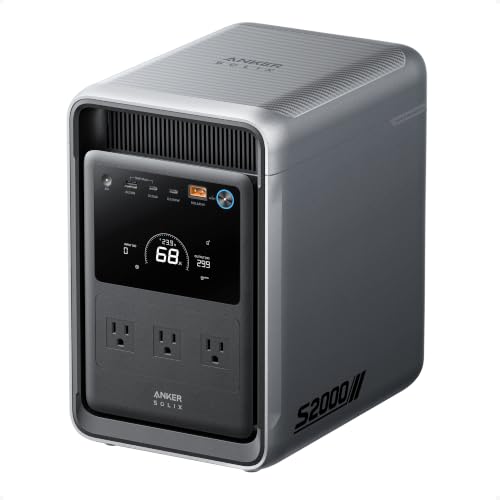
- 2010Wh capacity with 35-hour fridge backup claim
- 10,000-cycle LFP battery
- Eight outlets with flexible recharge options
Best For: Extended camping trips that need efficient fridge and essentials backup
Trail-Ready Fast Charge
BLUETTI AC50B 448Wh Portable Power Station

- 448Wh capacity with 700W AC output
- 0-80% charge in 45 minutes with AC input
- 14.8-lb build with 6 outlets
Best For: Lightweight camping trips with quick charging needs
High-Output Trip Power
EF ECOFLOW DELTA 2 1024Wh Power Station

- 1024Wh capacity, expandable to 3kWh
- 1800W output with 15 outlets
- 0-80% charge in 50 minutes
Best For: Long camping or RV trips that need higher output
Ultra-Light Camp Backup
Jackery Explorer 300 292Wh Power Station

- 7.5-lb portable design with handle
- 292Wh LiFePO4 battery with 4,000+ cycles
- 300W output with 2 AC outlets and USB-C PD
Best For: Pack-light campers and hikers needing basic device charging
Ultra-High Capacity Camping Pick
Anker SOLIX C2000 Gen 2 Portable Power Station
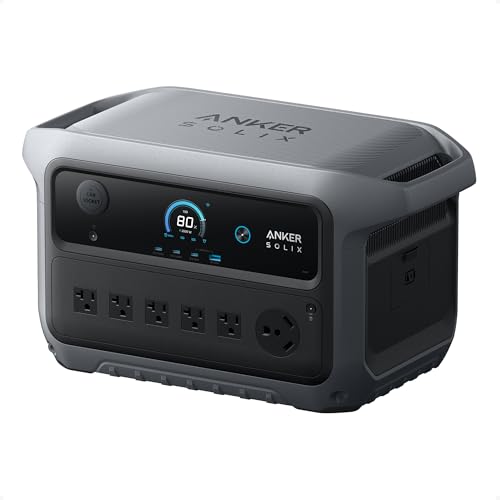
- 2,048Wh battery with optional 4kWh expansion
- 2,400W rated output, 4,000W peak power
- Full recharge in 58 minutes via AC or solar
Best For: Long camping trips and RV setups needing high output
Fast-Charge Mid-Size Camping Pick
Anker SOLIX C1000 Portable Power Station

- 1,056Wh LiFePO4 battery with 1,800W output
- Full charge in under an hour with AC
- Up to 600W solar input for off-grid use
Best For: Campers who want fast charging in a manageable size
Compact Long-Trip Choice
Anker SOLIX C1000 Gen 2 Portable Power Station

- 1,024Wh battery with 2,000W output
- Full recharge in 49 minutes with HyperFlash
- 14% smaller and 11% lighter than similar models
Best For: Campers and van lifers who want a compact fast-charging unit
Ultra-High-Capacity Pick – Jackery Explorer 2000 v2
If you want a camping power station for long trips that can also pull double duty at home, the Jackery Explorer 2000 v2 is built around a large 2042Wh battery and 2200W output. It’s a strong fit when you need to run multiple devices, recharge quickly, and keep noise low around camp.
Best For: Campers who want a near-2kWh station with fast charging and quiet operation for extended off-grid stays.
Pros:
- 2042Wh capacity and 2200W output support demanding camping and backup-use appliances.
- Charges from 0 to 80% in 66 minutes via AC, with a full charge in 102 minutes using Emergency Super Charging.
- Silent Charging mode runs at under 30dB for quieter nights at camp.
- LiFePO4 battery is rated for long-term use, with up to a 10-year lifespan.
Cons:
- At 39.5 lbs, it’s still a large unit to move compared with smaller camping stations.
- Solar panels are optional, so solar charging requires an additional purchase.
Overall, this Jackery makes sense if your trips are long enough to justify a high-capacity station and you value fast top-ups between uses. It’s one of the stronger choices here for campers who don’t want to compromise on output or recharge speed.
Fast-Refill Expansion Pick – OUPES Mega 1
The OUPES Mega 1 is a practical camping power station for long trips if fast recharging matters as much as capacity. Its 1024Wh battery can be expanded to 5120Wh, and the unit is designed to recharge quickly whether you’re at a campsite, in a vehicle, or pairing solar with AC.
Best For: Campers who want rapid charging, expandable capacity, and app-based control for longer off-grid stays.
Pros:
- 0-80% charge in 36 minutes on AC, or 26 minutes with AC plus solar.
- Expandable from 1024Wh to 5120Wh with up to two B2 extra batteries.
- 2000W continuous output and 4500W surge handle a wide range of gear.
- <20ms UPS transfer time and Bluetooth app control add convenience and backup utility.
Cons:
- Base capacity is 1024Wh, so longer trips may need expansion batteries.
- Accessory batteries add cost and bulk if you want the full 5kWh setup.
This is a smart pick for travelers who plan longer stays and want flexibility more than a fixed oversized battery. The fast recharge times make it easier to keep up with heavy daily use without waiting around.
Compact Solar Bundle – Jackery Explorer 1000 v2
If you’re looking for a camping power station for long trips but prefer something easier to carry, the Jackery Explorer 1000 v2 keeps the package compact at 23.8 lbs while still offering 1070Wh of capacity. The included 200W solar panel also makes it easier to stay topped up on extended outdoor stays.
Best For: Campers who want a lighter all-in-one power kit with solar charging for medium-duty trip use.
Pros:
- Lightweight 23.8-lb design is easier to move than larger 2kWh units.
- Includes a 200W solar panel for off-grid charging support.
- 1500W AC output and 3000W surge can handle multiple everyday appliances.
- 100W USB-C and multiple ports support charging several devices at once.
Cons:
- 1070Wh capacity is smaller than full-size 2kWh stations for very long trips.
- One-hour emergency charging requires app activation and is not the default mode.
For campers who value portability and a ready-to-go solar bundle, this is an easy station to live with. It is not the biggest battery in the roundup, but it balances size, charging flexibility, and output well for extended weekends or lighter long-haul trips.
All-Day Backup Choice – Anker SOLIX S2000
The Anker SOLIX S2000 is a strong camping power station for long trips when you want a large battery, efficient runtime, and a setup that stays organized. With 2010Wh of capacity, 1500W output, and multiple recharge options, it’s built for keeping essentials going over extended stays.
Best For: Campers who need long runtime for fridges and essentials with a clean, versatile power layout.
Pros:
- 2010Wh capacity and 35-hour fridge backup claim make it well suited to extended use.
- 10,000-cycle LFP battery is rated for a very long service life.
- 35.7-lb body is relatively compact for a 2kWh-class station.
- Eight outlets and multiple recharge methods, including solar, car, and alternator charging, add flexibility.
Cons:
- 1500W output is lower than some higher-wattage rivals in this category.
- No 12V DC port, so certain camping accessories may require adapters or different wiring.
This Anker stands out if your trips revolve around reliable appliance support rather than maximum wattage. The long runtime claim and broad charging options make it a well-rounded choice for campers who stay off-grid for days at a time.
Trail-Ready Fast Charge – BLUETTI AC50B 448Wh Portable Power Station
If you’re shopping for a camping power station for long trips, the BLUETTI AC50B is a compact option that leans hard into portability and quick turnaround charging. Its 448Wh battery and 700W AC output make it a practical pick for phones, laptops, lights, and other light camp essentials, while the LiFePO4 battery is built for long-term use.
Best For: Campers who want a lightweight unit with fast wall charging and enough output for everyday trip electronics.
Pros:
- 0-80% recharge in 45 minutes with Turbo Charging Mode and 580W AC input
- LiFePO4 battery rated for 3500+ cycles with AI-BMS protection
- Only 14.8 lbs, so it is easy to pack for mountain trips and road travel
- 6 outlets, including 2 AC ports, USB-A, USB-C, and a 12V car port
Cons:
- 448Wh capacity is better for smaller loads than for extended high-draw use
- 700W output limits what larger appliances it can run
- Solar charging is useful, but the panel is optional
The AC50B stands out for campers who value speed and portability over raw capacity. If your long trips are mostly about keeping small devices powered and recharging fast between stops, it fits the role well.
High-Output Trip Power – EF ECOFLOW DELTA 2 1024Wh Power Station
For a camping power station for long trips, the EcoFlow DELTA 2 is built around bigger capacity and stronger output. With 1024Wh of LiFePO4 storage, 1800W AC output, and 15 outlets, it is aimed at campers and RV users who want one unit that can cover a wide range of devices without giving up fast recharge times.
Best For: Campers and RV travelers who need high output, expandable capacity, and quick recharging.
Pros:
- 1024Wh battery with expandable capacity up to 3kWh
- 1800W AC output can handle many common appliances
- 0-80% recharge in 50 minutes with AC input
- 15 outlets plus up to 500W solar input for off-grid charging
Cons:
- At 27 lbs, it is heavier than smaller portable units
- More capacity and output may be more than casual campers need
- Solar panel is optional, so off-grid charging adds extra cost
The DELTA 2 is the strongest all-around option in this group for longer trips, especially if you want room to grow with extra batteries. It is a good fit when your power needs go beyond phones and lights and start including more demanding gear.
Ultra-Light Camp Backup – Jackery Explorer 300 292Wh Power Station
If you want a camping power station for long trips without carrying much weight, the Jackery Explorer 300 focuses on compact portability. Its 292Wh LiFePO4 battery and 7.5-lb body make it easy to pack, while the 300W output is suited to smaller electronics and light backup use on the trail.
Best For: Hikers, campers, and travelers who want the lightest packable backup power for smaller devices.
Pros:
- Very light at 7.5 lbs with an integrated handle
- LiFePO4 battery offers over 4,000 cycles before reaching 70% capacity
- Versatile ports include 2 AC outlets, USB-C PD, USB-A, and a car port
- Can reach 80% in about 2.8 hours with a 100W solar panel
Cons:
- 292Wh capacity is modest for extended high-use camping
- 300W rated output limits heavier-duty devices
- Only 2 AC outlets, so it is less flexible than larger stations
The Explorer 300 is best when low weight matters as much as backup power. It makes sense for longer trips if your priority is keeping essentials charged rather than running lots of gear.
Ultra-High Capacity Camping Pick – Anker SOLIX C2000 Gen 2 Portable Power Station
If you need a camping power station for long trips, the Anker SOLIX C2000 Gen 2 is built for heavy use and fast turnaround. Its 2,048Wh LiFePO4 battery, 2,400W rated output, and 4,000W peak power make it a strong fit for running multiple appliances, and the expandable design can stretch runtime even further.
Best For: Long camping trips, RV users, and campers who want high output with rapid recharging.
Pros:
- 2,048Wh capacity with optional expansion up to 4kWh for longer runtime
- Fast AC and solar charging, with a full charge in 58 minutes
- 2,400W rated output and 4,000W peak power for multiple appliances
- Lightweight for its class at 41.7 lb and smaller than similar products
Cons:
- Expansion battery is optional, so maximum runtime costs more
- Full feature set may be more power than casual weekend campers need
For extended off-grid stays, this model stands out because it combines high capacity with very fast recharge options. The low standby draw also helps preserve power over multi-day trips, which is exactly what matters in a camping power station for long trips.
Fast-Charge Mid-Size Camping Pick – Anker SOLIX C1000 Portable Power Station
The Anker SOLIX C1000 is a practical camping power station for long trips when you want strong output without going all the way up to a large heavy unit. It offers 1,056Wh of LiFePO4 storage, 1,800W output, and very fast charging, including a full charge in under an hour with AC.
Best For: Campers who want a balanced mix of portability, fast charging, and enough power for common gear.
Pros:
- Full charge in under an hour, with 80% in 43 minutes
- 1,800W output and SurgePad support for 99% of appliances
- Up to 600W solar charging for off-grid recharging
- 15% smaller than comparable 1kWh units
Cons:
- 1,056Wh capacity is smaller than larger long-haul options
- Best suited to moderate loads rather than the most power-hungry setups
This is a smart pick if you value speed and convenience on the road. It is especially appealing for campers who want a manageable size, app-based charging control, and enough versatility to handle everyday campsite electronics.
Compact Long-Trip Choice – Anker SOLIX C1000 Gen 2 Portable Power Station
The Anker SOLIX C1000 Gen 2 is a compact camping power station for long trips when portability matters as much as recharge speed. It pairs a 1,024Wh LiFePO4 battery with 2,000W output and 3,000W peak power, so it can handle a wide range of devices while staying easy to move and store.
Best For: Campers, van lifers, and off-grid users who want a compact unit with modern fast-charging features.
Pros:
- Fully recharges in 49 minutes at 1,600W with HyperFlash
- 2,000W output and 10 ports for powering multiple devices
- Compact build that is 14% smaller and 11% lighter than similar models
- 4,000-cycle battery life with 10 years of InfiniPower durability
Cons:
- 1,024Wh capacity is smaller than higher-capacity trip-focused models
- Solar recharging tops out at 600W, which may be limiting for some users
If your trips call for a lighter power station that still charges quickly and supports essential gear, this model is a strong fit. It is especially useful for campers who want reliable backup power, short recharge times, and a form factor that is easier to carry than bulkier units.
How We Picked the Best Camping Power Station for Long Trips
We prioritized battery capacity, usable AC output, recharge options, solar compatibility, weight, and battery chemistry. For a Camping Power Station for Long Trips, the goal is not just peak wattage — it is dependable runtime, efficient charging, and enough ports for the gear you actually bring.
Quick Comparison: What Matters Most
High-capacity models are best for multi-day base camps, fridge backup, and heavier device loads. Mid-size units tend to offer the best mix of portability and endurance. Smaller models make sense for weekend travel, charging electronics, and lighter camping setups where every pound matters.
Key Buying Factors for a Camping Power Station for Long Trips
Battery Capacity and Chemistry
Look for LiFePO4 batteries when possible. They typically offer longer cycle life and better long-term value. Capacity in watt-hours tells you how long the station can run gear, but real-world runtime depends on what you plug in.
Output and Port Selection
Check both continuous AC wattage and surge rating. If you plan to power a cooler, coffee maker, CPAP, or small cooking appliance, make sure the inverter can handle startup spikes. Also confirm you have the right mix of USB-C, USB-A, and AC outlets.
Recharge Speed and Solar Input
For extended off-grid use, fast wall charging and strong solar input are major advantages. A good solar-ready unit can reduce generator dependence and help you stay powered through long stays.
Portability and Setup
More capacity usually means more weight, so think about how often you will move the unit between the car, campsite, and tent. Handles, app control, and clear displays can make daily use easier.
Who Should Buy Which Camping Power Station for Long Trips?
Choose a large-capacity model if you want the most flexibility for long weekends, RV-adjacent camping, or running a fridge and multiple devices. Choose a mid-size unit if you want a strong balance of runtime and portability. Choose a compact model if you mainly need dependable charging for phones, lights, and personal electronics on shorter trips.
If your priority is the best Camping Power Station for Long Trips, start by matching capacity to your longest realistic off-grid day, then narrow down by recharge speed and weight. That approach will usually lead you to the best fit faster than chasing the biggest number on the box.