When your trip depends on keeping valuable gear safe, the right tracker can save time, money, and stress. The best options do more than pinpoint equipment—they help you recover lost items and stay connected when conditions get rough.
Below, we break down the top camping gear tracking device picks for 2026 based on range, battery life, durability, and real-world usefulness outdoors.
Best 10 Camping Gear Tracking Device Picks for 2026
Satellite Asset Tracker
Spot Trace for Hiking, Cars, and Luggage

- Satellite tracking via Globalstar network
- Tracks gear, vehicles, luggage, and boats
- Requires a subscription to operate
Best For: Outdoor asset tracking when you want satellite location updates
Two-Way Satellite Messenger
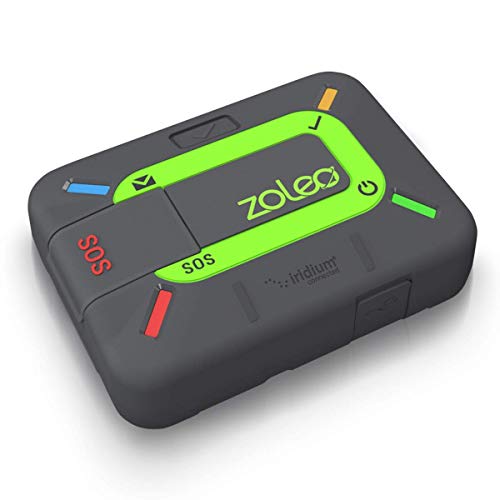
- Sends texts, email, and GPS location over satellite
- Includes SOS alerting and unlimited check-ins
- Rugged IP68 design with long battery life
Best For: Off-grid campers who want messaging and emergency alerts
Rugged Vehicle Tracker
Lonestar Barra for Assets and Trailers

- 4G/5G GPS tracker with adaptive updates
- Rugged IP68/IK07 housing and tamper alerts
- User-replaceable batteries for long service life
Best For: Trailers, vehicles, and outdoor equipment needing long-term tracking
Subscription-Free Rescue Beacon
ACR ResQLink 400 for Emergencies

- No subscription fees required
- 406 MHz distress alerting with GPS/Galileo
- LED and infrared strobes improve visibility
Best For: Emergency rescue signaling for hikers, campers, and boaters
Heavy-Duty Hidden Tracker

- Up to 2 months battery life at default reporting
- Waterproof magnetic case for discreet mounting
- Custom updates as often as every 10 seconds
Best For: Campers who need a long-lasting, discreet tracker for gear or vehicles
Satellite Backup Messenger

- Uses Globalstar satellite network beyond cell coverage
- Sends location updates while moving or stopped
- Includes SOS emergency feature
Best For: Campers and hikers who travel outside cell service
Satellite SOS Messenger

- Two-way satellite messaging with Bluetooth phone sync
- SOS protection with GPS coordinate sharing
- Up to 240 hours of battery life
Best For: Campers and hikers who need messaging plus emergency tracking
Discreet Vehicle Tracker

- Ultra-compact design with internal magnet
- Real-time tracking with geofencing and location history
- Motion-activated with up to 1 year of history
Best For: Discreet monitoring of vehicles and other camp assets
Long-Life Asset Tracker

- 12–18 months of battery life per charge
- Waterproof build with GPS and Wi‑Fi location
- Worldwide 4G LTE with 2G fallback
Best For: Long-term tracking of camping gear, trailers, and equipment
Satellite Asset Tracker – Spot Trace for Hiking, Cars, and Luggage
If you need a camping gear tracking device that works beyond cell coverage, the Spot Trace is built for tracking moving items through the Globalstar satellite network. It can monitor gear, vehicles, luggage, and other assets, with waypoint status messages and GPS-based location reporting to contacts.
Best For: Tracking valuable outdoor gear, bags, and vehicles when you want satellite coverage and simple asset monitoring.
Pros:
- Satellite-based tracking with Globalstar coverage
- Useful for luggage, backpacks, cars, boats, and trucks
- Can send status messages at waypoints
- Compact device with mounting accessories included
Cons:
- Subscription required for use
- Designed for asset tracking rather than two-way messaging
For campers who want to keep tabs on gear, the Spot Trace is a straightforward satellite tracker with a practical setup. Its real strength is helping you monitor items you cannot afford to lose.
Two-Way Satellite Messenger – ZOLEO for Off-Grid Camping
The ZOLEO is a strong camping gear tracking device if your priority is staying connected, sending GPS location data, and triggering SOS alerts when you are out of cell range. It uses satellite, cellular, or Wi-Fi through the lowest-cost available network, and works with your smartphone for texts, email, check-ins, and location sharing.
Best For: Campers and hikers who want two-way messaging, GPS location sharing, and emergency SOS support.
Pros:
- Two-way global SMS text and email messaging
- Emergency SOS with GPS location to a 24/7 monitoring center
- Unlimited check-ins included in the plan
- Rugged IP68-rated build with over 200 hours of battery life
Cons:
- Service plan required
- Needs a smartphone for full app-based use
Compared with simple trackers, ZOLEO is better suited to travelers who want communication as much as location sharing. It brings useful off-grid safety tools into a compact, rugged device.
Rugged Vehicle Tracker – Lonestar Barra for Assets and Trailers
For campers hauling trailers, boats, or high-value equipment, this camping gear tracking device focuses on long-term asset security with cellular tracking and tamper alerts. The Barra GPS uses 4G and 5G coverage, adaptive real-time updates, and a rugged waterproof body to keep location records moving with your gear.
Best For: Tracking trailers, vehicles, boats, and equipment that need long battery life and discreet security.
Pros:
- Long-lasting user-replaceable batteries
- IP68 and IK07-rated rugged housing
- Tamper detection, geofence alerts, and theft recovery mode
- 4G and 5G cellular coverage with app and web access
Cons:
- Subscription required
- Built for asset tracking, not two-way communication
This is a strong choice when your camping setup includes a trailer or gear trailer that sits unattended. The combination of replaceable batteries and adaptive tracking makes it practical for long deployments.
Subscription-Free Rescue Beacon – ACR ResQLink 400 for Emergencies
If your version of a camping gear tracking device is a personal safety beacon, the ACR ResQLink 400 is designed to alert search and rescue without any subscription fees. It combines GPS and Galileo GNSS with 406 MHz distress signaling, plus visual strobe features to help rescuers locate you in outdoor emergencies.
Best For: Hikers, boaters, and campers who want a no-fee emergency locator rather than an everyday tracker.
Pros:
- No subscription required
- Global coverage through Cospas-Sarsat and MEOSAR
- GPS and Galileo GNSS for precise location data
- LED and infrared strobes for low-light visibility
Cons:
- Built for distress signaling, not routine asset tracking
- Uses buttons and remote control methods instead of app-based tracking
The ResQLink 400 stands apart from standard trackers because its job is rescue, not monitoring. For backcountry trips where emergency signaling matters most, it offers a simple and subscription-free safety net.
Heavy-Duty Hidden Tracker – Optimus 3.0 GPS Tracker
If you want a camping gear tracking device that can also pull duty on vehicles, luggage, or other valuables, the Optimus 3.0 focuses on long battery life and flexible alerts. It uses cellular GPS tracking with a heavy-duty waterproof magnetic case, so it’s built for discreet placement and real-time monitoring across the USA, Canada, and Mexico.
Best For: Campers and travelers who want a discreet, magnet-mounted tracker with long battery life and configurable alerts.
Pros:
- Up to 2 months of battery life at the default 1-minute update setting.
- Waterproof heavy-duty magnetic case for discreet mounting.
- Custom position updates as often as every 10 seconds.
- Instant text and/or email alerts are available.
Cons:
- Requires a monthly subscription.
- Uses cellular coverage, so it is limited to USA, Canada, and Mexico.
Overall, this is a practical choice if you need a compact GPS tracker that can stay hidden on gear or vehicles and keep reporting for extended periods. The customizable alerts and update intervals add useful control for active trips and asset protection.
Satellite Backup Messenger – Spot Gen 4 GPS Messenger
The Spot Gen 4 is a camping gear tracking device for situations where cell service is unreliable or unavailable. It uses the Globalstar satellite network to transmit location updates, and it can also send an SOS if you need help beyond the reach of a phone signal.
Best For: Hikers and campers who need satellite-based location updates and an emergency SOS option.
Pros:
- Works beyond cell towers using the Globalstar satellite network.
- Can send location updates while moving and when stopped.
- Includes an SOS feature for emergency situations.
- Portable design with strap, carabiner, USB cable, batteries, and quick start guide.
Cons:
- Subscription required.
- Primarily built for outdoor communication and emergency use, not general smart-device tracking.
This is the strongest pick here for remote trips where a cellular tracker may not be enough. If your camping plans take you far from service, the satellite connection and SOS support make it a reassuring safety tool.
Discreet 4G Tracker – Family1st GPS Tracker
For buyers comparing a camping gear tracking device with everyday asset protection, the Family1st GPS Tracker offers real-time monitoring in a compact hidden design. It uses 4G LTE coverage across North America, includes geofencing alerts, and comes in a waterproof magnetic case for easy placement.
Best For: People who want a discreet, battery-powered GPS tracker for gear, vehicles, or family assets.
Pros:
- Real-time tracking through a browser and app.
- Geofencing alerts when the device enters or exits a set area.
- Up to 30 days of battery life on the basic plan.
- Waterproof, magnetic, and portable design.
Cons:
- Subscription required.
- Coverage is limited to North America.
If you want a compact tracker that can disappear under a vehicle or in with other gear, this one keeps the feature set focused on practical monitoring. The long battery life and geofence alerts make it especially useful for travel, storage, and asset watch duty.
Satellite SOS Messenger – Spot X 2-Way GPS Messenger
If your camping gear tracking device needs to do more than just log location, the Spot X adds two-way satellite messaging and SOS protection. It uses the Globalstar satellite network, works with Bluetooth for phone syncing, and can send GPS coordinates so family or emergency contacts know where you are.
Best For: Campers, hikers, and remote travelers who want a tracking and emergency communication device with two-way messaging.
Pros:
- Two-way satellite messaging lets you communicate with contacts or search and rescue.
- SOS feature connects to 24/7 search and rescue service.
- Shares GPS coordinates and supports standalone use with a dedicated U.S. mobile number.
- Battery life is listed at up to 240 hours.
Cons:
- Subscription required to use the service.
- Bulkier than a simple clip-on GPS tracker.
- Designed more for communication and safety than stealth asset tracking.
The Spot X is a strong pick when emergency communication matters as much as location sharing. For off-grid camping, it gives you a practical layer of reassurance without relying on cell coverage.
Discreet Vehicle Tracker – LandAirSea 54 GPS Tracker
The LandAirSea 54 is a compact camping gear tracking device for people who need real-time location updates on vehicles or other valuable assets. It offers global GPS tracking, geofencing, motion activation, and location history through the SilverCloud app or web software, with updates as fast as every 3 seconds.
Best For: Tracking trailers, vehicles, ATVs, golf carts, and other camping-related assets that need discreet monitoring.
Pros:
- Ultra-compact body with an internal magnet for discreet placement.
- Real-time tracking with Google Maps and updates as fast as every 3 seconds.
- Geofencing, alert notifications, and historical playback up to 1 year.
- Motion-activated design helps preserve battery life.
Cons:
- Subscription required, with pricing tied to plan length.
- More suited to asset tracking than personal carry use.
- Battery life depends on usage and motion patterns.
For campsite vehicles or stored gear, the LandAirSea 54 focuses on compactness and dependable tracking. It’s a practical choice when you want alerting and history features in a small, easy-to-hide tracker.
Long-Life Asset Tracker – Trak-4 USB GPS Tracker
When your camping gear tracking device needs long battery life and wide coverage, the Trak-4 is built for assets, equipment, and vehicles. It combines GPS with Wi‑Fi-based location technology, supports 4G LTE worldwide coverage with 2G fallback, and is rated for 12 to 18 months of operation per charge when reporting daily.
Best For: Long-term tracking of trailers, tools, equipment, and other camping assets where battery life matters.
Pros:
- Very long battery life, rated for 12–18 months per charge with daily reporting.
- Waterproof and durable for rough use.
- Worldwide tracking via 4G LTE with 2G fallback.
- Wi‑Fi-based location helps indoors when GPS is unavailable.
Cons:
- Subscription required for operation.
- Less compact than tiny personal trackers.
- Best suited to assets rather than quick pocket carry.
The Trak-4 stands out if you want a set-it-and-forget-it tracker for camping equipment or transport gear. Its long runtime and mixed-location technologies make it a solid choice for extended trips and storage.
How We Picked the Best Camping Gear Tracking Device
We focused on devices that make sense for camping, travel, and outdoor storage: dependable location reporting, strong battery performance, weather resistance, and easy recovery features. Because a Camping Gear Tracking Device may be used far from cell service, we also weighed satellite capability, GPS accuracy, and alerting tools like SOS or check-ins.
Quick Comparison
The best choice depends on what you need to track. Satellite communicators are better for remote safety and off-grid messaging. Compact GPS trackers are usually better for bags, cases, coolers, trailers, and other gear that needs discreet recovery support. A rugged magnetic or waterproof design is a plus if the device will live outdoors or ride in a vehicle.
Key Buying Factors for a Camping Gear Tracking Device
Coverage Type
Cellular trackers can work well near populated areas, while satellite-based models are better for backcountry use. If your camping takes you far from coverage, prioritize satellite support or a device with emergency messaging.
Battery Life
Long battery life matters because gear trackers are only useful if they stay powered when you need them. Consider whether you want days, weeks, or months of standby time, and whether the device supports rechargeable or replaceable power.
Durability and Mounting
Look for waterproof or rugged housings, magnetic mounting, and compact designs that can hide on equipment. For a Camping Gear Tracking Device, outdoor durability is just as important as software features.
Alerts and Recovery Tools
Some devices are built for simple location history, while others add SOS alerts, geofencing, movement notifications, or two-way messaging. Choose the feature set that matches whether your priority is asset recovery or personal safety.
Who Should Buy Which Camping Gear Tracking Device?
If you want remote safety and emergency communication, satellite messengers and personal locator beacons are the strongest fit. If you mainly want to protect vehicles, trailers, coolers, or expensive camp equipment, a compact GPS tracker with a long battery and discreet mounting is usually the better match. For buyers comparing a Camping Gear Tracking Device on a budget, subscription costs can matter as much as the hardware price, so check ongoing fees before you buy.
In short, the best pick is the one that matches your range, power, and recovery needs without adding complexity you will not use in the field.