A good camping emergency radio does more than play stations—it can deliver weather alerts, provide backup light, and keep your phone alive when power is limited.
For trips off-grid, storm prep, or vehicle kits, the right model should be easy to charge, easy to carry, and dependable when conditions get rough.
Best 10 Camping Emergency Radio Picks for 2026
Storm-Ready Powerhouse

- 12000mAh battery for phone and USB charging
- 8500mm² solar panel, hand crank, and Type-C input
- 5W flashlight, reading lamp, and SOS alarm
Best For: Campers and households needing high-capacity backup power
Compact All-Rounder
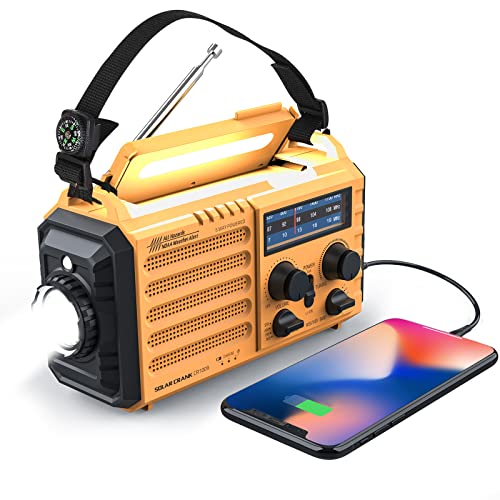
- Five power sources, including solar and AC
- 5000mAh battery for brief phone or USB charging
- Flashlight, reading lamp, SOS siren, and compass
Best For: Hikers and travelers who want a compact backup radio
Value Backup Pick

- 7400mWh power bank for small devices
- Solar, hand crank, and AAA battery power
- NOAA, AM/FM, flashlight, and reading light
Best For: Budget buyers wanting a basic emergency backup
High-Capacity Outdoor Ready

- Real 12000mAh battery for phone and light charging
- 8500mm² solar panel with fast hand crank backup
- IPX6 waterproof with NOAA alerts and SOS alarm
Best For: Campers and preparedness buyers wanting rugged backup power
Compact Backup Power
RunningSnail 2000mAh Solar Hand Crank Radio
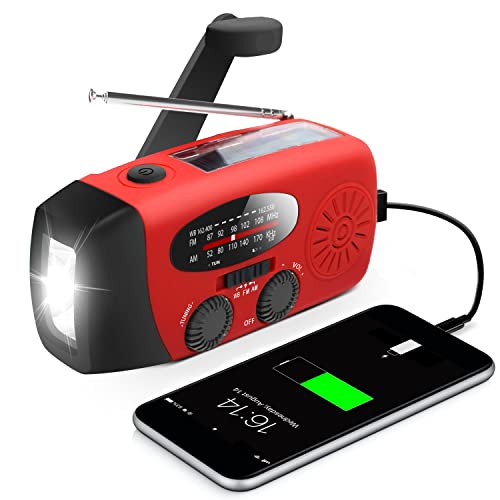
- 2000mAh battery with USB phone charging
- Hand crank, solar, and rechargeable power
- Compact radio with LED flashlight
Best For: Campers who want a lightweight emergency radio with basic backup power
High-Capacity Survival Pick
Eoxsmile 5000mAh NOAA Hand Crank Radio
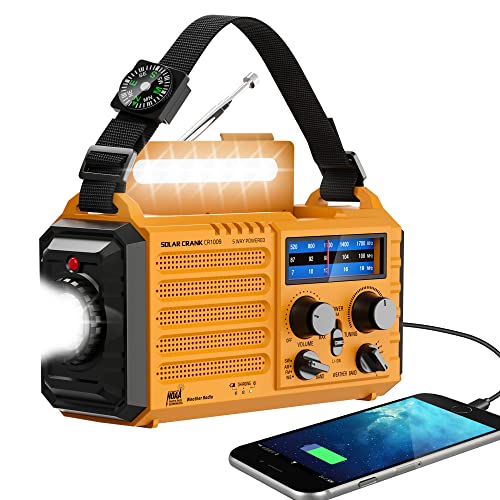
- 5000mAh battery with long runtime
- NOAA alerts, SOS alarm, and flashing light
- Flashlight plus reading lamp for campsite use
Best For: Users who want a higher-capacity camping emergency radio with extra features
All-Purpose Preparedness Choice
NITIGO 4000mAh NOAA Emergency Radio

- 4000mAh battery with USB, solar, and crank power
- High-gain antenna for stronger reception
- Flashlight, reading lamp, SOS alarm, and headphone jack
Best For: Campers who want a balanced emergency radio with strong reception and useful lighting
Storm-Ready Power Hub
Leaton 10000mAh NOAA Weather Radio

- 10000mAh battery for extended emergency use
- IPX6 waterproof body for storms and splashes
- Built-in lamp, flashlight, SOS alarm, and compass
Best For: Campers and preppers wanting a rugged all-in-one radio
Compact Survival Pick

- USB, solar, and hand-crank charging
- 2000mAh battery with NOAA/AM/FM support
- Compact body with flashlight and SOS alarm
Best For: Buyers who want a lightweight grab-and-go emergency radio
Upgraded Pocket Backup
iRonsnow Solar Emergency Radio
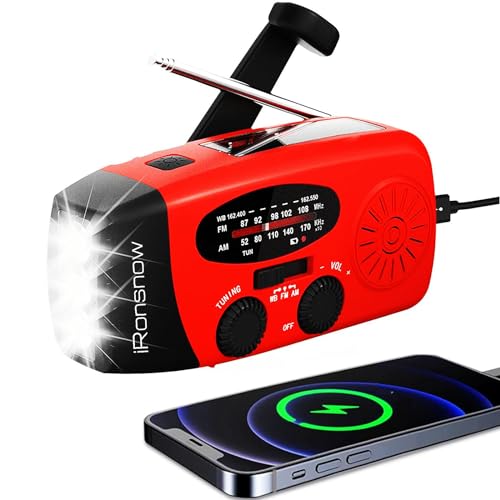
- USB-C, hand crank, and solar charging
- Battery level indicator for quick power checks
- Compact NOAA radio with SOS and flashlight
Best For: Campers who want a small USB-C emergency radio
Storm-Ready Powerhouse – 12000mAh Solar Crank Radio
If you want a camping emergency radio that leans hard into backup power and visibility, this model stands out. It combines NOAA alerts, AM/FM reception, a large battery, and multiple charging methods so you can stay informed and keep devices going when the grid is down.
Best For: Campers, RV users, and households that want a high-capacity emergency radio with strong lighting and charging backup.
Pros:
- 12000mAh power bank for charging phones and small USB devices
- 8500mm² solar panel plus hand crank and Type-C input for flexible recharging
- 57mm speaker with DSP signal processing for clearer weather and AM/FM audio
- 5W flashlight, 12-LED reading lamp, and 120dB SOS alarm for emergencies
Cons:
- NOAA alerts require the radio to be powered on and tuned to a NOAA station
- Bulkier power features may be more than you need for a minimal bug-out kit
Overall, this is a strong choice if you want a camping emergency radio that prioritizes long runtime, louder sound, and useful emergency lighting. Its IPX6 water resistance and multi-source charging make it a practical pick for storms, blackout prep, and outdoor trips.
Compact All-Rounder – 5000mAh NOAA Hand Crank Radio
This camping emergency radio is built for people who want a compact, do-everything backup option. With NOAA weather alerts, AM/FM/SW reception, and multiple power sources, it covers the basics well for home outages and outdoor use.
Best For: Hikers, trekkers, and anyone who wants a small emergency radio with versatile power options.
Pros:
- Five power sources, including hand crank, solar, AC, rechargeable battery, and AAA backup
- 5000mAh battery can briefly charge a phone or USB device
- Includes flashlight, reading lamp, SOS siren, and compass
- Compact 1.2 lb build with carabiner for easier carrying
Cons:
- NOAA alerts require the unit to be powered on and manually tuned to a weather station
- Smaller battery than higher-capacity models in this roundup
For buyers who value portability over maximum runtime, this Raynic model hits a useful middle ground. It’s especially appealing if you want a pocket-sized emergency radio for camping, travel, or quick-grab preparedness.
Value Backup Pick – 7400mWh Solar Crank Radio
If you’re comparing a camping emergency radio on a budget, this FosPower model focuses on the essentials. It provides NOAA and AM/FM access, a small built-in power bank, and three charging methods so you have a basic emergency tool when power is unavailable.
Best For: Budget-conscious buyers who want a simple emergency radio for home outages and outdoor backup.
Pros:
- 7400mWh power bank can charge a small tablet or phone in an emergency
- Three power sources: solar, hand crank, and AAA batteries
- 4-LED reading light plus 1W flashlight for emergency illumination
- Receives NOAA weather broadcasts plus AM/FM stations
Cons:
- Lower-capacity power bank than larger emergency radios in this list
- Fewer extra features than models with larger displays or stronger speakers
This is a practical pick if you want the core emergency-radio features without paying for a bigger battery or more advanced lighting. It’s a straightforward backup for camping, storm prep, and keeping essential updates within reach.
High-Capacity Outdoor Ready – Real 12000mAh Emergency Radio
For shoppers who want a camping emergency radio with honest capacity and strong utility, this Roxicosly model is built to cover the basics well. It combines a real 12000mAh battery, NOAA alerts, and multiple charging paths with outdoor-friendly lighting and waterproofing.
Best For: Campers and storm-prep buyers who want a large battery, bright lighting, and rugged backup features.
Pros:
- Real 12000mAh battery for dependable phone and light charging
- 8500mm² monocrystalline solar panel and fast hand crank generator
- 5W flashlight and 12-LED reading lamp with multiple brightness levels
- IPX6 waterproof design plus NOAA alerts and loud SOS alarm
Cons:
- Uses AAA batteries as part of its power setup, which adds another consumable to manage
- NOAA alert performance still depends on proper station tuning
This model makes sense if you want a sturdier emergency radio for camping and blackouts, especially when capacity and lighting matter most. The combination of rugged build, large battery, and five charging methods gives it broad appeal for preparedness kits.
Compact Backup Power – RunningSnail 2000mAh Solar Hand Crank Radio
If you want a straightforward camping emergency radio for basic alerts, lighting, and backup charging, this RunningSnail model covers the essentials. It combines AM/FM/NOAA weather bands with three power options, so you can keep it running when campsite power is unavailable.
Best For: Campers and families who want a small, lightweight emergency radio with a flashlight and phone-charging backup.
Pros:
- 2000mAh built-in battery can charge most USB-powered devices in a pinch.
- Three power sources: hand crank, solar panel, and rechargeable battery.
- Built-in 1W LED flashlight in a compact 5 x 1.8 x 2.4-inch body.
- Includes AM/FM/weather band support for emergency updates.
Cons:
- Solar charging is described as best for urgent use rather than routine charging.
- Smaller battery capacity than higher-capacity emergency radios.
Overall, this is a practical pick if portability matters more than extra features. It is a simple, lightweight camping emergency radio designed to stay useful during outages, short trips, and basic preparedness kits.
High-Capacity Survival Pick – Eoxsmile 5000mAh NOAA Hand Crank Radio
This camping emergency radio is built for people who want more runtime and more utility from one device. The Eoxsmile model adds NOAA alerts, AM/FM/shortwave reception, multiple charging methods, and both a flashlight and reading lamp for longer outdoor use.
Best For: Campers, hikers, and storm-prep users who want a feature-rich emergency radio with long runtime and extra lighting.
Pros:
- Large 5000mAh rechargeable battery for extended emergency use.
- Five power options, including solar, hand crank, USB, power plug, and AAA backup batteries.
- NOAA weather alert function with loud SOS alarm and flashing light.
- Includes a 3W flashlight, 2.5W reading lamp, compass, and hand strap.
Cons:
- AAA backup batteries are not included.
- Power plug charging requires a 5V/2A adapter, which is also not included.
For campers who want one radio to do a lot, this is the most versatile option in the group. Its larger battery and extra light sources make it a strong choice when you expect longer time away from reliable power.
All-Purpose Preparedness Choice – NITIGO 4000mAh NOAA Emergency Radio
For shoppers looking for a balanced camping emergency radio, the NITIGO model sits neatly between basic and feature-heavy options. It offers NOAA weather alerts, AM/FM/WB reception, three charging methods, and useful lighting tools for both emergency and everyday use.
Best For: Campers and preparedness buyers who want a balanced emergency radio with strong reception and practical lighting.
Pros:
- 4000mAh rechargeable battery with USB, solar, and hand-crank charging.
- Adjustable high-gain antenna designed for stronger signal reception.
- Includes an ultra-bright flashlight, 180-degree rotating reading lamp, and SOS alarm.
- Waterproof design and headphone jack add flexibility for outdoor use.
Cons:
- Does not include shortwave support.
- Heavier feature set may be more than needed for users who only want a basic radio.
This is a well-rounded option if you want reliable emergency coverage without moving up to the most complex model. It should work well for camping, home kits, and travel thanks to its mix of battery capacity, lighting, and signal-focused design.
Storm-Ready Power Hub – Leaton 10000mAh NOAA Weather Radio
If you want a camping emergency radio that doubles as a serious power bank, the Leaton is built for longer outages and rough weather. Its 10000mAh battery, USB-C charging, solar panel, and hand crank give you multiple ways to keep it running when outlets are unavailable.
Best For: Campers and home preppers who want a rugged, all-in-one emergency radio with extra battery capacity.
Pros:
- 10000mAh battery can deliver 6-8 hours of continuous radio playtime on a full charge.
- IPX6 waterproof build is made to handle heavy rain and splashes.
- Includes a 48-LED reading lamp, 20-LED flashlight, SOS alarm, and built-in compass.
- USB-C input supports fast recharging, and USB-C output can slow-charge a phone in an emergency.
Cons:
- USB-C output is only 5V/1A, so it is not a fast phone charger.
- No S.A.M.E. support, so NOAA alerts must be tuned manually.
- At 1.1 lbs, it is less pocket-friendly than smaller emergency radios.
Overall, this is a strong pick if you want a camping emergency radio that prioritizes runtime, weather resistance, and backup lighting over ultra-compact size.
Compact Survival Pick – Esky Hand Crank NOAA Radio
The Esky is a straightforward camping emergency radio for people who want the basics in a small, easy-to-carry package. It offers three charging methods, NOAA/AM/FM reception, and a built-in flashlight, making it a practical grab-and-go option for storm kits and travel.
Best For: Shoppers who want a lightweight emergency radio with simple charging options and basic survival features.
Pros:
- Three charging methods: USB, solar, and hand crank.
- 2000mAh battery can provide about 9 hours of radio use or 20 hours of flashlight use.
- Compact, lightweight design with attached lanyard for easy carrying.
- Includes NOAA weather reception and an SOS alarm for emergencies.
Cons:
- Battery capacity is smaller than larger-capacity emergency radios.
- Flashlight uses a 3-LED design, so it is more basic than some rivals.
- Best suited to short-term backup rather than extended off-grid power.
In practical terms, this Esky model fits buyers who value portability first and want a dependable camping emergency radio without extra bulk or complexity.
Upgraded Pocket Backup – iRonsnow Solar Emergency Radio
The iRonsnow is a compact camping emergency radio aimed at users who want an updated, easy-to-carry backup with modern charging convenience. Its 2000mAh battery, USB-C charging, hand crank, and solar power make it a flexible option for keeping weather alerts and basic power available in a pinch.
Best For: Campers and travelers who want a small emergency radio with USB-C charging and a battery level indicator.
Pros:
- Three rechargeable ways: USB-C, hand crank, and solar power.
- Battery level indicator helps you monitor remaining charge at a glance.
- Includes NOAA AM/FM reception, SOS alarm, and a super-bright LED flashlight.
- Compact 5 x 1.8 x 2.4-inch size is easy to pack for camping or emergencies.
Cons:
- 2000mAh battery is modest compared with higher-capacity emergency radios.
- Versions may vary slightly, with different flashlight layouts shipped randomly.
- Designed more as a backup tool than a high-output power source.
This is a sensible choice if you want a no-fuss camping emergency radio that emphasizes portability, charging flexibility, and quick status checks.
How We Picked the Best Camping Emergency Radio
We focused on practical features that matter in the field: NOAA weather alert support, multiple charging methods, battery capacity, flashlight usefulness, portability, and overall ease of use. We also favored radios that balance emergency performance with everyday camping convenience.
Quick Comparison
When comparing a Camping Emergency Radio, think in terms of redundancy. Models with solar plus hand crank plus USB charging are more versatile than single-source options. Larger batteries can help charge phones, but they often add weight. Compact radios are easier to pack, while larger units may offer louder audio and longer runtime.
Key Buying Factors for a Camping Emergency Radio
Alert Coverage
Look for NOAA weather alerts if you camp in the U.S. These alerts help you react to fast-changing storms, wind events, and flash-flood risks.
Charging Options
The best emergency radios for camping usually include at least two ways to recharge: USB for daily convenience and solar or hand crank for backup. A built-in power bank is useful if you want a last-resort phone charge.
Battery Capacity and Runtime
Higher-capacity batteries can be helpful, especially on longer trips or during outages. Still, capacity is only part of the story; efficient power use and realistic charging expectations matter just as much.
Durability and Portability
Choose a size and weight you will actually bring. If the radio will live in a daypack or tent kit, compact and rugged is usually better. If it is for base camp or home backup, a larger model may be worth the extra bulk.
Usability in the Dark
Flashlights, reading lights, and clear controls are more valuable than they sound. In an emergency, simple buttons and a bright light can matter more than extra features.
Who Should Buy Which Camping Emergency Radio?
If you want a lightweight backup for short camping trips, choose a compact Camping Emergency Radio with NOAA alerts, a flashlight, and basic charging support. If you camp frequently or travel to remote areas, prioritize larger batteries and multiple charging methods. For family emergency kits, pick a model with strong alert reception, a power bank, and easy controls so anyone can use it quickly.
In short, the best choice is the one that matches your trip length, packing space, and backup-power needs—not just the biggest spec sheet.