Choosing from today’s bike computers can be tricky because the best option depends on how you ride. Some models focus on advanced training and performance, while others prioritize simple navigation, battery life, and easy setup.
In this roundup, we highlight 10 strong picks across premium, midrange, and budget-friendly categories so you can quickly find the right fit for road riding, commuting, gravel, and e-bike use.
Best 10 Bike Computers Picks for 2026
Premium Navigation Flagship
Garmin Edge 1050 Premium Cycling Computer

- 3.5-inch vivid touchscreen
- Up to 60 hours in battery saver mode
- Road hazard alerts and group ride connectivity
Best For: Serious cyclists who want Garmin’s most advanced navigation and training tools
Touchscreen Value Navigator
iGPSPORT BSC500 GPS Bike Computer

- 3.3-inch touchscreen with buttons
- Voice navigation and rerouting support
- Route imports from Strava and Komoot
Best For: Riders who want a versatile GPS bike computer with navigation and climb planning
Easy Ride Navigator
Garmin Edge Explore 2 Easy-to-Use GPS Cycling Navigator

- 3-inch sunlight-readable touchscreen
- Preloaded activity profiles and maps
- eBike routing and safety features
Best For: Casual riders and explorers who want simple GPS navigation
Offline Map Tracker
iGPSPORT BSC300T Wireless Bike Computer GPS
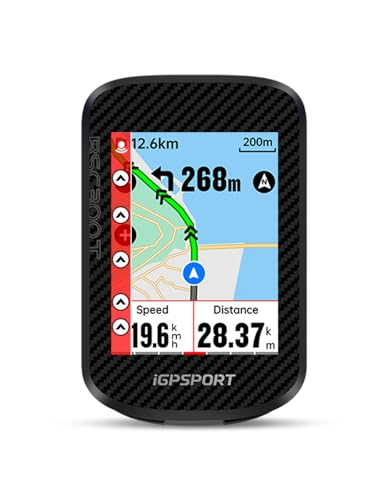
- 2.4-inch touchscreen with 6 buttons
- Offline maps and off-course warnings
- ANT+ and Bluetooth sensor support
Best For: Riders who want compact navigation with offline maps and accessory compatibility
Premium GPS Training Pick
Garmin Edge 540 Compact GPS Cycling Computer

- Up to 26 hours of battery life
- Multi-band GNSS improves positioning accuracy
- Training prompts and ClimbPro support
Best For: Riders who want advanced training guidance and reliable navigation
Value Route Navigator
iGPSPORT BSC200S 2.4" GPS Bike Computer

- Route navigation supports Strava, Ride with GPS, and Komoot
- Up to 25 hours of battery life with Type-C charging
- Tracks 100+ ride data fields and smart notifications
Best For: Cyclists who want navigation and ride tracking at a value price
Smart Navigation Pick
Wahoo ELEMNT Bolt V3 GPS Cycling Computer

- Turn-by-turn navigation with audible cues and LEDs
- Automatic route downloads and workout uploads
- ANT+ radar and smart notification support
Best For: Riders who want easy navigation and connected ride alerts
Easy-Setup GPS Pick
Wireless GPS Bike Computer with Multilingual Menus

- 8-language menus simplify setup
- Auto start/stop reduces manual input
- 28-hour battery with IPX7 protection
Best For: Riders who want an easy-to-use GPS bike computer for commuting and casual rides.
Touchscreen Navigation Pick
COOSPO CS600 Color GPS Bike Computer

- Color touchscreen with auto-backlight
- Built-in route navigation and breadcrumb trail
- 36-hour battery with Bluetooth and ANT+
Best For: Riders who want navigation, app syncing, and customizable data displays in one GPS unit.
Long-Battery Value Pick
CYCPLUS M1 GPS Bike Computer with Sensor Kit

- 60-hour battery life
- Includes speed/cadence sensor kit
- 2.9-inch glare-free backlit display
Best For: Riders who want a long-lasting GPS bike computer with bundled sensor support.
Premium Navigation Flagship – Garmin Edge 1050 Premium Cycling Computer
If you want a top-tier bike computer with a vivid touchscreen and deep ride data, the Garmin Edge 1050 is built for demanding cyclists. It combines navigation, planning, performance tracking, and smart connectivity in one premium unit, with tools that help on everything from route creation to climb pacing.
Best For: Serious cyclists who want the most advanced Garmin features for navigation, coaching, and ride awareness.
Pros:
- Large 3.5-inch color touchscreen with responsive on-device course creation
- Up to 20 hours of battery life, or up to 60 hours in battery saver mode
- Road hazard alerts, live location sharing, incident detection, and group ride features when paired with a compatible smartphone
- Built-in speaker, bike bell, Garmin Pay, ClimbPro, and power guide features
Cons:
- Battery life drops to 20 hours in demanding use cases
- Some advanced features depend on a compatible smartphone and sensors
- Premium feature set may be more than casual riders need
For riders who want one of the most capable bike computers in Garmin’s lineup, the Edge 1050 stands out for its rich display and advanced ride tools. It is especially compelling if navigation, training guidance, and group-ride connectivity all matter on the same device.
Touchscreen Value Navigator – iGPSPORT BSC500 GPS Bike Computer
The iGPSPORT BSC500 is a practical bike computer for riders who want a big screen, voice navigation, and broad satellite support without moving into premium pricing territory. Its touchscreen-and-button design, route importing, and climb planning features make it a flexible pick for everyday training and route riding.
Best For: Riders who want touchscreen navigation, climbing tools, and route importing in a straightforward bike computer.
Pros:
- 3.3-inch touchscreen plus button controls for easier operation
- Dual-band positioning with GPS, Beidou, GLONASS, Galileo, and QZSS support
- Voice navigation, turn reminders, and automatic rerouting when off course
- Route importing from the iGPSPORT app and third-party apps like Strava and Komoot
Cons:
- Battery life is not as long as some premium bike computers
- Smaller ecosystem than major flagship brands
- Navigation and training features are good, but less expansive than top-end units
For cyclists who value navigation clarity and useful training guidance, the BSC500 offers a well-rounded feature mix. It is a strong middle-ground choice if you want modern map tools and climbing support in a simple package.
Easy Ride Navigator – Garmin Edge Explore 2 Easy-to-Use GPS Cycling Navigator
The Garmin Edge Explore 2 is a user-friendly bike computer focused on navigation, visibility, and simple setup. It comes ready with ride profiles, ride-type-specific maps, and safety-minded features that make it appealing for commuters, leisure riders, and cyclists exploring new roads or trails.
Best For: Riders who want an easy GPS cycling navigator with clear maps and simple setup.
Pros:
- 3-inch glove- and rain-friendly touchscreen that stays visible in direct sunlight
- Preloaded road, off-road, and indoor activity profiles for quick setup
- Ride-type-specific maps with popular roads, trails, searchable POIs, and eBike routing
- Compatibility with sensors and Varia cycling awareness devices sold separately
Cons:
- 16-hour battery life is modest compared with some newer bike computers
- Less performance-focused than higher-end Garmin models
- Many sensor and awareness features require separate accessories
This is a strong choice if you want a dependable navigation-first bike computer without a steep learning curve. The Edge Explore 2 leans toward ease of use and route confidence rather than advanced training analysis.
Offline Map Tracker – iGPSPORT BSC300T Wireless Bike Computer GPS
The iGPSPORT BSC300T is a compact bike computer aimed at riders who want offline maps, off-course alerts, and broad device compatibility. With a touchscreen, six buttons, multi-satellite support, and real-time tracking, it covers the basics of navigation and ride data in a flexible format.
Best For: Riders who want offline map navigation and broad sensor compatibility in a compact bike computer.
Pros:
- 2.4-inch touchscreen plus 6-button control layout
- Offline map download, route preview, turn prompts, and off-course warnings
- Supports real-time tracking and route sharing with the iGPSPORT app
- ANT+ and Bluetooth 5.0 support for sensors, smart trainers, radar, and lights
Cons:
- Smaller 2.4-inch display than larger touchscreen bike computers
- Battery life is rated at 20 hours, which may not suit very long rides
- Type-C cable is not included in the box
If you want a practical bike computer with offline maps and strong accessory support, the BSC300T makes a lot of sense. It focuses on useful ride features like rerouting, tracking, and data sharing rather than premium extras.
Premium GPS Training Pick – Garmin Edge 540 Compact GPS Cycling Computer
The Garmin Edge 540 is a strong pick for riders who want one of the more advanced bike computers without moving to a touchscreen model. It combines detailed navigation, training prompts, and smart ride data in a compact unit with button controls, making it a good fit for focused road and gravel riding.
Best For: Riders who want advanced training guidance, dependable navigation, and long battery life in a compact bike computer.
Pros:
- Up to 26 hours of battery life, or up to 42 hours in battery saver mode
- Multi-band GNSS for improved positioning accuracy in challenging areas
- Training features include daily suggested workouts, stamina insights, and power guidance when paired with compatible sensors
- ClimbPro, ride type-specific maps, and course comparison tools add useful ride planning support
Cons:
- Button controls may feel less intuitive if you prefer a touchscreen
- Several advanced features require a compatible power meter and heart rate monitor
- Screen size is relatively small at 2.6 inches
Overall, the Edge 540 stands out as a feature-rich option for cyclists who care about training structure as much as navigation. If you want a compact GPS computer that can help guide both your routes and your workouts, this is one of the strongest all-around picks.
Value Route Navigator – iGPSPORT BSC200S 2.4" GPS Bike Computer
The iGPSPORT BSC200S is a practical choice for riders who want a budget-friendly GPS option with route navigation and plenty of ride data. It offers a clear 2.4-inch color display, Bluetooth and ANT+ support, and useful smart features that make it easy to use for everyday cycling.
Best For: Cyclists who want a straightforward GPS bike computer with navigation, notifications, and strong battery life at a value price.
Pros:
- Route navigation works with the iGPSPORT app and third-party routes from Strava, Ride with GPS, and Komoot
- Up to 25 hours of battery life with fast Type-C charging
- Supports more than 100 riding data fields, including speed, grade, cadence, and temperature
- Works with smart notifications, front lights, and radar light accessories
Cons:
- Type-C cable is not included in the box
- The feature set is broad, but the display is smaller than some premium units
- Advanced training and mapping tools are more limited than higher-end models
For riders who mainly want navigation, ride tracking, and simple connectivity, the BSC200S covers the essentials well. It is especially appealing if you want a capable bike computer without paying for premium-brand extras.
Smart Navigation Pick – Wahoo ELEMNT Bolt V3 GPS Cycling Computer
The Wahoo ELEMNT Bolt V3 is built for riders who want clean navigation, easy syncing, and smart ride alerts in a compact bike computer. Its turn-by-turn guidance, automatic route downloads, and radar integration make it a strong everyday companion for road cyclists and commuters alike.
Best For: Riders who want simple navigation, automatic syncing, and connected safety features in a compact computer.
Pros:
- On-device turn-by-turn navigation with audible cues and top LEDs
- Automatic route downloads and workout uploads from supported platforms
- On-demand route generation through the device or companion app
- Smart notifications, LiveTrack, and ANT+ radar integration add convenience and awareness
Cons:
- Battery life is rated at 20 hours, which trails some longer-lasting competitors
- Screen size is relatively small at 2.3 inches
- Many connected features depend on pairing with a smartphone and supported accounts
As a bike computer, the Bolt V3 focuses on making navigation and syncing feel effortless rather than overwhelming you with settings. If you want a compact unit with strong route tools and practical ride alerts, it is an easy one to recommend.
Easy-Setup GPS Pick – Wireless GPS Bike Computer with Multilingual Menus
This bike computer keeps setup and daily riding simple with 8 language options, a clear 2.4-inch screen, and straightforward button controls. It’s a practical choice if you want core ride data without spending extra time learning a complicated menu system. The auto start/stop feature also reduces manual interaction during traffic lights and short pauses.
Best For: Riders who want an easy-to-use GPS bike computer for commuting and casual rides.
Pros:
- 8-language interface makes setup and menus easier to follow.
- Auto start/stop helps reduce manual operation during rides.
- 28-hour battery life supports commuting and weekend outings.
- IPX7 protection and an out-front mount add everyday practicality.
Cons:
- Uses button controls instead of a touchscreen.
- Focused on simplicity rather than advanced training features.
Overall, this is a no-fuss option among bike computers for riders who value clarity, long battery life, and easy shared use. It covers the essentials well without adding complexity.
Touchscreen Navigation Pick – COOSPO CS600 Color GPS Bike Computer
The COOSPO CS600 is built for riders who want a feature-rich bike computer with a color touchscreen, route navigation, and detailed performance tracking. Its GPS and GLONASS support help it acquire signals quickly, while the auto-backlight and touchscreen make data easier to read and control in changing light. It also syncs wirelessly to training apps for riders who like to review data after each ride.
Best For: Riders who want navigation, app syncing, and customizable data displays in one GPS unit.
Pros:
- 2.4-inch color touchscreen with auto-backlight for easier viewing.
- Built-in route navigation with breadcrumb trail and route uploads.
- 36-hour battery life suits longer rides and multi-day trips.
- Bluetooth and ANT+ support plus app syncing to Strava and TrainingPeaks.
Cons:
- Does not include extra sensors or extension mounts.
- Touchscreen controls may be more than some riders need.
For cyclists comparing modern bike computers, this model stands out for navigation and ecosystem connectivity. It’s a strong fit if you want a cleaner, more connected ride experience with plenty of data options.
Long-Battery Value Pick – CYCPLUS M1 GPS Bike Computer with Sensor Kit
The CYCPLUS M1 is a practical bike computer for riders who want a larger 2.9-inch screen, long battery life, and included speed/cadence sensor support. Its FSTN backlit display is designed for visibility in sunlight and updates automatically based on sunrise and sunset timing. With Bluetooth, ANT+, and app syncing, it covers both everyday tracking and more structured training use.
Best For: Riders who want a long-lasting GPS bike computer with bundled sensor support.
Pros:
- Up to 60 hours of battery life for extended use.
- 2.9-inch glare-free backlit screen is easy to read.
- Includes speed/cadence sensor and supports ANT+ sensor data.
- Bluetooth app syncing can send rides to Strava.
Cons:
- Only fits 31.8 mm handlebars according to the notes.
- First-time setup requires setting the time zone before normal use.
Among bike computers in this group, the M1 offers a useful mix of battery life, screen size, and included accessories. It is especially appealing if you want sensor-based ride tracking without buying everything separately.
How We Picked These Bike Computers
We focused on features that matter in real-world riding: GPS reliability, screen readability, navigation quality, battery life, mounting options, waterproofing, and app compatibility. We also favored models that suit different rider types, from newcomers who want simple route guidance to performance riders who need deeper training data.
Quick Comparison
At a glance, the lineup breaks into a few clear groups. Premium models like the Garmin Edge 1050 emphasize advanced mapping, training tools, and a polished interface. Midrange picks such as the Garmin Edge 540 and Wahoo ELEMNT Bolt V3 balance performance and size. Value-oriented Bike Computers from iGPSPORT, COOSPO, CYCPLUS, and generic wireless GPS units prioritize core ride tracking and route support at a lower cost.
Key Buying Factors for Bike Computers
Navigation and Mapping
If you ride unfamiliar roads, look for turn-by-turn navigation, route recalculation, and map clarity. Riders who mainly follow preloaded courses may not need full-color mapping, but they should still want dependable off-course alerts and easy route loading.
Display and Usability
Touchscreens can make map use easier, while button controls may be better in rain, with gloves, or during hard efforts. Screen size, brightness, and anti-glare performance matter more than sheer resolution.
Battery Life and Durability
Long rides call for strong battery life, and all-weather riding calls for solid waterproofing. Look for IPX-rated protection and a battery profile that matches your longest typical outing.
Connectivity and Sensors
Most modern Bike Computers connect to speed, cadence, heart-rate, and power sensors through Bluetooth or ANT+. If you train seriously, confirm compatibility before buying. Casual riders can often get by with built-in GPS and phone syncing alone.
App Ecosystem and Smart Features
Companion apps affect how easy it is to sync rides, plan routes, and update firmware. For some riders, a simple interface is a benefit; for others, deeper analytics and ecosystem integration are the main reason to upgrade.
Who Should Buy Which Bike Computers?
Choose a premium model if you want the best navigation, training analysis, and a refined interface. Pick a compact midrange unit if you want reliable performance without a bulky setup. Go with a value-focused option if your priority is basic ride data, simple navigation, and a lower price.
For commuters and recreational cyclists, easy-to-read displays and straightforward routing may matter most. For endurance, road, and gravel riders, battery life, sensor support, and course handling should carry more weight. The best Bike Computers are the ones that match your riding habits, not just the longest spec sheet.