Automatic Microchip RFID Cat Feeder 16-Cup review is for buyers who need tight food access control, not a basic gravity feeder.
It combines microchip or RFID recognition with app scheduling and a backup battery, which makes it a strong fit for managed feeding routines.
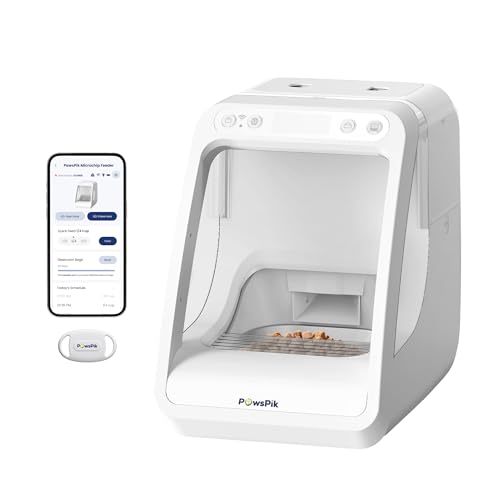
Automatic Microchip RFID Cat Feeder Review Summary
This feeder makes the most sense for homes where one pet needs access control and food theft is the problem to solve.
If you want an app-managed feeder that can keep meals organized while limiting access to an authorized pet, the feature set is aligned with that use case.
Verdict: the strongest appeal is the combination of RFID gating, portion control, and backup power in one unit.
That is a focused feature mix for owners who want controlled feeding rather than a simple timed dispenser.
Review Scorecard
| Category | Score | Buyer-focused rationale |
|---|---|---|
| Access control | 9/10 | Microchip and RFID support is the core value, and the feeder is designed to open only for an authorized pet. |
| Feeding control | 8/10 | App scheduling and precise portions are useful for routine feeding and diet management. |
| Capacity | 8/10 | The 16-cup hopper gives it practical everyday storage without feeling tiny. |
| Power reliability | 8/10 | Backup battery support reduces the risk of interruptions during power outages. |
| Multi-pet fit | 4/10 | The listing says each feeder works for one pet only, so it is not built for shared access. |
| Convenience | 8/10 | App control adds flexibility for owners who want monitoring and meal planning from anywhere. |
Key Features and Specifications of Automatic Microchip RFID Cat Feeder
The defining feature is smart access with RFID and microchip recognition.
The feeder is meant to stop food stealing by opening only for the assigned pet, and the listing says it is compatible with ISO-compliant 15-digit microchips.
It also includes a PawsPik RFID tag for pets that do not already have a compatible microchip.
The feeding system is built around a one-pet setup.
The product information says each feeder pairs with only one RFID tag or microchip, so this is a specialized choice rather than a shared feeder for multiple animals.
App control is another major part of the design.
The listing says you can schedule up to 10 meals per day, set precise portion sizes, and monitor feeding activity through the PawsPik app.
That gives it more control than a basic timer-based feeder.
The physical capacity is listed at 16 cups, which should suit regular dry-food feeding for a cat or small dog depending on portion size.
Backup battery support is also included, which is important for maintaining feeding continuity if the power goes out.
| Spec | What it means for buyers |
|---|---|
| Capacity | 16 cups |
| Access method | Microchip and RFID recognition |
| Microchip support | ISO-compliant 15-digit microchips |
| Included tag | PawsPik RFID tag |
| Meal scheduling | Up to 10 meals per day |
| App control | Feeding setup and monitoring through the PawsPik app |
| Power | Backup battery support |
| Intended use | Cats and small dogs |
Pros and Cons of Automatic Microchip RFID Cat Feeder
Pros
- Strong access control for preventing food stealing in homes with a guarded feeding routine.
- Microchip and RFID flexibility gives you two recognition paths depending on the pet.
- App-based scheduling makes it easier to manage meals without standing over the feeder.
- Backup battery support adds practical reliability during outages.
- 16-cup capacity is substantial enough for routine feeding without constant refills.
Cons
- Only one pet per feeder means it is not the right answer for households wanting shared access.
- Depends on compatible identification and the listing narrows support to ISO-compliant 15-digit microchips or the included RFID tag.
- Best value is situational because the main benefit is access control, not a broad feature list for every pet home.
Who Should Buy Automatic Microchip RFID Cat Feeder?
Buy this if your main problem is keeping one pet on its own feeding schedule while preventing another pet from stealing food.
It is also a sensible choice if you want app control, scheduled meals, and a backup power option in the same feeder.
It is especially relevant for homes with a cat that needs diet discipline, or with a cat and small dog arrangement where one animal should have controlled access to the bowl area.
Skip it if you need a feeder for multiple pets to share freely, or if you simply want a low-complexity automatic dispenser without RFID or app management.
The one-pet design is a feature, but it also limits flexibility.
How the RFID Access System Fits Daily Feeding
One Authorized Pet
The product is built around a single assigned pet, which means the feeder is not trying to solve general household feeding.
That design makes sense when the problem is a specific pet that needs protected access.
Microchip or Tag Entry
The feeder supports ISO microchips and includes an RFID tag, so the access method can match the pet’s setup.
That is useful if you already rely on microchip identification or need a tag-based fallback.
Scheduled Meals
With app scheduling for up to 10 meals per day, the feeder is positioned for structured routines.
That is a better fit for controlled portions than for owners who prefer an always-open food station.
Backup Power Protection
Backup battery support is a meaningful practical detail.
A feeder that relies on scheduled access is more useful when it can keep operating through a temporary outage.
Alternatives to Automatic Microchip RFID Cat Feeder
If you like the controlled-access idea but want to compare other options, these Amazon search pages are the most relevant starting points:
- SureFeed microchip feeder
- Petlibro automatic cat feeder
- WOPET automatic cat feeder
- PawPik microchip feeder
SureFeed is the clearest comparison if your priority is pet-specific access control.
Petlibro and WOPET are useful comparisons if you want to compare app-based feeding systems, storage, and general feeder design rather than RFID gating alone.
Is Automatic Microchip RFID Cat Feeder Worth It?
Yes, if your main goal is controlled, one-pet feeding with app scheduling.
The combination of RFID or microchip access, portion control, a 16-cup capacity, and backup battery support gives it a clear purpose.
It is not the best choice for households that want a general-purpose feeder for multiple pets, but it is a well-matched option for owners who need access restriction first and convenience second.