The best camping axe for backpacking balances packability with enough cutting power for kindling, small branches, and routine camp tasks. A compact design can save space, but weight, handle comfort, sheath quality, and blade performance matter just as much on the trail.
We compared 10 compact hatchets and multipurpose outdoor axes, including lightweight hiking models, traditional leather-grip options, folding designs, and tools with integrated saws or hammers.
Best 10 Camping Axes for Backpacking Picks for 2026
Lightweight Kindling Specialist

- Lightweight 1.4-pound, 14-inch design
- Balanced for kindling and small firewood
- Shock-absorbing handle with low-friction blade
Best For: Campfire prep and branch removal on weight-conscious trips
Multi-Tool Camp Companion
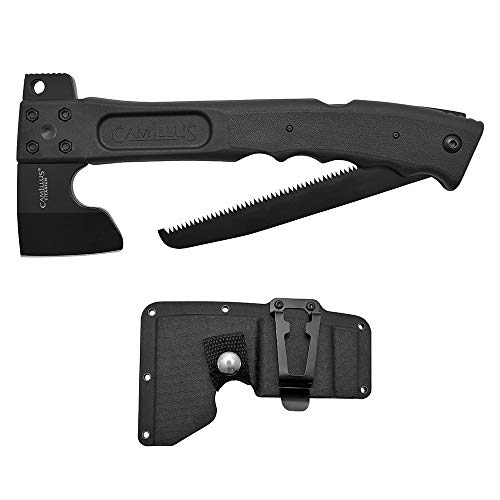
- Hatchet, folding saw, and hammer in one
- Includes a 7-inch lockback saw
- Molded sheath and reversible belt clip
Best For: Campers who want several camp tools in one package
Compact Packable Hatchet

- Compact 9.46-inch, 1.3-pound design
- 3.5-inch corrosion-resistant steel blade
- Sheath mounts to a pack or belt
Best For: Light cutting and portable outdoor carry
One-Piece American Steel

- Forged in one piece from American steel
- Comfortable genuine leather grip
- 4-inch edge and ballistic nylon sheath
Best For: Durable, versatile camp chopping and stake-pulling tasks
Ultralight Trail Pick

- 15% lighter compact design
- Forged steel blade with sharpness-focused grind
- Orange handle and sheath for visible carry
Best For: Lightweight backpacking and campsite kindling
Versatile Camp Workhorse

- 1.3-pound compact design
- Forged steel blade for splitting and kindling
- Shock-reducing fiberglass handle
Best For: General camp chopping and outdoor versatility
Multitool Survival Option

- Five built-in hex wrench slots
- Rubberized anti-slip handle
- Oxford sheath with belt loops
Best For: Bushcraft, repairs, and versatile trail use
Best Lightweight Pick
DESHIL 10-Inch Outdoor Hatchet

- 1.1-pound compact design
- Carbon steel head with fiberglass handle
- Includes protective blade cover
Best For: Light campsite chores and backpacking
Best Throwing and Survival Option
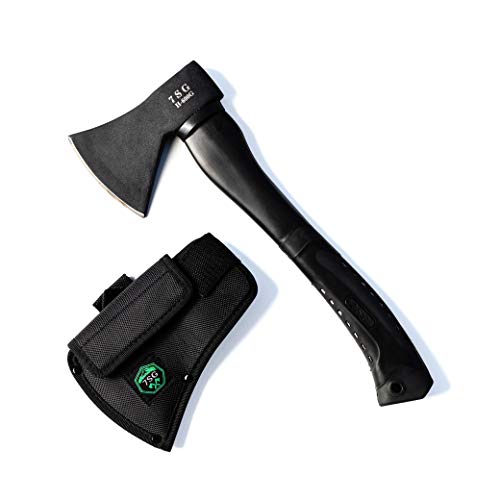
- Narrow profile for throwing-axe use
- Fiberglass-and-rubber handle
- Ballistic nylon sheath included
Best For: Versatile campsite and survival tasks
Best Multifunctional Design
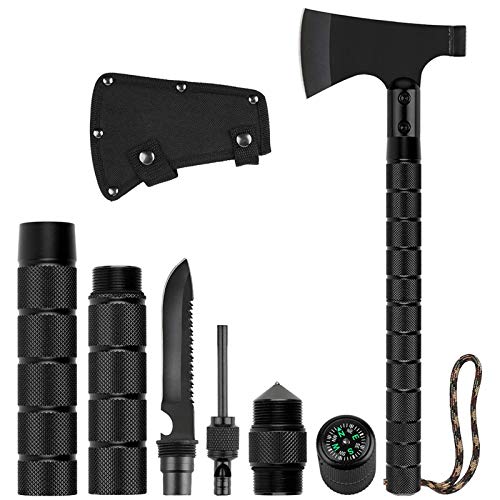
- Folding and adjustable design
- Includes fire starter, whistle, and compass
- Steel head with aluminum-alloy handle
Best For: Emergency-focused outdoor kits
Lightweight Kindling Specialist – Fiskars X7 Small Hatchet
The Fiskars X7 is a practical choice for camping axes for backpacking when low weight and efficient firewood preparation matter. Its 14-inch format, 1.4-pound weight, and 5.12-inch blade suit kindling, small-to-medium firewood, and branch removal.
Best For: Backpackers and campers preparing kindling or small firewood who want a lightweight hatchet with a comfortable grip.
Pros:
- Lightweight 1.4-pound design is easier to carry.
- Balanced construction supports quick, powerful swings.
- Low-friction forged-steel blade coating helps prevent sticking.
- Shock-absorbing FiberComp handle and lifetime limited warranty add practicality.
Cons:
- Its compact blade and hatchet profile are better suited to small or medium tasks than large logs.
- At 14 inches, it offers less leverage than a full-size axe.
The X7 stands out as a focused campfire-prep tool: light enough for carried gear but capable of handling common kindling and branch duties. It is a strong fit when packability matters more than maximum chopping capacity.
Multi-Tool Camp Companion – Camillus CAMTRAX 3-in-1
The Camillus CAMTRAX combines a hatchet, a 7-inch lockback folding saw, and a hammer in one 12-inch tool. For camping axes for backpacking, its multifunction design can help reduce the number of separate tools carried, although its 1.9-pound weight is higher than some compact hatchets.
Best For: Campers who value multiple functions, including sawing, hammering, and basic chopping, in a single tool.
Pros:
- Combines a hatchet, folding saw, and hammer.
- 7-inch lockback saw adds utility for cutting branches.
- Glass-filled nylon handle supports left- or right-hand use.
- Includes a molded sheath, reversible belt clip, and bottle opener.
Cons:
- At 1.9 pounds, it may be less appealing for strict ultralight backpacking.
- The multi-function design is more utility-focused than a dedicated chopping axe.
The CAMTRAX makes the most sense for users who prefer consolidated camp gear. Its saw and hammer expand its usefulness around camp, while the added functions and weight should be weighed against the simplicity of a dedicated hatchet.
Compact Packable Hatchet – Gerber Pack Hatchet
The Gerber Pack Hatchet is a compact option among camping axes for backpacking, measuring 9.46 inches overall and weighing 1.3 pounds. Its 3.5-inch corrosion-resistant steel blade, full-tang construction, and pack- or belt-mountable sheath are geared toward portable outdoor use.
Best For: Backpackers, hunters, and campers seeking a compact hatchet for light cutting and general outdoor tasks.
Pros:
- Compact 9.46-inch form is convenient to carry.
- Lightweight 1.3-pound build helps limit pack load.
- Full-tang steel blade and ergonomic rubber grip provide a durable, controlled design.
- Removable nylon sheath can mount to a pack or belt.
Cons:
- The 3.5-inch blade is intended for lighter cutting than larger hatchets.
- Its compact size provides less reach and leverage for substantial firewood.
This Gerber is a sensible choice when portability takes priority. It offers useful cutting capability in a small package, making it better suited to light camp and survival tasks than extensive wood processing.
One-Piece American Steel – Estwing Sportsman's Axe
The Estwing Sportsman’s Axe is a sturdy 14-inch hatchet for camping axes for backpacking, with a one-piece forged American steel construction and 1.8-pound weight. Its 4-inch cutting edge is suited to limbs, branches, firewood, kindling, and practical camp chores such as pulling tent stakes.
Best For: Campers who want a durable, versatile hatchet with a comfortable leather grip and protective carry sheath.
Pros:
- One-piece forged steel construction eliminates casting or weld weak points.
- Genuine leather grip is designed for comfort and control.
- Hand-sharpened 4-inch edge handles branches, kindling, and small firewood.
- Ballistic nylon sheath includes a belt loop for carrying.
Cons:
- At 1.8 pounds, it is heavier than the most compact backpacking hatchets.
- The 14-inch length may take more pack space than a mini hatchet.
The Sportsman’s Axe favors rugged construction and all-around camp utility over minimum weight. Its forged one-piece body, leather grip, and included sheath make it appealing for users who expect repeated use and want a traditional, durable hatchet.
Ultralight Trail Pick – Fiskars X13 Hiking Axe
For hikers comparing camping axes for backpacking, the Fiskars X13 emphasizes low carry weight without giving up a forged steel blade. Its 13-inch size, bright handle, and included sheath make it practical for kindling, bushcraft, and campsite tasks.
Best For: Backpackers who prioritize a lighter, easy-to-spot axe for chopping kindling and driving tent stakes.
Pros:
- 15% lighter than other compact X-series axes, according to the supplied specifications.
- Double-hardened forged steel blade with a proprietary sharpness-focused grind.
- High-visibility orange FiberComp handle includes a striking end for tent stakes.
- Low-friction coating, belt-loop sheath, and locking mechanism support convenient carry.
Cons:
- The 13-inch format is intended for compact outdoor work rather than large firewood.
- The bright orange finish may not suit shoppers seeking a subdued appearance.
This is the strongest fit when packability and visibility matter most. The forged blade and balanced construction should suit routine campsite chopping, while the sheath adds a safer way to transport it.
Versatile Camp Workhorse – KSEIBI 274150 Camping Hatchet
The KSEIBI 274150 is a straightforward choice among camping axes for backpacking, with a compact 15-inch profile and a 1.3-pound weight. It is designed for splitting wood, preparing kindling, and handling general outdoor tasks.
Best For: Campers seeking a compact hatchet with a fiberglass handle for wood splitting, kindling, and general outdoor use.
Pros:
- Forged steel blade with a 4.13-inch blade length.
- Fiberglass handle is designed for shock reduction and has an anti-slip grip.
- Compact 1.3-pound build is convenient for transport.
- Ground edge and lacquered finish support sharpening and maintenance.
Cons:
- The supplied specifications do not list a sheath or dedicated belt-carry system.
- Its throwing-axe capability may be unnecessary for shoppers focused solely on campsite chores.
Choose this model for a practical, no-frills hatchet with a secure-grip fiberglass handle. It offers useful versatility for camp and survival scenarios, though pack organization may require a separate protective solution.
Multitool Survival Option – Mossy Oak 12-Inch Camping Axe
For camping axes for backpacking that do more than chop, the Mossy Oak 12-inch hatchet adds five hex wrench slots and a secondary edge for bark or rope cutting. Its rubberized handle and included Oxford sheath are aimed at controlled, portable outdoor use.
Best For: Hikers and campers who want a compact hatchet with built-in adjustment features for bushcraft and emergency repairs.
Pros:
- Compact 12-inch design with a 6-inch blade width and 3/16-inch blade thickness.
- Five integrated hex wrench holes add gear-adjustment utility.
- Textured rubber handle and internal support structure promote a secure grip.
- Oxford sheath has belt loops and metal fasteners for transport.
Cons:
- The multifunction head adds features that may be unnecessary for simple wood chopping.
- The supplied details identify the blade material as metal rather than specifying forged steel.
This is the most feature-rich option of the three for hikers who value emergency and gear-maintenance functions. Its reinforced head attachment and protective sheath also make it a sensible choice for organized transport.
Best Lightweight Pick – DESHIL 10-Inch Outdoor Hatchet
For shoppers comparing camping axes for backpacking, the DESHIL 10-inch hatchet offers a compact 1.1-pound design with a carbon steel head and fiberglass handle. It is suited to light camp chores such as splitting kindling, cutting small branches, and driving stakes.
Best For: Backpackers and campers who want a lightweight, multipurpose hatchet for kindling and basic campsite tasks.
Pros:
- Lightweight 1.1-pound design is easier to pack and carry.
- Heat-treated carbon steel head is designed for durability and edge retention.
- Fiberglass handle provides shock reduction and a non-slip grip.
- Flat back can function as a hammer for driving stakes or wood piles.
Cons:
- Its compact size is better suited to kindling and small branches than larger logs.
- The supplied notes do not specify a handle length beyond the 10-inch product description.
This is a practical choice when pack weight matters and your campsite tasks are relatively light. The included blade cover also makes transport and storage more convenient.
Best Throwing and Survival Option – 7SG Camping Hatchet
Among camping axes for backpacking, this 7SG hatchet stands out for its narrow profile and throwing-axe design. Its fiberglass-and-rubber handle, 6-inch blade, and flat back give it utility for chopping, clearing brush, driving stakes, and general camp use.
Best For: Campers who want one compact hatchet for campsite cutting, brush clearing, stake driving, and throwing-axe use.
Pros:
- Narrow profile is specifically designed for axe throwing.
- Lightweight fiberglass handle helps keep pack weight down.
- Flat back head can serve as a hammer for driving stakes.
- Ballistic nylon sheath protects the blade and offers multiple attachment loops.
Cons:
- Its throwing-axe focus may be less relevant for backpackers seeking only a traditional wood-cutting tool.
- The listed product details contain inconsistent weight information, so buyers should verify the current specifications.
This versatile hatchet is a strong fit for users who value multiple functions in a compact tool. The sheath and lightweight construction support transport, while the head angle is intended for cutting and chopping.
Best Multifunctional Design – LIANTRAL Folding Survival Axe
For buyers evaluating camping axes for backpacking, the LIANTRAL folding survival axe emphasizes portability and extra functions. Its steel axe head, adjustable aluminum-alloy handle, and included sheath make it adaptable for camping, hiking, and emergency use.
Best For: Outdoor users who prefer a compact, adjustable tool with survival accessories beyond basic chopping.
Pros:
- Folding design and sheath support compact transport.
- Adjustable handle length can be adapted to different tasks.
- Combines axe and hammer functions with tools such as a fire starter, whistle, and compass.
- Steel axe head and aluminum-alloy handle are designed for outdoor use.
Cons:
- At 2.2 pounds, it is heavier than the DESHIL hatchet.
- The many integrated features may be unnecessary for backpackers seeking a simple axe.
- The notes describe a 6.5-inch blade, but do not provide a specific folded dimension.
This model makes the most sense when emergency features and adjustable portability are priorities. It offers broad functionality, though the added tools and higher weight may not suit minimalist backpacking kits.
How We Picked the Best Camping Axes for Backpacking
We focused on the practical demands of carrying and using an axe away from a vehicle. Each pick was considered for overall portability, cutting design, handle ergonomics, balance, included protection, and versatility. We also looked at whether the tool suits occasional camp chores or more frequent wood processing.
Because product specifications and user needs vary, treat listed dimensions and weights as important details to verify before buying. A compact axe should still have a secure grip, a protected edge, and a head that feels firmly attached.
Quick Comparison
| Type | Best For | What to Look For |
|---|---|---|
| Ultralight hiking axe | Weight-conscious backpackers | Low carry weight and efficient head design |
| Traditional hatchet | General camp chopping | Comfortable handle, durable steel, balanced swing |
| Multi-tool hatchet | Pack versatility | Useful secondary tools without excessive bulk |
| Folding or compact axe | Minimalist storage | Reliable locking mechanism and edge protection |
Key Buying Factors for Camping Axes for Backpacking
Weight and Packability
Every ounce matters on a long hike. Smaller axes are easier to carry, but an ultra-light model may require more effort for the same cut. Choose the lightest option that can handle your expected tasks rather than selecting by size alone.
Blade and Head Design
A sharp, properly shaped blade is more useful than an oversized head for small firewood and kindling. Forged or hardened steel can offer good durability, while a thinner profile may bite efficiently into smaller wood. Check how easily the blade can be sharpened and whether replacement or maintenance information is available.
Handle Comfort and Control
Look for a handle that remains secure with gloves and wet hands. Fiberglass and composite handles are often low-maintenance, while wood and leather-grip designs can provide a traditional feel. Balance is crucial: the axe should not feel head-heavy or difficult to control during repeated swings.
Safety, Sheath, and Versatility
A dependable sheath protects both the edge and your pack. Confirm that it fits securely and covers the blade completely. Integrated saws, hammers, or folding mechanisms can add value, but only if they are tools you will actually use. More features can also mean extra weight and more parts to maintain.
Who Should Buy Which Camping Axes for Backpacking?
Choose an ultralight hiking axe if minimizing pack weight is your top priority and you mainly process small branches. A traditional 12- to 14-inch hatchet is a better all-purpose choice for campers who want a familiar swing and dependable chopping performance. Multi-tool models suit hikers who value several functions in one package, while folding designs work well for compact storage and occasional use.
For frequent or heavy wood processing, consider whether a longer-handled axe would be safer and more efficient than any backpacking model. For most trail users, however, the right compact axe is one that is easy to carry, comfortable to control, and protected when stored.