The best camping axe balances cutting power, portability, grip comfort, and dependable construction. Whether you need a compact hatchet for kindling or a longer tool for splitting firewood, the right choice depends on your campsite and workload.
We compared 10 popular camping axes across size, materials, handling, versatility, and included protection to help you choose a practical tool for camp chores and outdoor emergencies.
Best 10 Camping Axes Picks for 2026
Lightweight Kindling Pick

- Compact 1.4-pound design for camp carry
- Forged steel head with low-friction coating
- Shock-absorbing grip and lifetime limited warranty
Best For: Campfire kindling, small firewood, and branch removal
Classic Leather-Grip Choice
Estwing Sportsman's 14-Inch Hatchet

- One-piece forged American steel construction
- Comfortable genuine leather grip
- Ballistic nylon sheath with belt loop
Best For: Versatile campsite chopping, kindling, branches, and tent stakes
Compact Multi-Use Option
DESHIL 15-Inch Chopping Hatchet

- 600-gram design for camping and hiking
- Carbon steel blade for kindling and small logs
- Hammer back and locking blade cover included
Best For: Light outdoor chopping, tent stakes, backpacking, and campfire prep
Long-Handle Splitting Tool
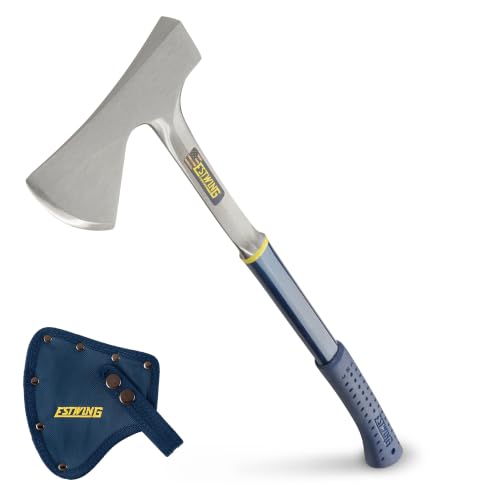
- 26-inch handle for added chopping leverage
- Forged steel construction with 4-inch edge
- Shock Reduction Grip and ballistic nylon sheath
Best For: Campground firewood splitting, logs, branches, and extended chopping
Compact Kindling Pick
DESHIL 10-Inch Outdoor Hatchet

- Lightweight 1.1-pound design for easy carry
- Heat-treated carbon steel head with corrosion-resistant finish
- Fiberglass shock-reduction handle and blade cover included
Best For: Campers and hikers handling kindling and small branches
Stake-Pulling Workhorse
Coleman Steel-Head Camping Axe

- Drop-forged alloy steel head with steel handle
- Non-slip rubber grip for secure handling
- Built-in notch for pulling tent stakes
Best For: Campsite wood splitting, stake removal, and hammering
Hand-Forged Splitting Choice
Purple Dragon 14.7-Inch Hatchet
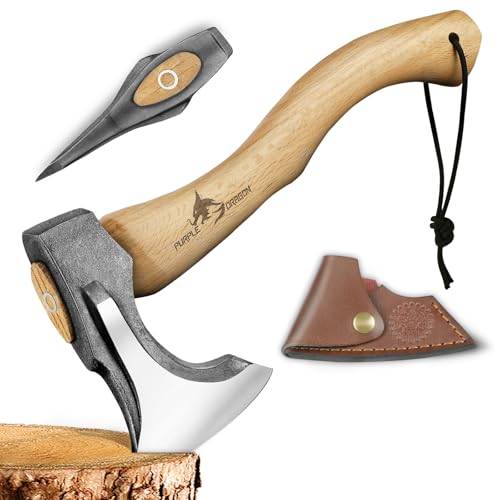
- Hand-forged high-carbon steel splitting head
- S-curve hickory handle for balance and shock absorption
- Leather sheath and rubber blade protection included
Best For: Campsite splitting, bushcraft, delimbing, and garden work
Throwing-Ready Camping Axe
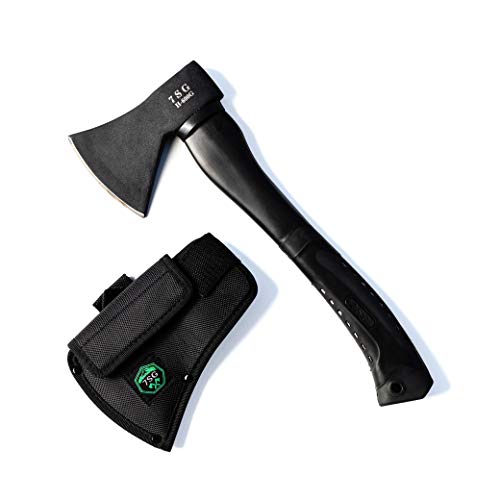
- Narrow profile designed for axe throwing
- Lightweight fiberglass-and-rubber handle
- Flat hammer head and ballistic nylon sheath
Best For: Campers wanting a packable hatchet for throwing, chopping, brush clearing, and stake driving
Splitting Power Camping Axe

- Forged steel blade for kindling and small logs
- Balanced 14-inch design for efficient swings
- Hammer poll and protective blade cover
Best For: Campers and firepit users preparing kindling, small logs, and tent stakes
Multitool Camping Axe
Mossy Oak 12-Inch Survival Hatchet

- Five built-in hex wrench slots
- Secondary edge for bark or rope cutting
- Textured handle and Oxford sheath
Best For: Hikers and campers wanting a compact hatchet with field repair features
Lightweight Kindling Pick – Fiskars X7 14-Inch Hatchet
For campers comparing camping axes for firewood prep and kindling, the Fiskars X7 is a compact 14-inch hatchet designed for small to medium-sized chopping tasks. Its balanced build, low-friction blade coating, and shock-absorbing handle make it practical for repeated camp use.
Best For: Campfire kindling, small to medium firewood, and removing branches.
Pros:
- Lightweight 1.4-pound design is easy to carry outdoors.
- Forged steel head and proprietary grinding help the blade stay sharp longer.
- Shock-absorbing FiberComp handle and non-slip grip help reduce hand fatigue.
- Low-friction coating helps prevent the blade from sticking.
Cons:
- Its compact size is better suited to kindling and smaller wood than large logs.
- The notes list a wood handle material, while the product highlights a FiberComp handle; verify the current construction if that detail matters.
The X7 is a sensible camping axe when portability and efficient kindling work matter more than heavy-duty splitting power. Its lifetime manufacturer limited warranty is an added ownership benefit.
Classic Leather-Grip Choice – Estwing Sportsman's 14-Inch Hatchet
The Estwing Sportsman’s Axe is a durable option among camping axes for chopping branches, splitting kindling, and handling general campsite tasks. Its one-piece American steel construction pairs with a genuine leather grip and a protective ballistic nylon sheath.
Best For: Campers who want a compact, versatile hatchet for branches, kindling, small trees, and tent stakes.
Pros:
- Forged in one piece from solid American steel to eliminate casting or weld weak points.
- Genuine leather grip is hand sanded and lacquered for comfort and control.
- Hand-sharpened 4-inch cutting edge supports chopping and splitting tasks.
- Ballistic nylon sheath includes a belt loop for protected carry.
Cons:
- At 1.8 pounds, it is heavier than some compact hatchets.
- The leather grip may require more care than synthetic handle materials.
This is a strong fit for buyers who value traditional materials and rugged construction in a small outdoor axe. Its tent-stake-puller versatility and made-in-USA construction add practical appeal for camping trips.
Compact Multi-Use Option – DESHIL 15-Inch Chopping Hatchet
The DESHIL 15-inch hatchet is one of the more function-focused camping axes, combining a carbon steel chopping blade with a built-in hammer back. Its 600-gram size and locking blade cover make it convenient for camping, hiking, backpacking, and firewood preparation.
Best For: Campers and hikers who need a compact axe for kindling, small logs, tent stakes, and general outdoor chores.
Pros:
- Heat-treated 45 carbon steel blade is designed for kindling and small-log splitting.
- Fiberglass handle with anti-slip grip helps absorb impact and maintain control.
- Flat hammer back can drive tent and wooden stakes without another tool.
- Locking blade cover supports safer storage and transport.
Cons:
- The 600-gram head and compact format are intended for smaller jobs, not large-log splitting.
- The carbon steel blade may need sharpening with a stone as needed.
The DESHIL stands out when packability and multiple campsite functions are priorities. It offers useful hammer functionality and carry protection while remaining light enough for hiking-oriented gear kits.
Long-Handle Splitting Tool – Estwing Camper's 26-Inch Axe
For buyers seeking camping axes with more reach and leverage, the Estwing Camper’s Axe uses a 26-inch all-steel design for chopping logs, branches, and firewood. Its shock-reduction grip and 4-inch cutting edge are suited to more demanding campsite work than a small hatchet.
Best For: Splitting firewood, chopping logs and branches, and extended outdoor use.
Pros:
- 26-inch length provides greater leverage for larger chopping tasks.
- Forged steel construction is paired with a pressed steel handle for durability.
- Patented Shock Reduction Grip is engineered to reduce impact vibration by 70%.
- Ballistic nylon sheath protects the hand-sharpened 4-inch edge during carry.
Cons:
- At 3.5 pounds and over two feet long, it is less packable than a camp hatchet.
- The longer handle may be excessive for light kindling and small campsite jobs.
This Estwing is the better choice when wood processing power matters more than minimal carry weight. Its longer handle, steel construction, and vibration-reducing grip make it suitable for substantial firewood preparation around an established campsite.
Compact Kindling Pick – DESHIL 10-Inch Outdoor Hatchet
For shoppers comparing camping axes for kindling and light campsite work, the DESHIL 10-inch hatchet emphasizes portability and easy handling. Its carbon steel head is heat treated and spray-painted for durability, while the fiberglass handle is designed to reduce shock and provide a non-slip grip.
Best For: Campers and hikers who need a compact hatchet for kindling, small branches, and occasional stake or pile hammering.
Pros:
- Compact 10-inch, 1.1-pound design is convenient for outdoor carry.
- Heat-treated carbon steel head is intended to stay sharp and resist corrosion, rust, and wear.
- Fiberglass shock-reduction handle has an anti-slip grip and is permanently attached to the head.
- Flat back can serve as a hammer, and a protective blade cover is included.
Cons:
- The compact size is better suited to kindling and small branches than larger logs.
- Its painted finish may eventually show wear with heavy use.
The DESHIL is a practical lightweight option when packability matters more than maximum splitting power. The included cover and low-maintenance sharpening instructions add convenience for routine campsite use.
Stake-Pulling Workhorse – Coleman Steel-Head Camping Axe
Among camping axes, the Coleman stands out for a robust steel construction and campsite-specific features. Its drop-forged head, steel handle, rubber grip, and stake-puller notch make it a versatile choice for splitting wood and setting up camp.
Best For: Campers and outdoor users who want a sturdy hatchet for wood splitting, hammering stakes, and occasional survival or landscaping tasks.
Pros:
- Drop-forged alloy steel head and steel handle are built for durable use.
- Non-slip rubber grip supports a secure hold.
- Stake-puller notch adds useful campsite functionality.
- Two-pound build offers a substantial feel for splitting and hammering.
Cons:
- At 13 inches and 2 pounds, it is heavier than the DESHIL for backpacking.
- The straight edge and compact hatchet format may not be ideal for larger wood-splitting jobs.
The Coleman is a sensible all-around campsite tool for buyers who value rugged construction and practical stake removal. Its heavier steel design favors durability and striking force over ultralight portability.
Hand-Forged Splitting Choice – Purple Dragon 14.7-Inch Hatchet
For buyers seeking camping axes with a more traditional feel, the Purple Dragon combines a hand-forged high-carbon steel blade with a shaped hickory handle. Its splitting-oriented geometry, leather sheath, and secure head attachment suit campsite wood processing and broader bushcraft use.
Best For: Campers, bushcraft users, and gardeners who need a balanced hatchet for splitting wood, delimbing, and general outdoor woodworking.
Pros:
- Hand-forged carbon-manganese steel head is hardened and polished to a stated 56–60 HRC.
- Optimized splitting geometry is designed to improve efficiency with each stroke.
- S-curve hickory handle is intended to improve grip, balance, and shock absorption.
- Two-wedge head attachment, rubber blade lips, and leather sheath add security during storage and transport.
Cons:
- At 1.1 kg, it is considerably heavier than a lightweight backpacking hatchet.
- The maker recommends soaking the axe before use, adding preparation before a trip.
- The splitting-wedge design may be less versatile for fine cutting than a general-purpose hatchet.
The Purple Dragon is the most traditional, splitting-focused option in this group. Its hickory handle and hand-forged head appeal to users prioritizing balance and wood-processing performance, while the leather sheath supports safer pack storage.
Throwing-Ready Camping Axe – Tactical 15-Inch Hatchet
This camping axe combines a lightweight fiberglass-and-rubber handle with a narrow, sharp head designed for throwing and everyday camp tasks. Its flat back also works as a hammer for driving stakes, while the included ballistic nylon sheath supports safer transport.
Best For: Campers and survival enthusiasts who want a lightweight hatchet that can chop wood, clear brush, drive stakes, and handle axe throwing.
Pros:
- Narrow profile and sharp head are designed for axe throwing.
- Lightweight 15-inch fiberglass handle is easy to pack and swing.
- Flat back doubles as a hammer for tent stakes and field tasks.
- Ballistic nylon sheath includes multiple attachment loops.
Cons:
- The throwing-oriented design may not suit shoppers seeking a dedicated heavy splitting axe.
- The supplied specifications list the blade material as fiberglass, so buyers should review the product details carefully.
Choose this model when portability, tactical styling, and throwing versatility matter as much as basic chopping performance. The included sheath adds useful protection for carrying it with camping gear.
Splitting Power Camping Axe – 14-Inch Wood Hatchet
This camping axe is built around a forged steel blade, balanced 14-inch design, and a fiberglass handle with anti-slip and shock-reduction features. It is aimed at preparing kindling and small to medium logs, with a hammer-style poll for campsite setup.
Best For: Campers, gardeners, and firepit users who need a compact hatchet for splitting kindling, chopping smaller logs, and driving tent stakes.
Pros:
- Forged steel blade is intended for splitting and kindling.
- Balanced weight distribution supports efficient swings.
- Hammer-style backside handles tent stakes and other camp tasks.
- Protective plastic blade cover supports storage and transport.
Cons:
- At 14 inches, it is more compact than a full-size wood-splitting axe.
- Its 2-pound overall weight may feel light for users tackling large logs.
This is a practical choice for campsite firewood preparation rather than heavy-duty timber work. The warranty and refund policy may also appeal to buyers who want additional purchase reassurance.
Multitool Camping Axe – Mossy Oak 12-Inch Survival Hatchet
This compact camping axe adds multitool features to a 12-inch survival hatchet, including five hex wrench slots and a secondary cutting edge for bark or rope. Its textured rubber handle, reinforced head attachment, and Oxford sheath make it suited to portable outdoor use.
Best For: Hikers, campers, and bushcraft users who value a compact hatchet with integrated gear-adjustment and emergency-use features.
Pros:
- Five integrated hex wrench slots support field gear adjustments.
- Secondary edge is designed for bark or rope cutting.
- Textured rubber handle provides a secure grip in wet or cold conditions.
- Oxford sheath includes belt loops and metal fasteners for carrying.
Cons:
- Its 12-inch compact format is less suited to larger chopping jobs.
- The multitool features may be unnecessary for buyers seeking a simple hatchet.
Consider this Mossy Oak model when portability and extra utility are priorities. The secured head and included sheath add practical stability and carry protection for hiking or camping trips.
How We Picked These Camping Axes
We focused on the features that matter most outdoors: overall length, head construction, handle design, grip security, portability, and intended workload. Compact hatchets generally excel at trimming branches, preparing kindling, and packing into smaller kits. Longer axes can provide more leverage for splitting larger pieces of firewood but require more storage space and careful handling.
We also considered practical extras such as protective sheaths, hammering surfaces, shock-reduction grips, and all-steel construction. Product specifications and intended use were weighed alongside portability so the selection covers casual campers, preparedness kits, and more demanding camp tasks.
Quick Comparison
| Best For | Recommended Style | Why It Works |
|---|---|---|
| Lightweight packing | 10–12-inch hatchet | Compact and easy to carry |
| General campsite use | 14–15-inch hatchet | Good balance of reach and control |
| Splitting larger firewood | 26-inch camp axe | More leverage and striking power |
| Preparedness or survival kits | Hatchet with sheath | Portable and safer to store |
Key Buying Factors for Camping Axes
Length and Weight
Short handles are easier to pack and control with one hand, making them useful for kindling and small branches. A longer handle increases swing momentum and leverage, but it also adds weight and requires more room in a vehicle or gear pack.
Head and Handle Construction
Look for a securely mounted steel head and a handle that remains comfortable during repeated strikes. All-steel designs can be highly durable, while wood or composite handles may offer different balances of flex, grip, and repairability. A non-slip or shock-reducing grip is especially helpful in damp conditions.
Cutting Purpose
A general-purpose camping axe can handle branches, kindling, and small logs. For frequent splitting, choose a heavier head or longer model designed to drive through wood. Do not treat a lightweight hatchet as a substitute for a full-size felling or splitting axe.
Sheath and Portability
A blade sheath protects the edge, your other equipment, and your hands during transport. Check that it fits securely and that the axe can be carried without snagging. Compact dimensions are valuable for hiking, while vehicle campers can typically accommodate larger models.
Who Should Buy Which Camping Axes?
Choose a compact 10- to 12-inch hatchet if portability is your priority or you mainly prepare kindling and small branches. These models suit day hikes, minimalist kits, and occasional campfires.
Choose a 14- to 15-inch camping axe for the best all-around balance. This size is practical for most campsite chores while remaining easier to control and transport than a full-length axe.
Choose a 26-inch camp axe if you regularly split larger firewood and have room to carry a longer tool. Its added reach can reduce effort, but it demands more deliberate technique and storage planning.
Before using any axe, inspect the head, handle, and sheath, wear eye protection and sturdy footwear, and maintain a clear striking area. Keep the edge protected when the tool is not in use.