Winter solar can be unpredictable, with shorter days, lower sun angles, and more frequent shading. The right charge controller helps squeeze more usable power from your panels while protecting batteries in cold conditions.
Below, we highlight the best options for different system sizes and battery types so you can choose with confidence.
Best 10 Solar Charge Controllers for Winter Use Picks for 2026
Winter-Ready Smart MPPT
Victron SmartSolar MPPT 75V 15A

- Fast MPPT tracking improves harvesting in shade.
- Bluetooth app shows real-time data and history.
- Intelligent load output supports battery protection.
Best For: Compact 12/24V systems needing efficient cold-weather charging
Cold-Weather PWM Pick

- Supports Lithium, AGM, Gel, and Flooded batteries.
- BT-1 temp compensation helps in winter conditions.
- IP32-rated compact housing fits RV and marine installs.
Best For: 12V users who want simple, rugged winter charging with temp support
High-Capacity Winter MPPT
POWLAND 120A Auto-Sensing MPPT

- Auto-senses 12V through 96V systems.
- Up to 98% MPPT efficiency helps in low light.
- 120A output suits large battery banks and arrays.
Best For: Large off-grid systems that need broad voltage support
Simple Winter Starter
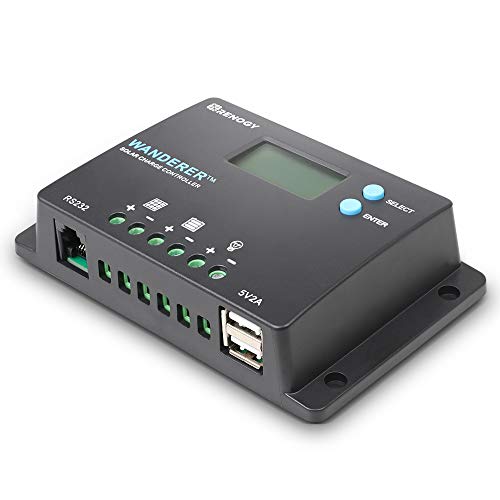
- 4-stage PWM charging works with multiple battery types.
- Temperature compensation supports colder-weather charging.
- Compact IP32 design fits small RV and marine spaces.
Best For: Small 12/24V systems needing basic winter battery management
Compact 12V MPPT Pick
SUNAPEX 10A LiFePO4/AGM/Gel Controller
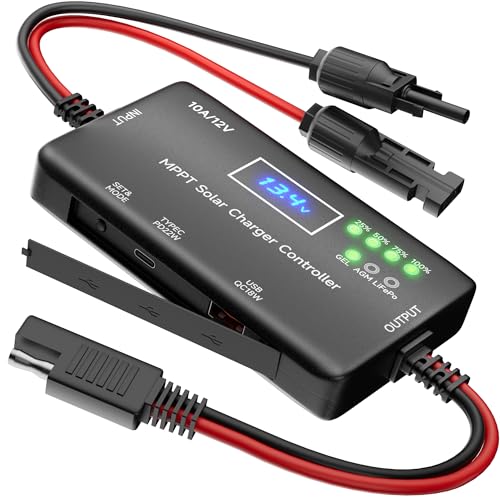
- Zero battery drain design
- MPPT with 4-stage charging
- USB-C and USB output ports
Best For: Small 12V systems needing efficient charging and low standby drain
Extreme-Weather Performance
Renogy Rover 40A MPPT Controller

- 98% conversion and 99% tracking efficiency
- Works from -40°F to 149°F
- 12V/24V auto-detection with lithium support
Best For: Off-grid users in harsh climates who need high-capacity winter charging
Waterproof Budget Choice
SOLPERK 10A 12V MPPT Controller

- IP67 waterproof construction
- 30% more efficient than PWM
- Works with AGM, gel, flooded, and LiFePO4
Best For: Small outdoor 12V systems needing simple, weather-resistant charging
Cold-Weather Power Pick

- Operates from -31°F to 113°F.
- Supports 12V/24V/36V/48V systems.
- 150V max input for larger arrays.
Best For: Large DIY or off-grid systems needing winter-ready MPPT control
Budget Waterproof Controller

- IP67 waterproof for outdoor use.
- Auto-detects 12V/24V systems.
- Simple SAE plug-and-play setup.
Best For: Small wet-weather setups needing a basic waterproof controller
Thin Waterproof Choice
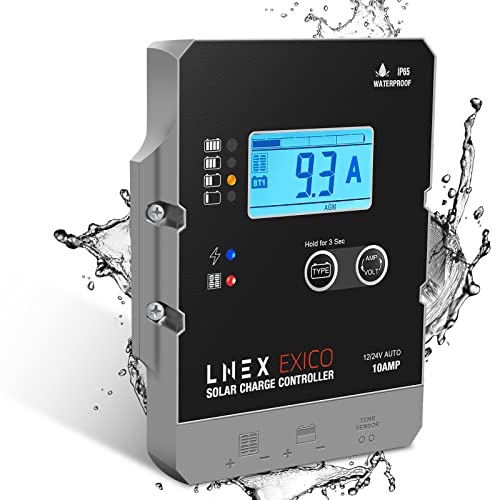
- IP65 waterproof for outdoor exposure.
- Ultra-thin body for tight spaces.
- LCD and LEDs show system status.
Best For: Compact outdoor systems needing a slim waterproof controller
Winter-Ready Smart MPPT – Victron SmartSolar MPPT 75V 15A
If you want solar charge controllers for winter use, the Victron SmartSolar MPPT is a strong fit for smaller 12/24V systems that need to squeeze the most from limited light. Its fast MPPT tracking and intelligent charge algorithms help capture usable power even when panels are partly shaded, which is a common issue in colder, lower-sun months.
Best For: Efficient winter charging on compact RV, boat, or off-grid 12/24V setups.
Pros:
- Lightning-fast MPPT tracking helps maximize power in partial shade.
- Bluetooth app support gives real-time data, history, and easy setup.
- Synchronized charging can help multiple controllers work together.
- Intelligent load output adds flexible battery protection.
Cons:
- 15A output is better for smaller systems than high-demand builds.
- No full-screen display; it relies on app-based monitoring and minimal LED feedback.
For winter use, the main advantage here is efficiency: it is designed to convert available sunlight into usable energy while protecting battery longevity. If your array is modest and you value smart monitoring, this controller is a practical upgrade.
Cold-Weather PWM Pick – Renogy Wanderer Li 30A
For buyers comparing solar charge controllers for winter use, the Renogy Wanderer Li stands out for battery-type flexibility and temperature compensation support. It uses PWM charging rather than MPPT, but its 4-stage charging profile and optional temp-sensing module make it a sensible choice for RVs, boats, and off-grid systems in harsh weather.
Best For: Budget-friendly winter charging for 12V RV, marine, and off-grid battery banks.
Pros:
- Supports Lithium, AGM, Gel, and Flooded batteries.
- Temperature compensation with the BT-1 module helps prevent winter undercharge.
- Built-in protections cover reverse polarity, overload, overcharge, and short circuits.
- Compact IP32-rated housing suits tight indoor or covered installs.
Cons:
- PWM design is less efficient than MPPT for maximizing solar harvest.
- Temperature compensation requires the BT-1 module, sold separately.
This controller makes sense if your winter priority is dependable battery charging and system protection rather than absolute harvesting efficiency. It is especially appealing for small to medium 12V setups where simple LED monitoring and rugged construction matter.
High-Capacity Winter MPPT – POWLAND 120A Auto-Sensing MPPT
If you need solar charge controllers for winter use in a larger system, the POWLAND 120A MPPT is built around high input capacity and broad voltage compatibility. Its auto-sensing support for 12V through 96V systems and claimed up to 98% conversion efficiency make it a strong fit when winter sunlight is limited and every watt matters.
Best For: Large off-grid or RV solar systems that need flexible voltage support and high output.
Pros:
- Auto-senses 12V to 96V systems for wide installation flexibility.
- MPPT design is rated up to 98% efficiency for better energy capture.
- 120A capacity suits bigger battery banks and larger arrays.
- LCD display shows PV input, charging stage, and warnings.
Cons:
- Its size and capacity are overkill for small portable systems.
- No detailed waterproof rating is listed in the supplied specs.
For winter planning, this controller is best when you want a feature-rich regulator that can adapt to a wide range of battery voltages and system sizes. It is more of a heavy-duty power management choice than a compact cold-weather controller.
Simple Winter Starter – Renogy Wanderer 10A PWM
For small systems looking at solar charge controllers for winter use, the Renogy Wanderer 10A is a straightforward option with temperature compensation and multi-battery support. It uses a 4-stage PWM charging process and low self-consumption, which can help conserve power in compact RV and marine setups during colder months.
Best For: Small 12/24V RV, marine, or off-grid systems that need basic cold-weather charging.
Pros:
- 4-stage PWM charging supports AGM, Gel, Flooded, and Lithium batteries.
- Temperature compensation helps maintain charging performance.
- Low self-consumption preserves more available solar energy.
- Compact, IP32-rated design fits tight spaces.
Cons:
- 10A output is limited for larger solar arrays.
- PWM charging is less advanced than MPPT for maximizing harvest.
This is a practical pick when simplicity, small size, and winter-aware charging matter more than maximum output. It is best suited to modest setups where reliable battery protection is the main goal.
Compact 12V MPPT Pick – SUNAPEX 10A LiFePO4/AGM/Gel Controller
If you’re comparing solar charge controllers for winter use, this SUNAPEX 12V MPPT model is a practical fit for small systems where low drain matters. It’s designed for 12V batteries only, uses MPPT charging, and includes zero-battery-drain design plus basic status monitoring so you can keep an eye on charging in cold, low-sun conditions.
Best For: Small 12V solar setups that need a compact, low-drain controller with LiFePO4, AGM, or gel support.
Pros:
- Zero battery drain design helps preserve stored power when sunlight is limited.
- MPPT charging and smart 4-stage charging support efficient battery maintenance.
- LCD screen, LED indicators, and button-based current readout make status checks simple.
- Includes USB and Type-C output ports for direct device charging.
Cons:
- Only works with 12V batteries; not for 24V or 36V packs.
- Must be connected with correct polarity and does not include a polarity converter.
- Not compatible with solar panels that already have a built-in controller.
For a compact winter-ready controller, the SUNAPEX stands out for its low standby impact and simple plug-and-play setup. It’s best suited to modest off-grid systems rather than larger multi-voltage installations.
Extreme-Weather Performance – Renogy Rover 40A MPPT Controller
For buyers focused on solar charge controllers for winter use, the Renogy Rover is built around colder-climate reliability and higher-capacity charging. Its MPPT technology is designed for strong tracking efficiency, and the controller operates in a very wide temperature range with low-temperature protection, making it a solid option for off-grid setups that see harsh weather.
Best For: Off-grid systems in extreme climates that need higher current capacity and strong MPPT performance.
Pros:
- 98% conversion rate and 99% tracking efficiency help maximize available winter sunlight.
- Operates from -40°F to 149°F with built-in low-temperature protection.
- Supports 12V/24V auto-detection and several battery types, including lithium.
- Includes remote temperature sensor and app connectivity support for monitoring and adjustments.
Cons:
- BT-2 for app features is sold separately.
- Larger and heavier than compact 10A controllers.
- May be more controller than needed for very small solar setups.
This model is the strongest fit when winter conditions are a real concern and you want a controller with broad battery support and serious protection features. It’s especially appealing for users who need more output headroom than small portable units provide.
Waterproof Budget Choice – SOLPERK 10A 12V MPPT Controller
If you want a simple option among solar charge controllers for winter use, this SOLPERK 12V MPPT unit keeps the focus on efficiency and straightforward operation. It’s compact, waterproof, and compatible with common 12V battery types, so it works well for small systems that need easy monitoring and a plug-and-play install.
Best For: Small 12V setups where a compact waterproof controller and basic status indicators are the priority.
Pros:
- MPPT charging is rated as 30% more efficient than PWM controllers.
- IP67 waterproof design adds protection for outdoor or exposed installs.
- Supports a wide range of 12V batteries, including LiFePO4.
- SAE port and simple instructions make installation easy.
Cons:
- Limited to 12V battery systems only.
- No advanced display beyond basic LED indicators.
- Lower 10A output may not suit larger arrays.
The SOLPERK is a good no-frills choice when you want an efficient winter-ready controller without extra complexity. Its waterproof housing and compact build make it especially practical for smaller outdoor solar projects.
Cold-Weather Power Pick – Renogy 60A Rover Lite MPPT
If you need solar charge controllers for winter use, this Renogy Rover Lite 60A is built for harsh conditions and larger DIY systems. Its MPPT design supports 12V/24V/36V/48V setups, and the 150V max solar input can simplify wiring on bigger arrays.
Best For: Larger off-grid or DIY solar setups that need dependable cold-weather performance and wide battery compatibility.
Pros:
- Rated for full-load operation from -31°F to 113°F.
- Built-in low-temperature protection helps safeguard lithium batteries.
- 150V maximum solar input supports more flexible panel wiring.
- LCD screen and optional Bluetooth module make monitoring easier.
Cons:
- Bluetooth monitoring requires a separate module.
- Sold as the controller only, so you need compatible components for the system.
This is the strongest fit here if winter reliability matters most and you want room to expand a serious solar setup. Its temperature protection and broad voltage support make it more versatile than a basic controller.
Budget Waterproof Controller – SOLPERK 10A IP67 PWM
For solar charge controllers for winter use in exposed locations, the SOLPERK 10A stands out for its IP67 waterproof housing and simple 12V/24V auto-detection. It is a compact PWM controller designed for smaller RV, boat, car, and outdoor battery setups.
Best For: Small outdoor solar setups where waterproofing and simple plug-and-play installation matter most.
Pros:
- IP67 waterproof design suits outdoor use in wet conditions.
- Automatically detects 12V or 24V systems.
- Supports AGM, GEL, and flooded batteries.
- SAE port and pre-drilled holes make installation straightforward.
Cons:
- 10A output limits it to smaller systems.
- PWM design is more basic than MPPT controllers.
This is a practical pick for simple winter-ready installs where protection from moisture is more important than maximum charging performance. It keeps setup easy while adding the weather resistance outdoor users need.
Thin Waterproof Choice – LNEX 10A LCD PWM
If you’re comparing solar charge controllers for winter use and want a slim, weather-resistant option, the LNEX 10A is a solid fit for small 12V/24V systems. Its IP65 waterproof design and LCD display make it easy to place outdoors and check system status at a glance.
Best For: Compact outdoor battery systems that need a thin waterproof controller with visible status monitoring.
Pros:
- IP65 waterproof design handles rain, spray, and condensation.
- Very thin profile is useful for tight installs.
- 5-stage PWM charging includes soft start, bulk, absorption, float, and equalization.
- LCD display and LED indicators show charging and battery status.
Cons:
- 10A limit keeps it suited to smaller setups.
- Manufacturer warranty is only 90 days.
The LNEX is a good middle-ground choice if you want winter-ready weather protection without adding bulk. It offers more detailed status feedback than a basic controller while staying compact and simple.
How We Picked the Best Solar Charge Controllers for Winter Use
For Solar Charge Controllers for Winter Use, we prioritized charging efficiency in weak light, compatibility with common battery chemistries, and stable operation in cold-weather setups. We also looked at maximum PV input, controller type, user-friendly displays, and whether the unit supports lithium and lead-acid batteries.
Quick Comparison
MPPT controllers are usually the best choice for winter because they extract more energy from panels when sunlight is limited or inconsistent. PWM units can still work well for smaller or simpler systems, especially when budget and straightforward setup matter more than maximizing harvest.
Key Buying Factors for Solar Charge Controllers for Winter Use
MPPT Vs. PWM
If you want the strongest performance in low light, choose MPPT. It typically performs better in cold, cloudy, and shaded conditions. PWM is more affordable, but it is best suited to smaller systems where panel output is already well matched to battery voltage.
Battery Compatibility
Make sure the controller supports your battery type, especially if you use LiFePO4, AGM, gel, or flooded lead-acid. Winter systems often benefit from precise charging profiles to prevent undercharging and preserve battery health.
Voltage and Input Headroom
Cold weather can reduce panel output, but it also changes system behavior. Choose a controller with enough voltage and amperage overhead for your array so it can handle real-world winter conditions without bottlenecks.
Temperature and Protection Features
Look for low-temperature safeguards, reverse polarity protection, overcharge protection, and good thermal management. In winter, dependable protection matters because batteries may be stressed by both cold and partial-state charging.
Who Should Buy Which Solar Charge Controllers for Winter Use?
Choose a small 10A controller if you have a modest RV, boat, shed, or backup setup. Step up to a 30A or 40A unit for medium off-grid systems or larger battery banks. If you run a bigger array or want maximum future expansion, a higher-amperage MPPT controller is the smarter long-term pick.
For most buyers seeking Solar Charge Controllers for Winter Use, the best value usually comes from an MPPT model with clear battery support, solid input capacity, and reliable protections rather than the highest amp rating alone.