Choosing the right controller can make or break a home backup solar system. The best options protect your batteries, improve charging efficiency, and help your setup run safely when the grid goes down.
Below, we focus on solar charge controllers for home backup that fit real-world needs, from small battery banks to larger hybrid systems with inverter integration.
Best 10 Solar Charge Controllers for Home Backup Picks for 2026
Smart Bluetooth MPPT
Victron SmartSolar MPPT 100V 50A

- Bluetooth app with live data and 30-day history
- Fast MPPT tracking for shaded or changing panel output
- Intelligent load output and synchronized charging support
Best For: Backup systems needing efficient charging and detailed app monitoring
Hybrid Power Hub
SUMRY 4000W 24V Pure Sine Inverter

- Built-in 140A MPPT charge controller
- 4000W pure sine inverter with 8000W peak
- Can run daytime loads from solar with proper PV voltage
Best For: All-in-one home backup systems needing inverter and charging in one box
All-Weather MPPT

- High-efficiency MPPT with strong low-light tracking
- Supports Gel, AGM, Flooded, and Lithium batteries
- App access available with BT-2 accessory
Best For: Rugged backup systems needing versatile battery support and protection
Compact Bluetooth MPPT
Victron SmartSolar MPPT 75V 15A

- Bluetooth app monitoring with real-time data
- Compact MPPT design for smaller systems
- Automatic low-voltage load disconnect support
Best For: Smaller backup builds that prioritize compact size and app monitoring
Whole-Home Hybrid Power
10kW Split-Phase Inverter With Dual MPPT

- Dual built-in MPPT controllers
- 10,000W split-phase output
- Four charging and output modes
Best For: Large home backup systems with integrated solar charging
Simple Battery Charging
10A PWM Controller for Small Systems
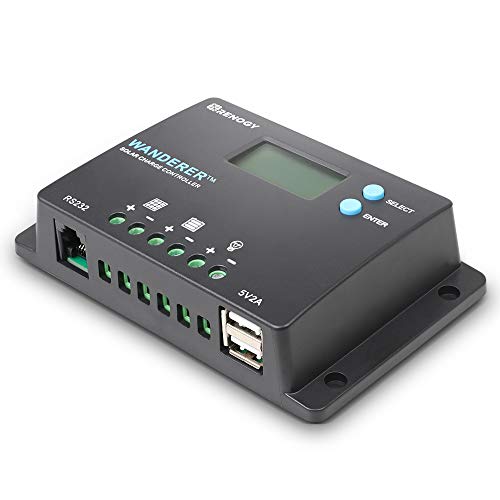
- 10A PWM for 12V/24V batteries
- 4-stage charging with LCD
- Compact, IP32-rated design
Best For: Small backup, RV, and marine battery systems
Flexible Backup Expansion
6.5kW Hybrid Inverter With Dual MPPT
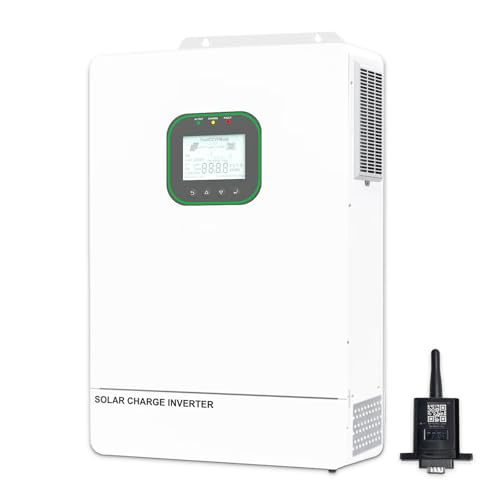
- Dual MPPT controllers, up to 99% efficiency
- Parallel support for up to 6 units
- Touch screen with 4 charging modes
Best For: Scalable home backup setups that need integrated solar charging
Boost MPPT
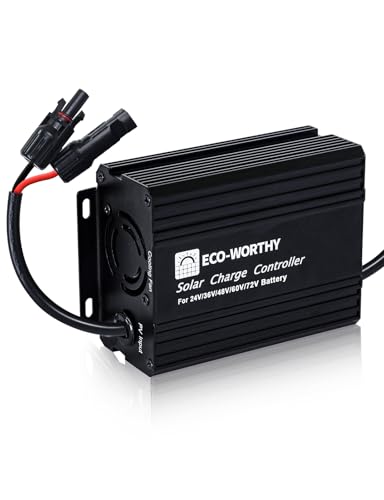
- Boosts 12V/24V panels to 24V-72V batteries
- 95% MPPT efficiency and 93% conversion
- LED display plus multiple battery support
Best For: high-voltage battery banks from smaller panels
Smart Bluetooth MPPT – Victron SmartSolar MPPT 100V 50A
For solar charge controllers for home backup, this Victron SmartSolar MPPT is a strong fit when you want efficient battery charging, app-based visibility, and flexible system behavior. It uses fast MPPT tracking to maximize available panel power, even with partial shading, while helping protect battery life through intelligent charge algorithms.
Best For: Home backup systems that need a Bluetooth-enabled MPPT controller with strong monitoring and load-control features.
Pros:
- MPPT tracking is designed to squeeze more usable power from the panels, including in shaded conditions.
- VictronConnect provides real-time data, 30-day history, settings changes, firmware updates, and alarms.
- Multiple units can synchronize for system-wide charging behavior and battery longevity.
- Built-in intelligent load output can disconnect loads automatically if battery voltage drops too low.
Cons:
- No built-in display on the unit itself.
- Best suited to users comfortable with app-based configuration.
Overall, this is a polished choice for backup-power builds where monitoring and charge efficiency matter more than simple standalone controls. Its app connectivity and synchronized charging features make it especially practical for expandable home systems.
Hybrid Power Hub – SUMRY 4000W 24V Pure Sine Inverter
For solar charge controllers for home backup, this SUMRY hybrid inverter combines a 140A MPPT charge controller with a 4000W pure sine wave inverter in one unit. It is built for systems that want direct solar use, battery support, and configurable charging priorities for backup power and outage resilience.
Best For: Home backup setups that want an all-in-one inverter plus MPPT charging in a 24V system.
Pros:
- Integrated 140A MPPT charge controller supports up to 5600W of PV input.
- Pure sine wave output is intended for sensitive appliances and cleaner power delivery.
- Can work without a battery in daytime when PV input voltage is high enough and grid is not connected.
- LCD display and buttons make it easier to view status and adjust priorities.
Cons:
- Requires careful matching of load wattage to the 4000W rated and 8000W peak output.
- Battery-less operation has specific voltage and grid conditions.
This is less of a simple controller and more of a complete backup power hub. If you want one device to manage solar charging, inverter output, and priority settings, it offers a very capable all-in-one approach.
All-Weather MPPT – Renogy Rover 40A 12/24V
For solar charge controllers for home backup, the Renogy Rover 40A is a practical MPPT option when you want strong tracking, broad battery support, and durable operation across tough conditions. Its 12V/24V auto-detection, app connectivity, and comprehensive protection features make it a solid controller for off-grid backup builds.
Best For: Home backup and off-grid systems that need a rugged MPPT controller with app access and multi-battery compatibility.
Pros:
- High MPPT conversion and tracking efficiency help capture more energy in low light or partial shade.
- Supports Gel, AGM, Flooded, and Lithium batteries with 12V/24V auto-detection.
- Built-in protections cover reverse polarity, overcharge, over-discharge, overload, short circuit, and reverse current.
- DC Home app support adds real-time data, history, settings, and firmware updates with the proper BT-2 accessory.
Cons:
- App connectivity requires the BT-2 accessory, sold separately.
- Uses an LCD and external accessories rather than a highly integrated smart display experience.
For buyers who want a dependable controller that can handle varied battery chemistries and harsh environments, this Renogy model is a well-rounded pick. It balances efficiency, protection, and configuration flexibility for backup power use.
Compact Bluetooth MPPT – Victron SmartSolar MPPT 75V 15A
For solar charge controllers for home backup, this smaller Victron SmartSolar MPPT is a good fit when the system needs efficient charging, Bluetooth monitoring, and compact hardware. It uses fast MPPT tracking and intelligent charge algorithms to extract useful power from solar panels while helping preserve battery longevity.
Best For: Smaller home backup setups that want a compact, app-connected MPPT controller.
Pros:
- Bluetooth connectivity through VictronConnect makes monitoring and setup straightforward.
- Fast MPPT tracking helps improve output when panels are partly shaded.
- Supports synchronized charging with other SmartSolar controllers.
- Intelligent load output can automatically disconnect loads when battery voltage gets too low.
Cons:
- 15A output is better for smaller systems than larger backup arrays.
- Minimal display means most control happens through the app.
This model is a streamlined option for users who want Victron’s monitoring features in a smaller controller. It makes sense when your home backup needs are modest and you prefer a compact, Bluetooth-first setup.
Whole-Home Hybrid Power – 10kW Split-Phase Inverter With Dual MPPT
If you’re comparing solar charge controllers for home backup, this all-in-one inverter is built for larger systems that need charging, conversion, and backup control in one unit. It combines two built-in MPPT solar controllers with a 48V battery charger, split-phase output, and multiple charging priorities for a flexible home setup.
Best For: Homes that want a high-capacity hybrid inverter with integrated solar charging and split-phase output for backup power.
Pros:
- Built-in dual MPPT solar controllers for simplified wiring and solar input management
- Supports 10,000W output, 20,000W peak power, and split-phase 120V/240V operation
- Offers four charging modes and four output modes for different backup and usage scenarios
- Compatible with AGM, Gel, Flooded, Lithium, and battery-free operation
Cons:
- Much larger and heavier than a basic standalone charge controller
- More system than most small backup or RV installs need
- Best suited to users comfortable with a complex hybrid setup
This unit makes the most sense when you want one device to handle solar charging and home backup power management together. Its integrated controller design and time-slot charging feature are especially useful for systems built around utility use, solar priority, and peak-rate shifting.
Simple Battery Charging – 10A PWM Controller for Small Systems
For smaller solar charge controllers for home backup, this Renogy unit is a straightforward option for low-power 12V or 24V battery systems. It uses PWM charging with a 4-stage profile and includes load control plus protection features for basic off-grid or backup applications.
Best For: Small backup batteries, RVs, and marine setups that need an affordable, compact controller.
Pros:
- 10A PWM controller for 12V/24V systems
- 4-stage charging helps manage AGM, Gel, Flooded, and Lithium batteries
- Includes manual, automatic, and timed load control modes
- Compact design with LCD display and IP32 waterproof rating
Cons:
- 10A output is limited for larger home backup systems
- PWM is less advanced than MPPT for solar harvesting
- Best suited to small loads rather than whole-house backup
This is a practical pick when you need a simple controller rather than a full hybrid inverter. It’s geared toward dependable small-system charging, with enough protection and monitoring for DIY backup projects and mobile installs.
Flexible Backup Expansion – 6.5kW Hybrid Inverter With Dual MPPT
If you want solar charge controllers for home backup with more expansion headroom, this hybrid inverter adds dual MPPT charging, 48V battery support, and parallel capability for larger loads. It’s designed to keep power flowing during outages while giving you multiple ways to prioritize solar, grid, and hybrid charging.
Best For: Homeowners who want a scalable backup inverter with built-in solar charging and monitoring.
Pros:
- Built-in 2 MPPT solar charge controllers with up to 99% efficiency
- Supports up to 6 units in parallel for expanded capacity
- Includes 4 charging modes and 4 output modes for flexible power management
- Touch screen interface makes settings and status checks easier
Cons:
- Split-phase 220V output requires multiple units in parallel
- More complex than a basic charge controller for small systems
- Better suited to larger backup builds than minimal battery setups
Overall, this is a strong middle ground for people who want backup power and solar charging in one system without jumping straight to the biggest units. The dual MPPT inputs and parallel support make it easier to grow a home setup over time.
Bluetooth MPPT – Redodo 24V 40A
If you want solar charge controllers for home backup with a smart monitoring focus, the Redodo 24V 40A MPPT is built for hands-on system management. It supports 12V/24V auto detection, uses MPPT tracking up to 99%, and adds built-in Bluetooth plus an LCD display so you can check charging status without guessing.
Best For: Home backup setups, RVs, and off-grid DIY systems that benefit from remote monitoring and flexible battery support.
Pros:
- Built-in Bluetooth and RJ12/RS485 support for remote status monitoring.
- MPPT tracking efficiency up to 99% and peak conversion efficiency up to 98%.
- Compatible with LiFePO4 by default and adjustable for sealed, gel, and flooded lead-acid batteries.
- LCD screen and LED indicators make day-to-day checking simple.
Cons:
- Limited to 12V/24V systems, so it is not for higher-voltage battery banks.
- Requires parameter adjustment if you are not using the default LiFePO4 mode.
Overall, this is a practical pick if you want a compact MPPT controller that combines efficient charging with clearer visibility into your backup power system. The built-in protections and aluminum alloy shell add confidence for regular off-grid use.
Boost MPPT – ECO-WORTHY 12A
This ECO-WORTHY unit stands out among solar charge controllers for home backup when you need to charge higher-voltage batteries from 12V or 24V panels. It boosts panel voltage to support 24V through 72V battery systems, making it a useful fit for compact solar arrays, golf carts, and backup-oriented battery banks.
Best For: High-voltage battery setups that need a boost controller from 12V or 24V panels.
Pros:
- Boost charging supports 24V, 36V, 48V, 60V, and 72V batteries.
- Works with lithium, GEL, flooded, and lead-acid batteries.
- MPPT efficiency up to 95% with 93% conversion efficiency.
- LED display shows charging current and voltage clearly.
Cons:
- Panel operating voltage must be lower than battery voltage.
- Lower 12A current rating limits total charging capacity.
If your backup system uses a higher-voltage battery bank and you do not want to rework the panel layout, this controller offers a straightforward boost approach. The safety protections and simple display make it easy to manage in smaller systems.
High-Current Smart Controller – SA100A 100A MPPT
For larger solar charge controllers for home backup, the SA100A focuses on high current, wide system compatibility, and load control. It automatically recognizes 12V, 24V, 36V, and 48V systems, supports lead-acid and lithium batteries, and adds timing and light-control functions for more deliberate power management.
Best For: Off-grid homes, backup power stations, and remote installations that need high current and flexible load control.
Pros:
- 100A controller with automatic recognition for 12V/24V/36V/48V systems.
- Supports sealed, GEL, flooded, and LiFePO4 batteries.
- LCD display shows voltage, charging/discharging current, temperature, and error codes.
- Dual USB ports and load timing/light-control features add convenience.
Cons:
- Feature-rich interface may be more than you need for a basic backup setup.
- Technical details indicate adaptive logic rather than a standard buck-style MPPT design.
This model makes sense if your backup plan needs strong output capacity and more control over loads and battery behavior. The broad voltage support and protection features help it fit both home and remote solar applications.
How We Picked These Solar Charge Controllers for Home Backup
We prioritized charging efficiency, battery compatibility, voltage and current headroom, safety features, monitoring options, and overall usefulness in backup-power setups. For home systems, MPPT models and hybrid inverter units tend to offer the most flexibility, while PWM controllers can still make sense for smaller, lower-cost builds.
Quick Comparison
In this roundup, the strongest choices split into a few groups: high-efficiency MPPT controllers for battery-focused systems, compact controllers for smaller loads, and all-in-one hybrid inverters with built-in charging for homeowners who want fewer separate components. If you need better solar harvest and room to expand, MPPT is usually the better long-term choice.
Key Buying Factors for Solar Charge Controllers for Home Backup
Battery Voltage and System Match
Make sure the controller supports your battery bank voltage, whether that is 12V, 24V, 48V, or a higher-voltage setup. Mismatching voltage can limit performance or make the system unusable.
MPPT Vs. PWM
MPPT controllers are typically the best fit for Solar Charge Controllers for Home Backup because they extract more power from panels, especially in colder weather or when panel voltage is higher than battery voltage. PWM units are simpler and cheaper, but usually less efficient.
Input Voltage and Current Capacity
Check maximum PV input voltage and charging amps to ensure the controller can handle your array now and after future expansion. Oversizing a little is often smart if you plan to add panels later.
Monitoring and Protection
Features like LCD displays, Bluetooth, WiFi, temperature compensation, and built-in protections against overcharge, overload, and short circuits can make a backup system safer and easier to manage.
Inverter Integration
If you want a simplified installation, a hybrid inverter with integrated charge control may be a good fit. If you prefer flexibility or want to upgrade in stages, a standalone controller is usually easier to scale.
Who Should Buy Which Solar Charge Controllers for Home Backup?
Choose a high-quality MPPT controller if your priority is maximum charging performance and battery health. Pick a hybrid inverter with built-in charging if you want an all-in-one home backup solution. Go with a basic PWM or lower-amp controller only if you are building a small, budget-conscious system with modest solar input.
For most homeowners, the best Solar Charge Controllers for Home Backup are the ones that leave room to grow, match the battery bank cleanly, and offer clear monitoring so you can trust the system when it matters most.