Choosing the right solar charge controller can make a big difference in how safely and efficiently your lithium battery bank charges. The best models help protect your batteries, maximize harvest, and simplify setup.
Below, we focus on lithium-compatible options across MPPT and PWM designs so you can match the controller to your panel wattage, battery chemistry, and budget.
Best 10 Solar Charge Controller for Lithium Batteries Picks for 2026
High-Efficiency MPPT Pick

- 98% conversion and 99% tracking efficiency
- Lithium, AGM, gel, and flooded support
- App monitoring with optional Bluetooth module
Best For: Off-grid users who want a high-output MPPT controller for lithium batteries
Compact Bluetooth MPPT

- Compact MPPT controller with Bluetooth
- VictronConnect app for monitoring and setup
- Supports synchronized charging with other units
Best For: Small solar builds that want a lithium-ready MPPT controller with app control
Budget PWM Lithium Option

- Lithium, AGM, gel, and flooded support
- Compact IP32-rated design for RV or marine use
- 30A PWM charging with simple LED status
Best For: 12V users who want a straightforward lithium-capable controller for small systems
High-Output MPPT Workhorse

- 100V, 50A output for larger systems
- Bluetooth app with live data and history
- Synchronizes with multiple controllers
Best For: Large solar installations that need high-output lithium charging with smart control
Budget 12V Lithium Fit
20A PWM Controller for LiFePO4

- Supports 12V LiFePO4, AGM, gel, and other battery types
- 20A PWM output works with solar panels below 300W
- LCD screen, LED indicators, USB, and Type-C ports add convenience
Best For: 12V solar setups needing an affordable lithium-compatible PWM controller
Versatile 12V/24V Pick
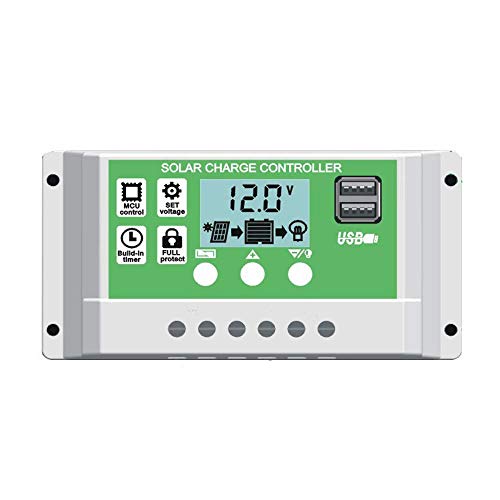
- Works with 12V and 24V systems
- Supports lithium-ion, LiFePO4, AGM, GEL, and lead-acid batteries
- LCD display and dual USB output add convenience
Best For: Mixed-voltage solar users who want broad battery compatibility
Compact MPPT Choice
10A Solar Controller for 12V Lithium
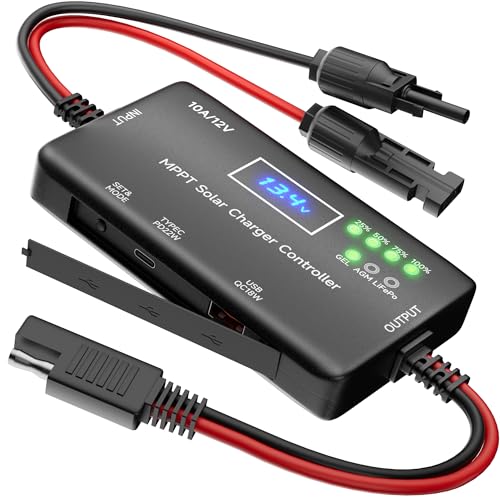
- MPPT design for 12V systems with stable 10A charging
- Supports LiFePO4, AGM, gel, and lead-acid batteries
- Compact size with LCD, LED, USB, and Type-C ports
Best For: Small 12V systems where compact MPPT charging matters
Portable MPPT Starter
10A 12V Portable MPPT for LiFePO4

- MPPT controller for 12V lithium setups
- LCD display and LED indicators
- SAE plug-and-play with waterproof design
Best For: Compact 12V lithium solar setups
App-Controlled 30A Pick
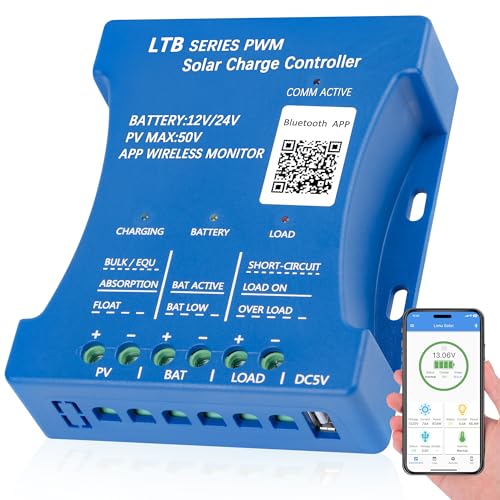
- Bluetooth app monitoring and remote control
- Supports LiFePO4 and lithium batteries
- Seven load modes plus USB output
Best For: Users who want app-based control and load options
Slim Waterproof Option
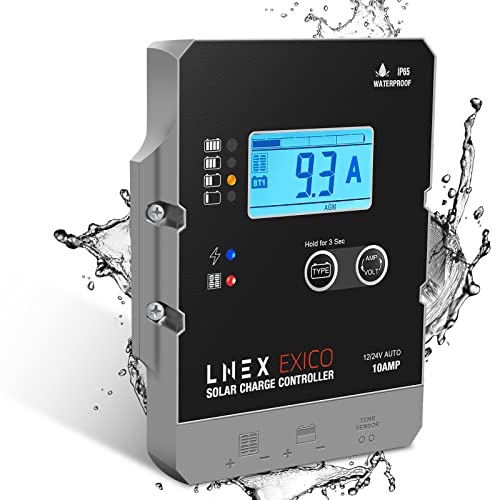
- IP65 waterproof slim design
- Auto-detects 12V/24V systems
- Supports LiFePO4 and other battery types
Best For: Small outdoor systems needing weather resistance
High-Efficiency MPPT Pick – Renogy Rover 40A MPPT 12V/24V
If you want a solar charge controller for lithium batteries that prioritizes harvesting power efficiently, the Renogy Rover 40A is built around MPPT performance and flexible battery support. It’s a strong fit for off-grid systems where you want fast adaptation to changing sunlight, app-based monitoring, and protection features that help keep the system safe in demanding conditions.
Best For: Off-grid setups that need a 40A MPPT controller with lithium support and app connectivity.
Pros:
- MPPT technology with up to 98% conversion and 99% tracking efficiency
- Supports lithium, plus gel, AGM, and flooded batteries
- Built-in electrical protections, including reverse polarity and short-circuit protection
- DC Home App support for real-time data and 30-day history
Cons:
- BT-2 Bluetooth module is sold separately for app connection
- Larger and heavier than compact low-amp controllers
Overall, this is a practical choice if you want a capable MPPT controller with lithium compatibility and a full set of monitoring and safety features. It’s especially appealing for users who expect variable weather and want better control over charging behavior.
Compact Bluetooth MPPT – Victron SmartSolar 75V 15A
This solar charge controller for lithium batteries is a compact MPPT option for smaller systems that still need smart monitoring and strong charging behavior. The Victron SmartSolar 75V 15A focuses on efficient power conversion, battery longevity, and easy app-based configuration in a very small footprint.
Best For: Small lithium-ready solar systems that benefit from Bluetooth monitoring and compact hardware.
Pros:
- Fast MPPT tracking helps maximize available solar power
- VictronConnect app provides real-time data and 30-day history
- Supports battery presets, firmware updates, and alarms
- Can synchronize with multiple SmartSolar controllers
Cons:
- 15A output is better for smaller setups
- No load output flexibility may be limiting for some users
For a compact lithium-friendly controller, this model stands out for app control and smart charging features rather than raw capacity. It’s a sensible pick when space is tight and you want a reliable, well-connected controller.
Budget PWM Lithium Option – Renogy Wanderer Li 30A
If you’re looking for a solar charge controller for lithium batteries in a simple 12V build, the Renogy Wanderer Li 30A is a PWM option aimed at RVs, boats, and off-grid setups. It offers lithium-focused charging, basic monitoring, and a compact waterproof design for users who value straightforward operation over MPPT efficiency.
Best For: 12V RV, marine, and compact off-grid systems that want a simple lithium-capable PWM controller.
Pros:
- Supports LiFePO4, AGM, gel, and flooded battery types
- 30A PWM charging with lithium-oriented charging stages
- Compact size for tight spaces in RV and marine installations
- IP32-rated waterproof casing and corrosion-resistant materials
Cons:
- PWM design is less efficient than MPPT controllers
- Best suited to 12V systems only
- Bluetooth module for app monitoring is sold separately
This is a practical budget-friendly choice if your lithium system is 12V and you want essential charging support with a durable build. It’s less advanced than the MPPT options here, but its simplicity may be exactly what some small systems need.
High-Output MPPT Workhorse – Victron SmartSolar 100V 50A
For larger builds, this solar charge controller for lithium batteries offers the output headroom and MPPT efficiency needed to manage more demanding charging setups. The Victron SmartSolar 100V 50A is designed for systems that want strong power conversion, app-based setup, and the ability to coordinate multiple controllers as one.
Best For: Larger lithium-ready solar systems that need a high-amp MPPT controller with Bluetooth management.
Pros:
- 100V, 50A capacity for bigger solar setups
- Fast MPPT tracking helps capture more available power
- VictronConnect app offers real-time data and 30-day history
- Can synchronize with multiple SmartSolar controllers
Cons:
- No display on the unit
- Higher-capacity hardware may be more than small systems need
This model makes sense when you need a more robust controller for a higher-demand lithium system. It keeps the same smart monitoring features as Victron’s smaller unit while adding much more charging capacity.
Budget 12V Lithium Fit – 20A PWM Controller for LiFePO4
If you need a solar charge controller for lithium batteries in a simple 12V setup, this 20A PWM model is built for straightforward charging with LiFePO4, AGM, and gel batteries. It is designed for solar panels below 300W and adds LCD monitoring, USB/Type-C outputs, and zero-idle drain for practical everyday use.
Best For: 12V off-grid users who want a basic, feature-rich PWM controller for lithium and lead-acid batteries.
Pros:
- Supports 12V LiFePO4, AGM, gel, and other battery types
- 20A PWM output works with solar panels below 300W
- LCD screen and LED indicators make system checks easy
- Includes USB and Type-C ports for charging small devices
Cons:
- Only for 12V systems, not 24V or 36V packs
- No polarity converter is included, so wiring must be correct
Overall, this is a practical pick if you want a compact controller with clear monitoring and extra device charging ports. Its biggest strengths are simple installation, zero idle drain, and broad battery compatibility within a 12V solar setup.
Versatile 12V/24V Pick – 30A PWM Controller with LCD
This solar charge controller for lithium batteries is a flexible 30A PWM option for both 12V and 24V systems. It supports lithium-ion, LiFePO4, and lead-acid batteries, and adds an LCD display, dual USB output, and multiple protection features for general-purpose solar use.
Best For: Users who need one controller for both 12V and 24V battery setups with lithium support.
Pros:
- Works with 12V and 24V systems
- Compatible with lithium-ion, LiFePO4, AGM, GEL, and lead-acid batteries
- LCD display shows PV, battery, and load parameters
- Dual USB output provides up to 5V 2.5A
Cons:
- PWM design may be less advanced than MPPT options
- Best suited for DC loads and standard solar setups
This model stands out for broad compatibility and higher 30A capacity, making it a solid all-around controller for mixed battery needs. If you want a straightforward unit with useful display data and strong protection, it covers the basics well.
Compact MPPT Choice – 10A Solar Controller for 12V Lithium
If you want a solar charge controller for lithium batteries with MPPT charging and a compact footprint, this 12V 10A model is aimed at small systems. It is designed for panels without built-in controllers and supports LiFePO4, AGM, gel, and lead-acid batteries with LCD monitoring, zero battery drain, and dual USB/Type-C charging.
Best For: Small 12V solar systems where space is limited and MPPT charging is preferred.
Pros:
- MPPT design for 12V systems with stable 10A charging
- Supports LiFePO4, AGM, gel, and lead-acid batteries
- Compact size fits tight installation spaces
- LCD screen, LED indicators, USB, and Type-C ports included
Cons:
- Only suitable for 12V batteries, not 24V or 36V packs
- Not compatible with solar panels that already have built-in controllers
This is a strong option for smaller installs where you want MPPT efficiency and easy status monitoring in a compact unit. It makes the most sense for portable or space-constrained 12V systems rather than larger battery banks.
Portable MPPT Starter – 10A 12V Portable MPPT for LiFePO4
If you want a solar charge controller for lithium batteries in a simple 12V setup, the SunRock 10 is built around MPPT charging, portable handling, and easy SAE plug-and-play use. It is designed for 12V battery banks and supports LiFePO4 alongside common lead-acid types, with an LCD display to help you monitor what the system is doing.
Best For: 12V lithium battery users who want a compact MPPT controller for portable solar setups.
Pros:
- Upgraded 10A MPPT charging with claimed high tracking efficiency.
- Supports 12V LiFePO4 plus AGM, Gel, sealed, flooded, and deep-cycle batteries.
- Compact body with LCD display, LED indicators, and SAE plug-and-play connection.
- Built-in protection features and a waterproof design for outdoor use.
Cons:
- Designed only for 12V batteries, so it is not for higher-voltage systems.
- PV Voc must stay between 15V and 30V.
- Connection order matters: battery first, then solar panel.
For a small lithium-ready controller, this model focuses on portability and straightforward operation more than advanced system expansion. It makes the most sense if your solar setup is 12V, compact, and you want a controller that is easy to carry and hook up.
App-Controlled 30A Pick – 30A PWM with App and USB
For buyers comparing a solar charge controller for lithium batteries with more monitoring and load control, this 30A PWM model stands out for Bluetooth app access and a wide feature set. It supports LiFePO4 and lithium batteries, adds 12V/24V auto matching, and gives you app-based control over charging status and load modes.
Best For: Users who want app monitoring, load modes, and USB charging in a 30A controller.
Pros:
- Bluetooth app monitoring with real-time status, settings, and load control.
- Compatible with LiFePO4, lithium, sealed, gel, flooded, and other battery types.
- Seven load modes provide flexible control for different use cases.
- Built-in 5V/1.5A USB port adds convenient device charging.
Cons:
- PWM design is not the same as MPPT charging.
- 12V/24V auto matching applies to non-lithium batteries, per the notes.
- First-time setup requires correct battery voltage so the controller can identify the system properly.
This is a practical pick if you want more control than a basic solar regulator can offer. The app support and multiple load modes make it especially useful for systems where monitoring and easy adjustment matter.
Slim Waterproof Option – 10A 12V/24V LCD PWM
If you need a solar charge controller for lithium batteries that can handle outdoor exposure, the LNEX focuses on a slim waterproof build with LCD monitoring. It automatically detects 12V or 24V systems and supports LiFePO4 as well as lithium, AGM, Gel, flooded, and other battery types.
Best For: Outdoor users who want a slim, waterproof 10A controller for 12V/24V systems.
Pros:
- IP65 waterproof design for spray, rain, and condensation.
- Super-thin body with LCD display and LED indicators.
- Supports 12V/24V auto detection and multiple battery types, including LiFePO4.
- 5-stage PWM charging and built-in protection features.
Cons:
- PWM controller, not MPPT.
- 10A output limits it to smaller systems.
- Equalization is automatic every 28 days, which may not suit every battery setup.
The LNEX is a solid option if weather resistance and compact size matter as much as battery compatibility. It is best suited to smaller solar setups where you want simple monitoring and dependable outdoor use.
How We Picked the Best Solar Charge Controller for Lithium Batteries
We prioritized lithium charging support, clear battery settings, usable current ratings, and control features that matter in real-world installs. MPPT models earned extra weight for higher-efficiency systems, while PWM models were included for smaller or budget-conscious setups where simplicity matters.
Quick Comparison
As a rule, MPPT is the better choice for larger arrays, longer wire runs, and mixed weather conditions. PWM can still work well for compact 12V systems with modest solar input. Also check whether the controller supports LiFePO4 profiles, user-adjustable voltage targets, and temperature or load protection if your setup requires them.
Key Buying Factors for a Solar Charge Controller for Lithium Batteries
Battery Compatibility
Make sure the controller explicitly supports lithium chemistry, especially LiFePO4. Some units also handle AGM, gel, or flooded batteries, but lithium support should be clear and configurable.
Charge Algorithm and Voltage Settings
Lithium batteries need accurate absorption and float behavior. Adjustable settings are important if your battery manufacturer specifies custom charging targets.
Controller Type: MPPT Vs. PWM
MPPT controllers generally deliver better energy capture and are usually the smarter pick when panel voltage is higher than battery voltage. PWM is simpler and often cheaper, but less efficient in many installations.
System Size and Amperage
Match the controller’s amp rating to your solar array and battery bank. Undersizing can limit output and create heat, while oversizing may add unnecessary cost.
Display, App, and Monitoring
LCD screens, Bluetooth apps, and smart monitoring make setup easier and help you verify real charging behavior. That matters when you want to confirm lithium settings are correct.
Who Should Buy Which Solar Charge Controller for Lithium Batteries?
If you’re building a larger off-grid or mobile power system, a higher-capacity MPPT controller is usually the best fit. If you have a small 12V lithium setup, a compact 10A to 20A controller may be enough. Buyers who want the simplest path should look for lithium presets and auto-detection, while tinkerers may prefer fully adjustable models for custom tuning.
In short, the best Solar Charge Controller for Lithium Batteries is the one that matches your battery chemistry, solar input, and system scale without forcing you to compromise on charging safety or efficiency.