Choosing the right inverter can make RV life feel a lot more like home. From charging devices to running kitchen gear, the best power inverters for RVs turn your 12V battery power into dependable AC electricity.
Below, we’ve rounded up 10 strong options for different rigs, power needs, and budgets, with a focus on output, waveform quality, surge capacity, and ease of installation.
Best 10 Power Inverters for Rvs Picks for 2026
Portable Pure Sine Pick
Renogy 1000W Pure Sine Inverter

- 1000W continuous, 2000W surge
- Pure sine wave for sensitive devices
- USB, dual AC outlets, wired remote
Best For: Compact RV setups with smaller electronics and appliances
High-Power Travel Workhorse
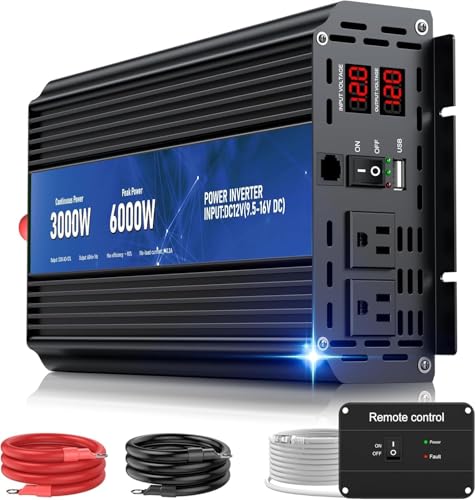
- 3000W continuous, 6000W peak
- LCD display with real-time status
- 14.8ft wired remote and broad battery support
Best For: RV travelers needing more wattage for multiple devices
Clean Power Midrange
BELTTT 2000W Pure Sine Inverter

- 2000W continuous, 4000W surge
- Pure sine wave with graphical LCD
- Dual AC, USB, hardwire port, 23ft remote
Best For: RV users who want cleaner power and more capacity
Remote-Control Safety Pick

- Dual AC outlets plus USB-A/USB-C charging
- 200ft wireless remote control
- Ten-layer protection system
Best For: RV users who want remote control and extensive safety features
Heavy-Duty RV Power

- 3000W continuous, 6000W surge output
- Pure sine wave for sensitive electronics
- 3 AC outlets, hardwire terminal, remote display
Best For: RV owners needing high-output clean power and remote monitoring
Feature-Packed Vehicle Inverter
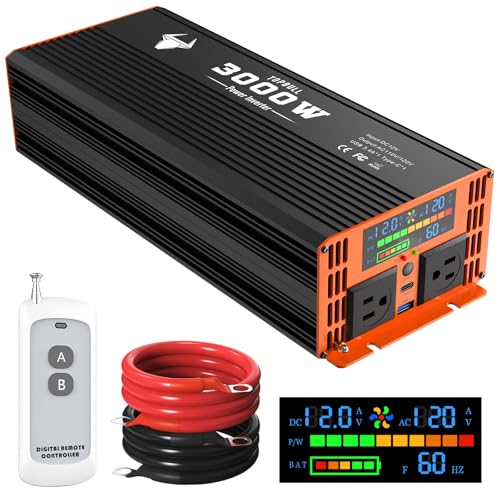
- 3000W continuous, 6000W peak output
- Color display plus 200-foot remote control
- 2 AC sockets with USB, Type-C, and grounding
Best For: RV users who want convenience features and broad connectivity
RV Transfer Switch Inverter

- 2500W continuous, 5000W peak output
- Built-in ATS for automatic shore/battery switching
- Hardwired design for RV breaker panels
Best For: Permanent RV installs that need automatic transfer between shore and battery power
High-Capacity RV Power
5000W 12V Inverter with Wireless Control

- 5000W continuous, 10000W peak output
- LCD display and 150 ft wireless remote
- Built-in cooling fan and protection features
Best For: Large RVs and off-grid systems needing high power and remote monitoring
Clean Power for Sensitive Gear
1500W Pure Sine Wave Inverter with LCD Remote

- Pure sine wave output for sensitive devices
- 1500W continuous, 3000W peak power
- 4 AC outlets plus USB and Type-C ports
Best For: RV travelers needing stable power for electronics and medium appliances
Balanced RV and Solar Use
3000W Pure Sine Inverter with Dual Remote

- 3000W continuous and 6000W peak output
- Wired and wireless remote control options
- 4 AC outlets plus 4 USB ports
Best For: RV users wanting a versatile mid-size inverter with strong feature set
Portable Pure Sine Pick – Renogy 1000W Pure Sine Inverter
If you want one of the more dependable power inverters for rvs for lighter loads, this Renogy 1000W model is a practical fit. It delivers clean pure sine wave output, includes a wired remote, and adds both USB and AC connectivity for everyday RV, truck, or camping use.
Best For: RV owners who need a compact pure sine wave inverter for electronics, small appliances, and off-grid trips.
Pros:
- 1000W continuous output with 2000W surge for startup loads
- Pure sine wave output helps protect sensitive electronics
- Built-in USB port, 2 AC outlets, AC terminal block, and 16.4ft wired remote
- Safety features include under/over-voltage, overload, short circuit, and over-temperature protection
Cons:
- Lower wattage limits use to smaller RV power needs
- Requires a deep-cycle battery setup per the notes
This is a solid choice if your priority is cleaner power rather than maximum wattage. For RV setups centered on laptops, TVs, tablets, and similar devices, the Renogy offers a well-rounded mix of output quality, protection, and convenience.
High-Power Travel Workhorse – HONOURLIGHT 3000W RV Inverter
Among power inverters for rvs, this 3000W HONOURLIGHT model is built for users who need more headroom for multiple devices. It pairs a high continuous output with an LCD display, remote control, and broad battery compatibility for travel, backup, and off-grid use.
Best For: RV travelers who need a higher-wattage inverter for multiple everyday devices and emergency backup.
Pros:
- 3000W continuous output and 6000W peak capacity
- LCD display shows input/output voltage, battery level, and protection status
- Includes 14.8ft wired remote for easier RV or trailer installation
- Compatible with LiFePO4, AGM, GEL, and lead-acid batteries
Cons:
- Modified sine wave output may be less ideal for sensitive electronics
- Cooling fan behavior and size may be more noticeable in smaller spaces
This inverter makes sense when you want more capacity than a basic RV unit can offer. Its mix of power, monitoring, and installation flexibility makes it a strong option for trips, backup power, and off-grid use.
Clean Power Midrange – BELTTT 2000W Pure Sine Inverter
This BELTTT model sits in a useful middle ground for power inverters for rvs, offering pure sine wave output and 2000W of continuous power. It is designed for users who want cleaner AC power, a clear LCD screen, and a package that includes cables, fuses, and a long remote lead.
Best For: RV owners who want a midrange pure sine inverter with strong monitoring and included installation accessories.
Pros:
- 2000W continuous output with 4000W surge
- Pure sine wave output is suitable for sensitive and inductive loads
- Graphical LCD shows input/output voltage, battery status, and load status
- Includes dual AC sockets, 20A outlet, USB port, hardwire port, and 23ft remote
Cons:
- Higher power draw still requires a suitably sized battery setup
- Larger footprint than a small basic inverter
For RV use, this is a balanced option when you need more capacity than a 1000W unit but still want clean output. The included accessories and monitoring tools make installation and day-to-day use more straightforward.
Remote-Control Safety Pick – TOPBULL 12V RV Power Inverter
If you are comparing power inverters for rvs and want lots of ports plus long-distance control, this TOPBULL unit stands out. It offers dual high-power outlets, USB-C and USB-A charging, a wireless remote, and a detailed LED display, all in a rugged aluminum housing.
Best For: RV and mobile users who want extensive port options, remote control, and broad safety protection.
Pros:
- Two 20A/120V AC outlets plus USB fast-charge ports and grounding terminal
- 200ft wireless remote with one-button shutdown/restart
- Color LED display shows battery, load, input voltage, fan status, and frequency
- Ten-layer protection system covers voltage, overload, short circuit, heat, grounding, and more
Cons:
- Feature-rich design may be more than needed for simple RV setups
- High-output use still depends on proper 12V/12.8V battery capacity
This inverter is a strong fit when control, connectivity, and protection matter as much as raw output. For RVs, it brings a flexible port layout and long-range remote operation that can make larger or harder-to-reach installs easier to manage.
Heavy-Duty RV Power – 3000W Pure Sine Wave Inverter
If you want one of the more capable power inverters for rvs, this 3000W pure sine wave unit is built for serious onboard and mobile use. It delivers clean 12V DC to 120V AC power with a 6000W surge rating, making it a practical fit for sensitive electronics and harder-starting appliances in an RV, truck, or off-grid setup.
Best For: RV owners who need high continuous output, pure sine power, and remote monitoring for larger appliances.
Pros:
- 3000W continuous output with 6000W surge for demanding startup loads.
- Pure sine wave output is designed for sensitive electronics and inductive loads.
- Includes 3 AC outlets, hardwired terminal, USB, and 30W PD charging.
- Comes with 15ft wired remote, LED screen, and protection features for RV use.
Cons:
- Higher-capacity setup may be more than casual weekend RV users need.
- Hardwired terminal and thick battery cables suggest a more involved install.
This LANDERPOW model stands out if you need a rugged, feature-rich inverter with clean power and strong startup headroom. The monitoring, safety protections, and included cables make it especially appealing for frequent RV travel and heavier electrical demands.
Feature-Packed Vehicle Inverter – 3000W DC to AC Converter
For buyers comparing power inverters for rvs, this 3000W unit focuses on versatility and monitoring. It converts 12V DC to 110V/120V AC, includes multiple charging options, and adds a color display plus remote control, which makes it a practical match for vehicle-based power needs and larger appliances.
Best For: RV users who want a multi-outlet inverter with display, remote access, and broad device support.
Pros:
- 3000W continuous output with 6000W peak capacity.
- Includes 2 AC sockets, USB fast charging, Type-C, and grounding terminal.
- Color display shows voltage, power, and working status in real time.
- Remote control supports operation from up to 200 feet away.
Cons:
- Listed waveform is modified sine wave, not pure sine wave.
- May be less ideal than pure sine models for the most sensitive electronics.
This TOPBULL inverter is a strong fit if you value convenience features and flexible connections more than pure sine output. The combination of display, remote, and protection features makes it a capable all-around option for RV and vehicle use.
RV Transfer Switch Inverter – 2500W Pure Sine Wave with ATS
If you need power inverters for rvs with permanent-install convenience, this 2500W pure sine wave model adds an integrated ATS for automatic switching between shore power and battery power. It is designed for RV electrical systems, so it is a good fit when you want uninterrupted AC power without manual intervention.
Best For: RV owners who want a hardwired inverter with automatic shore-power switching.
Pros:
- 2500W continuous output with 5000W peak power.
- Built-in ATS automatically switches between shore power and battery power.
- Pure sine wave output supports RV appliances like microwaves, refrigerators, and TVs.
- Hardwired AC input terminal is made for RV breaker panels and permanent installs.
Cons:
- Lower continuous output than the 3000W models in this roundup.
- External 12V battery is required and not included.
This ZETAWALE inverter is the most installation-focused choice here, especially if you want automatic transfer behavior in an RV. Its pure sine output and hardwire-ready design make it well suited to dedicated onboard electrical setups.
High-Capacity RV Power – 5000W 12V Inverter with Wireless Control
If you want one of the more capable power inverters for rvs, this 5000W model is built for heavy-demand setups that need 12V DC to 110V/120V AC conversion. It offers 5000W continuous power, 10000W peak power, over 90% conversion efficiency, and comes with an LCD display plus wireless remote for easier monitoring in RV, camping, and off-grid solar use.
Best For: RV owners, motorhomes, and off-grid users who need high continuous output with remote monitoring.
Pros:
- 5000W continuous power with 10000W peak output
- LCD display shows voltage, battery capacity, load, and error codes
- 150 ft wireless remote adds convenient control
- Built-in safety protections and cooling fan for demanding use
Cons:
- Modified sine wave output, not pure sine wave
- Large 5000W capacity may be more than smaller RV systems need
- Installation and battery setup should match the appliance load carefully
This is a strong pick if you want lots of headroom and easy status monitoring in an RV power setup. The wireless remote and error-code display make it more practical for everyday travel and off-grid use than basic inverters.
Clean Power for Sensitive Gear – 1500W Pure Sine Wave Inverter with LCD Remote
Among power inverters for rvs, this 1500W pure sine wave option is a practical choice when you need clean AC power for everyday devices. It converts 12V DC to 120V AC with 1500W continuous output and 3000W peak power, making it suitable for refrigerators, microwaves, coffee makers, CPAP machines, TVs, and other equipment that benefits from stable waveform output.
Best For: RV owners and travelers running sensitive electronics or medium-load appliances from a 12V battery system.
Pros:
- Pure sine wave output for cleaner, more stable power
- 1500W continuous and 3000W peak capacity
- Includes 4 AC outlets, USB, and Type-C ports
- Wired LCD remote shows voltage and load in real time
Cons:
- Lower wattage than larger RV inverter options
- May not suit high-demand whole-camper loads
- Remote is wired, so placement planning matters
This inverter makes sense if your RV setup prioritizes quiet, stable power for sensitive electronics rather than maximum wattage. The pure sine wave output and monitoring remote add useful flexibility for travel and off-grid use.
Balanced RV and Solar Use – 3000W Pure Sine Inverter with Dual Remote
If you’re comparing power inverters for rvs and want a middle-ground option, this 3000W pure sine wave inverter delivers a useful mix of output and features. It converts 12V DC to 110V/120V AC with 3000W continuous power and 6000W peak power, plus wired and wireless remote control, LCD monitoring, 4 AC outlets, and 4 USB ports for travel, camping, and off-grid solar setups.
Best For: RV and camping users who want more output than a small inverter but do not need a 5000W unit.
Pros:
- Pure sine wave design with 3000W continuous output
- 6000W peak capacity for short surges
- Wired and wireless remote options plus LCD display
- 4 AC outlets and 4 USB ports for multiple devices
Cons:
- Wireless remote batteries are not included
- Still requires careful matching of appliance load to inverter capacity
- More complex feature set may be more than basic users need
This model stands out as a flexible RV inverter for users who want strong output without jumping to the largest size. The combination of pure sine power, dual remote control, and multiple charging ports makes it well suited to mobile setups.
How We Picked the Best Power Inverters for Rvs
We focused on inverter types that make the most sense for real RV use: clean output for sensitive electronics, enough surge power for startup loads, and wattage ranges that fit everything from light-duty charging to larger appliances. We also looked for practical features such as remote displays, built-in protection, multiple outlets, and installation-friendly designs.
Quick Comparison
Smaller 1000W to 1500W units are best for phones, laptops, lights, and small accessories. Midrange 2000W to 3000W inverters are the sweet spot for many RV owners because they can handle more day-to-day appliances with better flexibility. Larger 5000W-class models are for users with bigger electrical demands, though they require more battery capacity and heavier wiring.
Key Buying Factors for Power Inverters for Rvs
Pure Sine Wave Vs. Modified Wave
Pure sine wave inverters are the better choice for most RVs because they are safer for sensitive electronics, quieter for motors, and generally more compatible with modern appliances. If you plan to run a fridge, CPAP machine, TV, or laptop, pure sine wave is usually worth it.
Continuous Wattage and Surge Rating
Check both numbers. Continuous wattage tells you what the inverter can run all day, while surge wattage covers short startup spikes. Appliances with compressors or motors often need more surge headroom than their label suggests.
Battery Bank and Wiring
The inverter is only one part of the system. Larger Power Inverters for Rvs demand a strong battery bank, proper cable gauge, correct fusing, and solid ventilation. Undersized wiring can cause voltage drop, heat, and poor performance.
Outlets, Displays, and Remote Control
Multiple AC outlets, USB ports, LCD readouts, and remote controls can make daily use easier, especially if the inverter is installed in a hard-to-reach compartment. These extras are convenient, but they should not outweigh core electrical specs.
Who Should Buy Which Power Inverters for Rvs?
If you mostly charge electronics and run light loads, a 1000W to 1500W inverter is usually enough. If you want a more versatile setup for mixed use, 2000W to 3000W models are often the best balance of capability and value. If you’re powering more demanding appliances or building a larger off-grid system, consider a 5000W option only if your batteries, charging setup, and wiring can support it.
In short, the best choice depends on how much AC power you actually need now—and how much you may want later.