Power inverters turn your vehicle’s DC power into usable AC, making it easier to charge laptops, run small appliances, and keep essential devices powered on the go.
This roundup focuses on practical options for commuters, travelers, and drivers who want the right balance of wattage, safety features, and outlet selection.
Best 10 Power Inverters Picks for 2026
Compact Travel Pick
BESTEK 300W Car Power Inverter

- 300W continuous, 700W peak
- 2 AC outlets plus 2 USB ports
- Compact body with long vehicle plug
Best For: Light travel charging and small electronics
High-Power Off-Grid Choice
BELTTT 2000W Pure Sine Inverter

- 2000W continuous, 4000W surge
- Pure sine wave for sensitive loads
- LCD display with remote and hardwire port
Best For: Off-grid, RV, truck, and solar power needs
Fast-Charging Vehicle Pick
EPANEE 400W Car Power Inverter

- 400W continuous, 800W peak
- 65W USB-C and 18W USB-A charging
- Dual AC outlets in a compact body
Best For: Travelers who want fast USB-C charging in the car
Clean-Power Compact Pick
BESTEK 300W Pure Sine Car Inverter

- Pure sine wave output for sensitive devices
- 300W continuous, 700W peak
- 2 AC outlets and 2 USB charging ports
Best For: Cleaner vehicle power for laptops and portable electronics
Road-Trip Compact Pick
Pro Chaser 400W Power Inverters for Vehicles

- 400W continuous output, 800W peak
- Dual AC sockets plus dual USB ports
- Compact size with 30-inch cord
Best For: Travel, family trips, and lighter device charging
Budget Portable Charger
PiSFAU 200W Car Power Inverter

- 200W output for light-duty charging
- 2 AC outlets and 4 USB ports
- Compact, quiet, and easy to carry
Best For: Basic phone, tablet, and laptop charging in the car
High-Power Emergency Choice

- 750W continuous, 1000W peak output
- Dual AC outlets with USB-C and USB
- Digital display plus multi-protection
Best For: Camping, outages, and higher-capacity vehicle power
Portable 1000W Vehicle Inverter
1000W DC to AC Power Converter

- 1000W continuous, 2000W peak output
- LCD shows voltage, battery, and fault codes
- 2 AC outlets, USB-C, and USB charging
Best For: road trips, camping, and everyday vehicle-powered electronics
Multi-Port Car Power Inverter
500W Inverter with 3 AC and 4 USB Ports
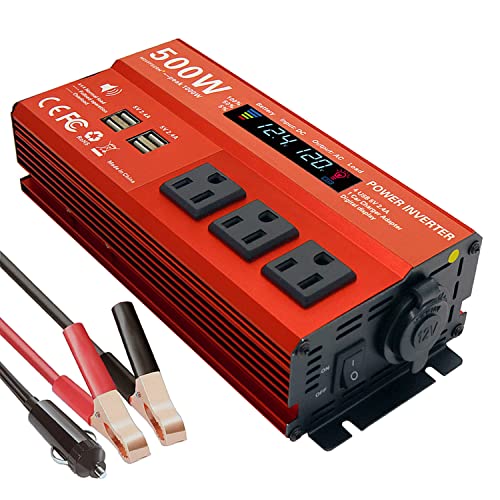
- 500W continuous, 1000W peak power
- 3 AC outlets, 4 USB ports, and 1 lighter port
- Battery clips or cigarette lighter input included
Best For: travel charging and light vehicle-powered electronics
Fast-Charging Vehicle Inverter
500W Inverter with USB-C Fast Charging

- 500W continuous, 1000W peak output
- USB-C 25W and multiple USB charging ports
- LCD plus 50A fuses and protection features
Best For: fast charging phones, tablets, and light-duty travel devices
Compact Travel Pick – BESTEK 300W Car Power Inverter
If you want a compact option among power inverters for everyday travel, this BESTEK model is built around portability and simple plug-in use. It provides 300W continuous power, two AC outlets, and dual USB ports, making it a practical pick for charging laptops, tablets, phones, and other small devices on the road.
Best For: Drivers who want a lightweight, vehicle-plug inverter for light travel charging and basic accessory power.
Pros:
- 300W continuous power with 700W peak output for common travel electronics
- Two AC outlets plus two 4.8A USB ports for multi-device charging
- Compact, iPhone-sized design with a long 32-inch cigarette lighter plug
- Built-in protections and a silent smart cooling fan for safer use
Cons:
- Not intended for heavy-duty appliance loads
- Modified sine wave output may not suit every sensitive device
For road trips, camping, or commuting, this inverter focuses on convenience over raw power. The ETL-certified build, aluminum housing, and 5-year warranty add reassurance if you want a small inverter that is easy to keep in the car.
High-Power Off-Grid Choice – BELTTT 2000W Pure Sine Inverter
Among larger power inverters, this BELTTT unit stands out for serious off-grid use. It delivers 2000W of continuous power, 4000W surge capacity, and pure sine wave output, which is a strong fit for sensitive electronics and higher-demand equipment in RVs, trucks, and solar setups.
Best For: RV, truck, and solar users who need higher continuous power and cleaner AC output.
Pros:
- 2000W continuous output with 4000W peak surge power
- Pure sine wave waveform suited to sensitive and inductive loads
- LCD screen shows input/output voltage, battery, and load status
- Includes dual AC sockets, hardwire port, USB, and 23-foot remote control
Cons:
- Larger and heavier than compact car plug models
- Requires a more involved installation than simple lighter-socket inverters
This is the kind of inverter to choose when the goal is dependable power, not just convenience. The efficiency rating above 93%, multiple safety protections, and included cables and fuses make it a more complete package for off-grid systems.
Fast-Charging Vehicle Pick – EPANEE 400W Car Power Inverter
If you want a midrange choice among power inverters for car trips, this EPANEE model balances outlet power with modern USB charging. It offers 400W continuous power, dual AC sockets, a 65W USB-C port, and an 18W USB-A port, so it can handle everyday electronics and some small appliances while you drive.
Best For: Road trips and commuters who want USB-C fast charging plus dual AC outlets in a portable car inverter.
Pros:
- 400W continuous output with 800W peak power
- 65W USB-C and 18W USB-A ports for fast device charging
- Dual AC outlets for laptops, DVD players, and similar gear
- Compact, lightweight design with built-in cooling fan and fuse protection
Cons:
- Modified sine wave output is less ideal for some sensitive devices
- Lower power ceiling than larger RV or off-grid inverters
This model makes sense if your main priority is convenience and charging speed inside a vehicle. The compact footprint, automatic fan control, and three-year warranty help round out a practical travel-friendly inverter.
Clean-Power Compact Pick – BESTEK 300W Pure Sine Car Inverter
For shoppers comparing power inverters for sensitive devices, this BESTEK model is built around pure sine wave output rather than raw wattage. It provides 300W continuous power, 700W peak power, two AC outlets, and two USB ports, making it a sensible option for laptops, cameras, tablets, and other everyday electronics.
Best For: Users who want a compact pure sine inverter for cleaner power delivery in a vehicle.
Pros:
- Pure sine wave output for better compatibility with sensitive electronics
- 300W continuous and 700W peak power for light-duty use
- Two AC outlets and two smart USB charging ports
- Compatible with 11-17V vehicles, including Tesla and other new energy vehicles
Cons:
- Not meant for high-wattage appliances or heavy loads
- Compact car-adapter format limits it to lighter-duty applications
This inverter is a good fit if waveform quality matters more than sheer output. The built-in protections, smart fan design, and 18-month warranty make it a well-rounded compact choice for routine travel charging.
Road-Trip Compact Pick – Pro Chaser 400W Power Inverters for Vehicles
If you want power inverters for everyday car charging without a bulky setup, the Pro Chaser 400W is a practical middle-ground option. It delivers 400W of continuous DC to AC power with dual AC sockets plus dual USB ports, so it can handle phones, tablets, cameras, and many 300W–400W travel devices from a 12V vehicle socket.
Best For: Drivers who want a compact inverter for road trips, family travel, and lighter laptop-style loads.
Pros:
- 400W continuous output with 800W peak power
- Dual 110V AC outlets and two high-speed USB ports
- Compact, cellphone-sized body with a 30-inch cord
- Built-in protection and a cooling fan that activates at 113°F
Cons:
- Modified sine wave output
- Best suited to lighter 300W–400W devices rather than heavy appliances
- Must be used in a cool, dry environment
Overall, this is a sensible pick if portability matters more than raw power. It combines useful outlet options, safety features, and a small footprint that fits well in travel bags or glove compartments.
Budget Portable Charger – PiSFAU 200W Car Power Inverter
Among compact power inverters, the PiSFAU 200W model is aimed at simple charging jobs in the car. It converts 12V DC to 110V AC and adds two AC outlets plus four USB ports, making it a straightforward pick for laptops, tablets, phones, and small travel accessories.
Best For: Drivers who want a small, quiet inverter for basic charging and travel convenience.
Pros:
- Very compact, cellphone-sized design
- 2 AC outlets and 4 USB charging ports
- Quiet, high-efficiency circuit design with reduced heat and noise
- Multiple protection features for overheating, overload, and short circuit
Cons:
- 200W output limits it to smaller devices
- Modified sine wave output
- Best for light-duty use rather than high-wattage gear
If you mainly need a space-saving inverter for phones and small electronics, this one keeps things simple. Its low profile and multiple USB ports make it especially handy for everyday vehicle use and short trips.
High-Power Emergency Choice – TWING 1000W Car Inverter
If you need more headroom from power inverters for emergency or travel use, the TWING 1000W model offers a stronger setup. It provides 750W continuous power and 1000W peak power, along with dual AC outlets, USB ports, a Type-C port, and a digital display for checking status at a glance.
Best For: Users who want a higher-capacity inverter for camping, outages, and more demanding vehicle power needs.
Pros:
- 750W continuous output with 1000W peak power
- Dual AC outlets plus USB and USB-C charging
- Digital display and cooling fan for easier monitoring
- Built-in protection against overload, short circuit, low voltage, and overheating
Cons:
- Modified sine wave output
- Must be used in a well-ventilated, dry area
- Higher-capacity use requires careful attention to total device wattage
This is the most capable option in the group for people who need a more versatile inverter. It is a better fit when you want extra output, more charging options, and emergency-ready flexibility for larger loads.
Portable 1000W Vehicle Inverter – 1000W DC to AC Power Converter
If you want a practical power inverter for road trips, camping, or job sites, this 1000W model gives you enough output for everyday electronics without moving into heavy-duty territory. It converts 12V DC to 110V/120V AC and adds a helpful LCD screen so you can monitor voltage and battery status while you use it.
Best For: Drivers, campers, and van-life users who need a 1000W inverter for laptops, TVs, routers, and other small appliances.
Pros:
- 1000W continuous power with 2000W peak surge for common travel electronics
- LCD display shows input/output voltage plus battery status and protection codes
- Dual AC outlets plus 36W USB-C and 5V/3A USB port for multi-device charging
- Includes safety protections like overload, short-circuit, overvoltage, undervoltage, and overheat
Cons:
- Modified sine wave output is not recommended for sensitive medical devices
- Vehicle cigarette lighter socket is limited to 150W, so higher loads need direct battery clips
- Not suited for high-draw appliances like refrigerators, microwaves, or air conditioners
This is a well-rounded option if you need a compact inverter with clear status feedback and flexible charging ports. Its limits are typical for a modified sine wave design, but for standard mobile electronics it covers the basics well.
Multi-Port Car Power Inverter – 500W Inverter with 3 AC and 4 USB Ports
This power inverter is built for drivers who want a flexible vehicle charging setup with multiple outlet options. It delivers 500W continuous power, 1000W peak power, and includes 3 AC outlets, 4 USB ports, and a cigarette lighter port for a wide range of small devices.
Best For: Users who want a compact 12V inverter with multiple charging ports for laptops, lights, game consoles, and travel accessories.
Pros:
- 500W continuous output with 1000W peak surge
- 3 AC outlets plus 4 USB 2.4A ports for charging several devices at once
- Can plug into a car cigarette lighter or connect directly to a 12V battery
- Includes overload, short-circuit, over/under-voltage, overheating, and overcharging protection
Cons:
- Cigarette lighter input should stay under 150W, so higher loads require battery clips
- Modified sine wave output may not be ideal for sensitive electronics
- No advanced display details beyond the LCD information listed in the specs
For shoppers comparing power inverters mainly by ports and convenience, this one stands out for its mix of AC, USB, and cigarette-lighter connections. It is best used as a travel-friendly solution for light to moderate device loads.
Fast-Charging Vehicle Inverter – 500W Inverter with USB-C Fast Charging
If you want power inverters with a stronger charging focus, this 500W model adds more modern USB options alongside its AC outlets. It converts 12V DC to 110V AC, includes an LCD display for battery and load monitoring, and is designed for everyday vehicle use with multiple protection features.
Best For: Buyers who want a 500W inverter with USB-C and fast-charging ports for phones, tablets, and laptop accessories.
Pros:
- 500W continuous power with 1000W peak power
- Includes 3 AC outlets, 2 USB 2.4A ports, 1 USB-C 25W port, and PD fast charging
- LCD display shows input/output voltage, battery capacity, and load capacity
- Built-in 50A fuses plus overload, short-circuit, overheat, reverse polarity, and voltage protection
Cons:
- Modified sine wave output is better for common electronics than for sensitive gear
- Spec listing mixes fast-charging port details, so buyers should verify the exact port layout they need
- Best suited to moderate loads rather than high-wattage appliances
Among compact power inverters, this one is appealing because it combines practical AC output with newer USB-C charging support. It makes the most sense for people who prioritize device charging convenience over running larger appliances.
How We Picked These Power Inverters
We focused on the features that matter most in real-world use: continuous wattage, surge capacity, inverter waveform, outlet and USB options, and suitability for cars, SUVs, trucks, and road-trip setups. We also favored models with clearer safety protections and a sensible size-to-output ratio.
Quick Comparison
The list spans compact 200W and 300W units for phones, tablets, and laptops, midrange 400W to 500W options for more flexible charging, and 1000W to 2000W inverters for users who need extra headroom. Pure sine wave models are the safer choice for sensitive electronics and devices with motors or power supplies that prefer cleaner output.
Key Buying Factors for Power Inverters
Wattage and Surge Ratings
Match the inverter’s continuous output to what you plan to power, not just the peak number. If a device has a startup surge, make sure the inverter can handle that brief spike without shutting down.
Waveform Type
Modified sine wave units are often fine for basic charging and many small electronics. Pure sine wave Power Inverters are better for laptops, medical devices, appliances with variable-speed motors, and gear that benefits from stable AC power.
Ports and Outlets
Look at the mix of AC outlets, USB-A, USB-C, and cigarette-lighter passthroughs. More ports are useful, but only if the inverter can supply enough total power across them.
Vehicle Compatibility and Power Draw
Check whether the inverter is designed for a standard 12V socket or direct battery connection. Higher-wattage models usually need direct wiring and more careful attention to fuse size, cable length, and ventilation.
Protection and Thermals
Overload, overvoltage, short-circuit, and overheating protection are essential. A good cooling fan and a durable housing help the inverter stay reliable during longer drives or heavy loads.
Who Should Buy Which Power Inverters?
If you mainly need to charge phones, tablets, cameras, or a laptop, a compact 200W to 300W model is usually enough. Drivers who want to power multiple devices at once should look at 400W to 500W options with extra USB ports.
For campers, contractors, or anyone running more demanding equipment, a 1000W or 2000W inverter offers much more flexibility. If you plan to power sensitive electronics, choose a pure sine wave model for the cleanest output and broadest compatibility.