Finding binoculars under 200 does not mean settling for blurry optics or flimsy build quality. The best models in this range can deliver bright images, solid durability, and comfortable viewing for birding, sports, travel, and everyday outdoor use.
In this roundup, we focused on practical performance, not marketing claims, so you can choose a pair that matches your budget and how you actually plan to use it.
Best 10 Binoculars Under 200 Picks for 2026
Nature-Ready All-Rounder

- 8x42 design balances steadiness and brightness.
- Fully multi-coated optics with phase-coated BaK-4 prisms.
- Waterproof, nitrogen-purged, and tripod-adaptable.
Best For: Birding and hiking in wet or changing weather
Low-Light Performer

- 10x42 setup adds reach and light-gathering power.
- Multilayer coatings and silver-alloy prisms improve image quality.
- Waterproof, fogproof, and comfortable for long viewing sessions.
Best For: Users who want more zoom for birds, sports, and trail viewing
Outdoor Value Pick

- 8x42 configuration is practical for everyday outdoor use.
- Multi-coated optics with BaK-4 prisms improve clarity.
- Waterproof, nitrogen-purged, and tripod-adaptable.
Best For: Affordable birding and nature viewing with weather protection
Rugged Premium Option

- HD optics and fully multi-coated lenses target sharp detail.
- Waterproof, fogproof, and shock-resistant with full rubber armor.
- Includes a GlassPak harness and other carry accessories.
Best For: Hunters and hikers wanting a tough, accessory-rich 10x42
Compact Everyday Pick
Hontry 10x25 Compact Binoculars for Adults and Kids
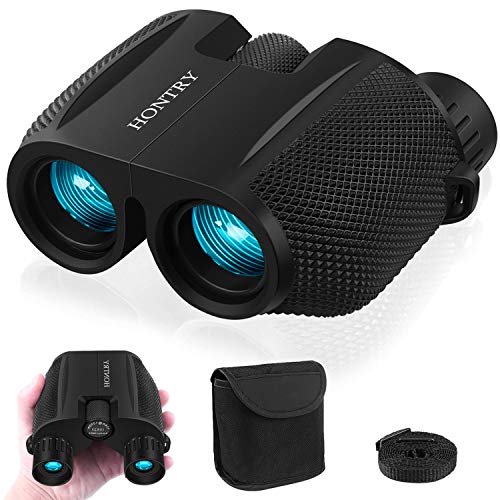
- 10x25 design keeps it small and easy to carry
- Bak-4 prisms for bright, detailed viewing
- Fits kids and most adults with adjustable IPD
Best For: Families and casual users who want a lightweight all-around pair
High-Power Compact Option
Occer 12x25 Compact Binoculars for Adults and Kids
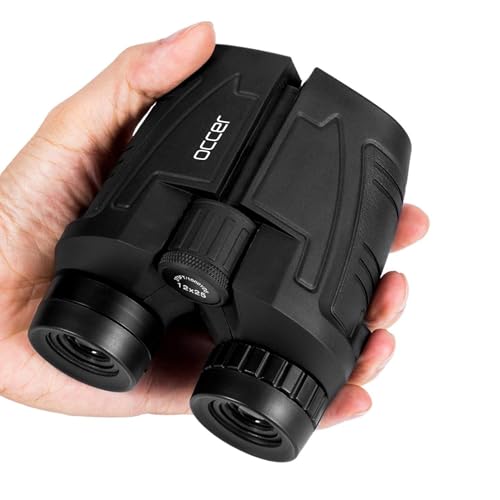
- 12x magnification gives extra reach in a small body
- Large eyepieces and 20mm eye relief improve comfort
- BAK4 prisms and FMC coatings support clearer viewing
Best For: Users who want more zoom in a pocket-size binocular
Ultra-Long Range Pick
15x52 HD Binoculars with Phone Adapter

- 15x magnification for distant detail
- 22mm eyepieces and 52mm objective lens
- Includes upgraded phone adapter
Best For: Long-range viewing and digiscoping
Most Portable Choice
Compact Foldable Pocket Binoculars

- Only 5.3oz and easy to pack
- 8x21 optics with BAK-4 prisms
- Waterproof body for outdoor use
Best For: Travel, concerts, and everyday carry
Bright Low-Light Pick

- 12x54 optics for a bright, wide view
- 23mm eyepieces with BAK4 prisms
- Waterproof and fogproof build
Best For: Birding, sightseeing, and outdoor use
Nature-Ready All-Rounder – Celestron Nature DX 8×42
If you want binoculars under 200 that work well for birding, hiking, and everyday outdoor use, the Celestron Nature DX 8×42 is a balanced pick. The 8x magnification keeps the view steady, while the 42mm objectives and fully multi-coated optics help deliver bright, detailed images in changing light.
Best For: Bird watchers and hikers who want a lightweight, weather-ready 8×42 for general outdoor viewing.
Pros:
- 8x magnification offers a stable view for tracking birds and wildlife.
- Fully multi-coated lenses and phase-coated BaK-4 prisms support crisp, color-accurate images.
- Waterproof, nitrogen-purged, and rubber-armored for outdoor conditions.
- Tripod-adaptable for steadier extended viewing sessions.
Cons:
- Tripod adapter is not included.
- At 1.8 pounds, it is not the lightest option in this group.
Overall, the Nature DX 8×42 is a practical choice if you want dependable clarity and weather protection without paying for premium extras. It is especially appealing for users who value a wide field of view and a familiar 8×42 format.
Low-Light Performer – Nikon PROSTAFF P3 10×42
For buyers comparing binoculars under 200, the Nikon PROSTAFF P3 10×42 stands out for higher reach and strong low-light performance. Its 10x magnification and large 42mm objective lenses are built to pull in plenty of light, while multilayer coatings and a silver-alloy prism coating help keep the image bright and vivid.
Best For: Birding, hiking, and sports viewing when you want more magnification and comfortable all-day use.
Pros:
- 10x magnification gives extra reach for distant subjects.
- Multilayer-coated lenses and silver-alloy prism coating support brightness and contrast.
- Waterproof, fogproof, and nitrogen-filled for tough conditions.
- Long eye relief and turn-and-slide eyecups improve comfort, including for eyeglass wearers.
Cons:
- 10x power can be harder to hold steady than 8x binoculars.
- The narrower exit pupil may feel less forgiving in dimmer conditions than some 8×42 models.
In practice, the PROSTAFF P3 is a strong option if you want a full-size binocular with extra magnification and Nikon’s weather-ready build. It makes the most sense for users who are comfortable trading a bit of steadiness for added reach.
Outdoor Value Pick – Celestron Outland X 8×42
The Celestron Outland X 8×42 is a straightforward option in the binoculars under 200 category for users who want bright views and outdoor durability. With 8x magnification, 42mm objectives, multi-coated lenses, and BaK-4 prisms, it is built to give clear, high-contrast images for casual birding and nature watching.
Best For: Budget-minded outdoor users who want a waterproof 8×42 for birding, hiking, and general nature viewing.
Pros:
- 8×42 design offers a good mix of brightness and steady viewing.
- Multi-coated optics and BaK-4 prisms help produce sharp, color-accurate images.
- Waterproof and nitrogen-purged with rubber-armored polycarbonate housing.
- Tripod-adaptable for more stable long sessions.
Cons:
- Warranty is shorter than some competing models listed here.
- Tripod adapter is not included.
For the price-focused shopper, the Outland X keeps the essentials in place: decent brightness, weather resistance, and a familiar 8×42 layout. It is a sensible everyday outdoor binocular rather than a feature-heavy premium model.
Rugged Premium Option – Vortex Triumph HD 10×42
If you want binoculars under 200 with a more rugged feel and premium-style feature set, the Vortex Triumph HD 10×42 is worth a look. It combines HD optics, fully multi-coated lenses, and a waterproof, fogproof build with a comfortable carry system for hunters and hikers who spend serious time outdoors.
Best For: Hunters and hikers who want a durable 10×42 binocular with strong optics and a harness included.
Pros:
- HD optical system and fully multi-coated lenses aim for sharp, high-fidelity images.
- Waterproof, fogproof, and shock-resistant polycarbonate chassis with full rubber armor.
- Tripod adaptable with adjustable eyecups and diopter for better fit.
- Includes a GlassPak harness, neck strap, and lens covers for easier carry.
Cons:
- At 2.3 pounds, it is the heaviest option in this group.
- 10x magnification may be less steady for hand-held viewing than 8x alternatives.
The Triumph HD is best for buyers who value ruggedness and accessories as much as optical performance. Its bigger, sturdier design makes sense if you plan to carry it on long days in the field and want extra confidence in tough conditions.
Compact Everyday Pick – Hontry 10×25 Compact Binoculars for Adults and Kids
If you’re shopping for binoculars under 200 and want something easy to carry, the Hontry 10×25 is built for everyday use. Its 10x magnification, Bak-4 prisms, and compact palm-sized body make it a practical choice for bird watching, travel, concerts, and quick outdoor viewing without adding bulk.
Best For: Families, casual users, and anyone who wants a lightweight pair for travel, sports, and backyard use.
Pros:
- 10x magnification gives useful reach while staying manageable for hand-held viewing.
- Bak-4 prisms and fully multi-coated optics are designed for bright, sharp images, including in lower light.
- Compact, 0.6-pound design is easy to pack in a glove box, bag, or carry-on.
- Adjustable IPD helps it fit both kids and most adults comfortably.
Cons:
- 25mm objective lenses are smaller than full-size models, so they are less suited to demanding low-light viewing.
- Not the best choice if you want a more stable, higher-detail view at longer distances.
Overall, this is a straightforward pick for buyers who value portability over extra size. It covers the common use cases well and makes sense if you want binoculars under 200 that are easy to share and carry.
Feature-Rich Mid-Size Choice – Gosky 10×42 Binoculars with Phone Adapter
For shoppers comparing binoculars under 200 and looking for a more capable full-size option, the Gosky 10×42 stands out. It combines 10x magnification, 42mm objective lenses, BAK4 prisms, and FMC coatings for a brighter, clearer view, plus it adds a phone adapter and tripod support for sharing photos and videos.
Best For: Bird watchers, hikers, and travelers who want a brighter full-size binocular with phone-capture extras.
Pros:
- 10×42 optics offer a wider field of view and a brighter image than compact 25mm models.
- BAK4 prisms and green FMC coating are designed to improve light transmission and image sharpness.
- Waterproof, fogproof construction with nitrogen filling adds durability in harsh weather.
- Includes a smartphone adapter and tripod support for photos, videos, and steadier viewing.
Cons:
- Heavier and bulkier than compact binoculars, so it is less pocket-friendly.
- The extra accessories add capability, but they may be more than casual users need.
This is a strong value-oriented pick if you want more viewing power and useful add-ons without moving into premium pricing. It is especially appealing for users who plan to document what they see.
High-Power Compact Option – Occer 12×25 Compact Binoculars for Adults and Kids
If you want binoculars under 200 with a little more reach in a small body, the Occer 12×25 is worth a look. It pairs 12x magnification with a compact 25mm design, BAK4 prisms, and FMC coatings, making it suitable for bird watching, travel, sports, and other everyday viewing.
Best For: Buyers who want higher magnification in a pocket-size binocular for travel, sports, and casual wildlife viewing.
Pros:
- 12x magnification offers more reach than most compact binoculars in this price range.
- Large 15mm eyepieces and 20mm eye relief help improve comfort, including for glasses wearers.
- BAK4 prisms and FMC coatings are designed to deliver a clearer, more realistic image.
- Compact, one-hand-friendly body is easy to carry for trips, games, and outdoor activities.
Cons:
- The higher 12x power can be harder to hold steady than 10x models.
- 25mm objective lenses limit light gathering compared with larger full-size binoculars.
Overall, the Occer makes sense if magnification matters more to you than size and low-light performance. It is a practical compact option for people who want a little extra reach without paying for a larger setup.
Ultra-Long Range Pick – 15×52 HD Binoculars with Phone Adapter
If you want binoculars under 200 with serious reach, this 15×52 model is built for distant detail and low-light use. The 15x magnification, 52mm objective lens, and large 22mm eyepieces are aimed at crisp viewing for hunting, bird watching, and other long-distance observation.
Best For: Hunters, bird watchers, and users who want a high-powered view plus phone digiscoping support.
Pros:
- 15x magnification with a 52mm objective lens for long-range viewing
- 22mm large eyepieces for a wider, clearer image
- Upgraded phone adapter for stable photo and video capture
- Twist-down eyecups and long eye relief for glasses and non-glasses wearers
Cons:
- High magnification can be less forgiving than lower-power binoculars
- Bigger optics make it less compact than pocket-style models
This is the pick for shoppers who care more about reach and detail than portability. If your main use is wildlife, hunting, or distant scenery, it offers a feature set that goes well beyond basic budget binoculars.
Most Portable Choice – Compact Foldable Pocket Binoculars
For binoculars under 200 that prioritize portability, this compact foldable option is easy to carry and simple to pack. At just 5.3oz with a pocket-size design, it suits travel days, concerts, theater, hikes, and casual bird watching without adding bulk.
Best For: Travelers, kids, and casual users who want a lightweight binocular they can carry anywhere.
Pros:
- Very lightweight at 5.3oz with a foldable pocket design
- 8x magnification and 21mm eyepieces for a wide, clear view
- BAK-4 prisms and waterproof body for outdoor use
- Easy center-focus setup for adults and kids
Cons:
- Smaller build is not meant for maximum long-range power
- Best suited to casual viewing rather than demanding observation
This model makes sense when convenience matters more than high magnification. It is a practical grab-and-go binocular for everyday outings, family use, and situations where a small size is a real advantage.
Bright Low-Light Pick – 12×54 Waterproof Binoculars
These binoculars under 200 are designed for buyers who want a brighter image and solid low-light performance. With 12x magnification, a 54mm objective lens, and a large 23mm eyepiece, they are a strong fit for bird watching, travel, hiking, sports, and wildlife viewing.
Best For: Outdoor users who want a bright, comfortable binocular for birding, hunting, and general sightseeing.
Pros:
- 12×54 design balances reach with brightness
- 23mm eyepieces and long eye relief for comfortable viewing
- BAK4 prisms and multi-coated optics for clear images
- Waterproof and fogproof construction with rubber armor
Cons:
- Larger body is less pocket-friendly than compact binoculars
- Tripod mount support may be unnecessary for casual handheld use
If you want a more versatile all-around option, this one stands out for its bright optics and weather-ready build. It is especially appealing if you expect to use your binoculars outdoors in changing light conditions.
How We Picked the Best Binoculars Under 200
We prioritized optical clarity, brightness, build quality, comfort, and overall value. For Binoculars Under 200, small details matter: lens coatings, prism quality, eye relief, and whether the body is waterproof or fogproof can make a big difference in real use.
We also considered how each model fits common buyer needs, from compact travel binoculars to full-size 8×42 and 10×42 options for birding and general outdoor viewing.
Quick Comparison
As a simple rule, 8x models are easier to hold steady and often better for birding and wildlife, while 10x models provide a closer view with a bit more shake. Compact 10×25 or similar designs are the most portable, but full-size binoculars usually deliver a brighter, more comfortable image. High-power options can be appealing, but they are best only if you can hold them steady and accept a narrower field of view.
Key Buying Factors for Binoculars Under 200
Magnification and Objective Lens Size
For most buyers, 8×42 and 10×42 are the safest choices. They balance image brightness, field of view, and stability better than extreme magnification. Compact models are easier to pack, but they usually trade away low-light performance.
Eye Relief and Comfort
If you wear glasses, look for generous eye relief and adjustable eyecups. A comfortable view matters just as much as sharp optics, especially during long birding sessions or concerts.
Weather Resistance
Waterproof and fogproof construction is a major plus in this price range. It helps Binoculars Under 200 handle rain, humidity, and temperature changes without losing performance.
Accessories and Extras
Phone adapters, tripod compatibility, cases, and straps can add real value, especially for travel or digiscoping. Just make sure the core optics are strong before paying extra for accessories.
Who Should Buy Which Binoculars Under 200?
Choose 8×42 binoculars if you want the most balanced everyday option for birding, hiking, and nature watching. Choose 10×42 if you want a tighter view and do not mind a little extra hand shake. Go compact if portability is the priority, especially for travel or kids. If you are interested in phone photography or tripod use, a model with adapter support may be the smarter pick.
In short, the best Binoculars Under 200 are the ones that match your viewing habits, not just the highest magnification or the biggest spec sheet.